
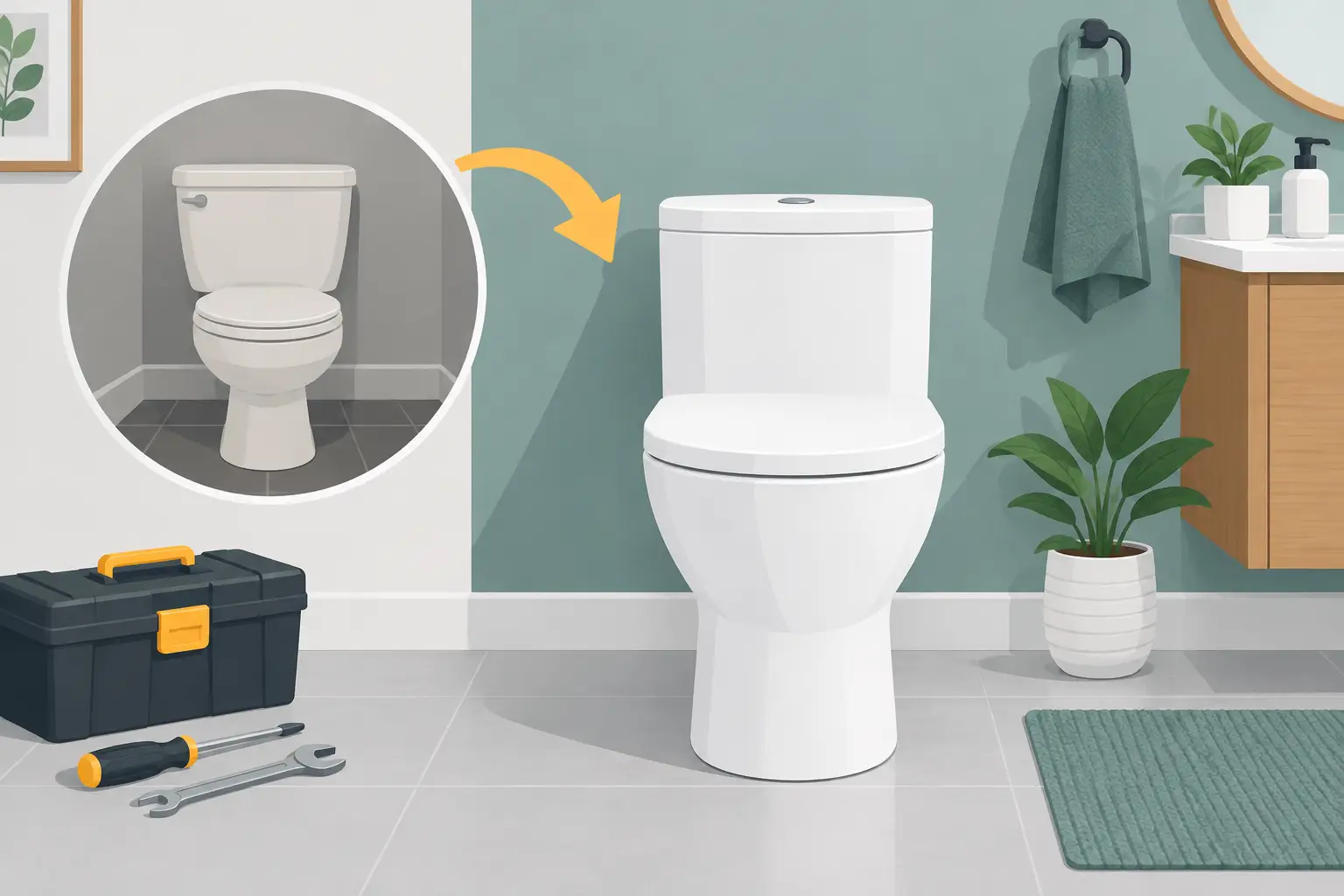
A weak flush, a seat that never stays tight, or a toilet that runs long after flushing can make you want to upgrade toilet for renters right away. But unlike swapping a shower curtain or cabinet hardware, a toilet is a permanently installed fixture. The right move depends on whether you are the tenant, the property owner, or the manager responsible for keeping the bathroom functional.
For renters, the short answer is simple: get written approval before replacing a toilet. For landlords and property managers, replacement is often smarter than repeated small fixes when the bowl is cracked, the porcelain is stained beyond recovery, the tank leaks, or the toilet has become unreliable between tenants.
Can a Renter Replace a Toilet?
A renter can replace a toilet only with the landlord’s permission, ideally confirmed in writing before the old fixture is removed. Most leases treat the toilet as part of the property, and the owner may want to approve the model, color, height, installer, and final invoice.
That is not just paperwork. A toilet has to match the bathroom’s existing rough-in, which is the distance from the finished wall to the center of the drain. In many homes it is 12 inches, but 10-inch and 14-inch rough-ins exist. Ordering the wrong configuration can leave the tank against the wall, create an awkward gap, or prevent installation altogether.
Tenants should also understand that a new toilet is not typically a move-out item. Once installed, it stays with the property unless the landlord agrees otherwise. If you pay for an upgrade, ask whether the owner will reimburse part of the cost, apply it to rent, or allow you to leave the new fixture in place without a restoration charge later.
When Toilet Replacement Makes More Sense Than Another Fix
Not every annoyance calls for a replacement. A worn flapper, loose handle, or slow-fill valve can often be addressed without changing the fixture. But older toilets reach a point where small repairs keep adding up without solving the actual problem.
Replacement is usually worth discussing when you see a crack in the bowl or tank, water collecting at the base after flushing, recurring clogs despite normal use, or a toilet that rocks even after the mounting bolts have been checked. A hairline crack can be especially deceptive. It may only seep after a flush, then leave a damp ring around the base or damage flooring over time.
A toilet that runs intermittently is another common rental complaint. Sometimes it is a simple tank component. Other times the toilet is old enough that the tank hardware, seat, finish, and flushing performance are all showing their age. For a landlord preparing a unit between tenants, replacing that aging fixture can be more predictable than sending someone back for one more repair call.
Choosing a Toilet Upgrade for Renters
The best rental toilet is rarely the flashiest model. It should flush reliably, fit the space correctly, be easy to clean, and use water efficiently without being fussy. A familiar, quality toilet from Kohler, American Standard, or TOTO is often a practical choice because replacement parts and seats are widely available.
Standard height or comfort height?
Standard-height toilets are generally closer to 15 inches from the floor to the top of the bowl, before the seat. Comfort-height models are closer to chair height, often around 17 to 19 inches with the seat. Many adults appreciate the easier sit-to-stand position of comfort height, particularly in a primary bathroom or for older residents.
For a compact hall bath or a property with young children, standard height may still make more sense. Comfort height is not automatically better for every renter. It is a preference, and the owner should consider who will use the bathroom most.
One-piece, two-piece, or skirted?
A two-piece toilet has a separate tank and bowl. It is a common rental choice because it is familiar, cost-conscious, and easy to service. A one-piece model has fewer exterior seams and a more streamlined look, but it often costs more.
Skirted toilets cover the trapway – the curved plumbing passage visible on the side of many conventional toilets. That smooth-sided design is easier to wipe down and can make a bathroom look more updated. The trade-off is price and, on certain models, more specific installation requirements. For a landlord focused on quick turnover, a dependable two-piece toilet may be the better value. For a higher-end rental or a bathroom being refreshed for sale, a skirted model can be a worthwhile visual upgrade.
Water use and flushing performance
Older toilets can use 3.5 gallons per flush or more. Modern high-efficiency toilets commonly use 1.28 gallons per flush, which can reduce water use without sacrificing everyday performance when you choose a well-designed model.
The lowest water number is not the only thing that matters. A toilet that needs to be flushed twice defeats the purpose. Look for proven flushing performance, a bowl shape that suits the room, and a tank design that provides consistent refill and flush action. In rental properties, reliability matters more than gimmicks.
Get the Owner’s Approval in Writing
A quick text saying “go ahead” is better than nothing, but a clear email or written approval is safer. It should state who is paying, what toilet will be installed, whether professional installation is required, and who owns the fixture after the work is complete.
If the toilet is leaking or cracked, document the problem with photos before anyone removes it. That protects the tenant from being blamed for an existing issue and gives the owner a clear picture of why replacement is needed. If water is actively leaking onto the floor, shut off the supply valve behind the toilet if it is safe to do so, avoid using the fixture, and notify the owner immediately.
Landlords should be equally clear with tenants. If you approve an upgrade, confirm whether you want a basic white round-front toilet, a comfort-height elongated bowl, or a cleaner-looking skirted design. A few minutes of agreement before ordering prevents an argument over taste after the old toilet is already gone.
Why Professional Installation Is Usually the Cleaner Option
A toilet installation looks straightforward until it is not. The old toilet is heavy, residual water has to be managed, the wax seal must sit correctly, and the bowl has to be stable without being overtightened. Overtightening can crack porcelain. A poor seal can allow water to escape below the toilet, where it may not be obvious until flooring feels soft or a ceiling below shows staining.
There is also the disposal issue. An old porcelain fixture cannot simply go into regular household trash. It needs to be removed and legally disposed of. For tenants, that is one more reason not to treat a toilet replacement like a weekend DIY project.
For property owners in Fairfax County, Loudoun County, and across Northern Virginia, ToiletKing packages delivery, old-fixture removal, installation, and legal disposal together. The actual replacement is typically completed in under an hour once the correct toilet is on site. Essential options start at $499 for cost-conscious rental replacements, while Performance starts at $669, Signature starts at $799, and King’s Throne options start at $1,049. Specific pricing varies by toilet model and the needs of the installation.
A Better Upgrade Plan for Landlords and Renters
Start with the reason for the change. If the toilet is broken, leaking, cracked, or repeatedly clogging, the owner should treat it as a property-maintenance issue. If it is functional but dated, discuss whether the renter wants an upgrade and how costs will be handled.
Then confirm the rough-in, bowl shape, color, and height before selecting a model. White is usually the safest choice for a rental because it is easy to match later. An elongated bowl offers more sitting room but projects farther into the bathroom. In a tight powder room, that extra length can interfere with the door swing or make the room feel cramped.
Finally, keep the documentation. Save the approval, installation invoice, model information, and any warranty paperwork. A good toilet should be a quiet improvement: no rocking, no mystery water around the base, no long refill cycle, and no old fixture left waiting at the curb.
If a rental toilet is causing trouble, you do not have to sort out delivery, installation, and disposal separately. Call (571) 326-8708 to discuss a replacement or book a free consultation through ToiletKingVA.com. Use promo code FIVEOFF where applicable, and get the bathroom back to being the least complicated room in the home.