
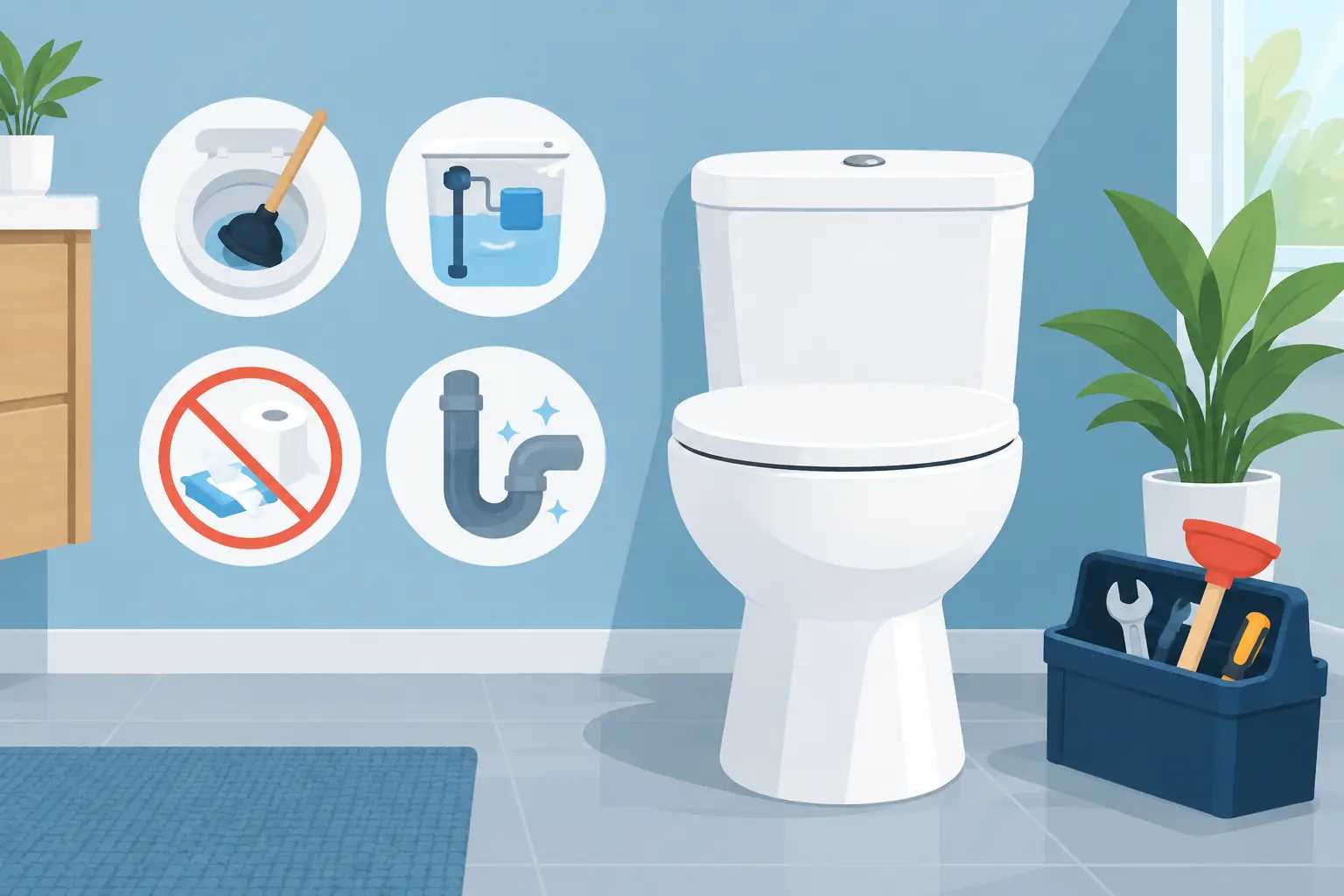
A toilet rarely overflows without giving you at least one chance to intervene. It may start with a weak flush, water that swirls higher than usual, a bowl that needs a second flush, or a toilet that clogs every few weeks. Knowing how to prevent toilet overflow comes down to using the fixture properly, acting on those early warnings, and replacing a toilet that has become unreliable.
The fastest way to turn a small clog into a bathroom flood is flushing again to see if it clears. If the water is rising, do not flush a second time. Take the tank lid off, close the flapper if water is still running into the bowl, and turn the shutoff valve behind the toilet clockwise. A few towels around the base can protect the floor while you assess what happened.
How to Prevent Toilet Overflow: Start With What Goes In
A toilet is designed for waste and toilet paper. It is not a general-purpose drain, even when an item is labeled “flushable.” Thick paper products, wipes, cotton swabs, dental floss, and hygiene products can lodge in the toilet trap or farther down the drain line. The bowl may appear to drain normally at first, then start backing up after enough material catches behind it.
Keep a small covered trash can within reach, especially in bathrooms used by children or guests. It is a simple change, but it prevents the most common accidental flushes. In rental homes, a short reminder near the toilet can save a property owner from an emergency call and damaged flooring.
Toilet paper matters too. There is no need to use the thinnest paper available, but very thick, quilted paper can cause trouble in an older toilet with a weaker flush. If your toilet consistently struggles after normal use, use less paper per flush while you determine whether the fixture itself is the problem.
Never flush these items:
- “Flushable” wipes, baby wipes, or cleaning wipes
- Paper towels, facial tissues, or makeup pads
- Feminine hygiene products, cotton balls, or swabs
- Dental floss, hair, cooking grease, or small objects
A child’s toy, a shampoo cap, or an air freshener clip can also create a sudden full blockage. If something solid falls into the bowl, retrieve it before flushing. Do not assume it will travel through the toilet safely.
Watch for the Signs Before the Bowl Rises
A toilet that is about to overflow often has a pattern. The bowl may fill higher before slowly draining, the flush may sound weak or incomplete, or water may gurgle after the bowl empties. These are not quirks to ignore. They are signs that water and waste are no longer moving through the toilet as cleanly as they should.
Occasional clogs happen, particularly in a busy household. Repeated clogs are different. If you keep a plunger beside the toilet because someone needs it every week, the fixture may have a restricted trapway, weak flushing performance, mineral buildup, or an internal problem that makes it a poor fit for the home.
Pay attention to changes in the tank as well. A toilet that runs after flushing can send excess water into the bowl if the fill valve or flapper is not working correctly. You may hear intermittent refilling at night, notice ripples in the bowl, or see water reaching unusually high levels in the tank. Turning off the shutoff valve when a toilet is actively running can prevent a surprise overflow while you arrange the next step.
Water around the base is another warning that deserves prompt attention. It may be from a missed splash, condensation, or a loose connection, but it can also point to a failing seal beneath the toilet. A toilet should feel solid and dry at the floor. Rocking, staining, soft flooring, or a persistent sewer odor are reasons to stop treating the issue as a minor annoyance.
Use a Plunger Correctly, but Do Not Force the Problem
For a normal paper clog, a flange plunger is the right tool. Unlike a flat sink plunger, it has a soft extension that seals inside the toilet outlet. Make sure there is enough water in the bowl to cover the rubber cup, create a firm seal, and use controlled strokes rather than frantic splashing.
If the water level is already near the rim, wait for it to go down before plunging. Pressing too aggressively against a fully blocked toilet can force dirty water out of the bowl. If the clog clears and the next few flushes work normally, you may be fine. If the same toilet backs up again soon afterward, avoid repeatedly forcing it through. The underlying issue has not gone away.
A toilet auger can retrieve or break up a stubborn obstruction, but it is easy to scratch the porcelain or damage internal components when used carelessly. For homeowners who are already considering a replacement, it usually makes more sense to avoid pouring more money and frustration into an old fixture that has become a repeat problem.
Give the Toilet Enough Water and Time to Flush
Low water in the tank can leave a flush without enough force to clear the bowl. Lift the tank lid and check whether the water sits near the marked fill line. If it is noticeably low, the toilet may not be refilling correctly. If the tank is full but the flush remains lazy, mineral buildup around the rim holes or an aging flush mechanism may be limiting performance.
Hard-water buildup is common in older bathrooms. Over time, mineral deposits can narrow the small openings beneath the bowl rim, making the water enter unevenly and reducing the force of the flush. You might see a partial rinse pattern, with one side of the bowl cleaning poorly after each flush.
There is a trade-off here. Cleaning and minor adjustments can make sense on a newer, otherwise dependable toilet. On a toilet that is cracked, loose, constantly running, hard to clean, or more than a couple decades old, replacement is often the cleaner long-term decision. A modern water-efficient toilet can deliver a stronger, more consistent flush while using less water per flush than many older models.
When Toilet Replacement Helps Prevent Future Overflows
A new toilet will not solve a blockage in the home’s drain line, but it can eliminate many toilet-specific causes of repeat overflows. Older fixtures often have smaller trapways, worn internal parts, and flushing systems that no longer clear waste reliably. Homeowners sometimes keep replacing flappers and plunging clogs because each fix is inexpensive. The cost is the time, worry, and risk of water damage every time the toilet is used.
When choosing a replacement, look beyond color and bowl shape. Flush performance, bowl height, trapway design, and ease of cleaning all affect daily reliability. Comfort-height models are easier for many adults to use, while standard-height toilets may work better for young children. Skirted designs hide the hard-to-clean curves around the base, but may cost more than a conventional exposed-trapway toilet. The right choice depends on the bathroom, the users, and how much maintenance you want to avoid.
For a rental property or a home going on the market, a dependable, straightforward replacement can stop repeat clogs without overinvesting. For a primary bathroom, an upgraded model may be worthwhile if you want stronger flushing, a more polished look, or bidet compatibility.
ToiletKing provides toilet replacement across Fairfax County, Loudoun County, and Northern Virginia, including delivery, removal, installation, and legal disposal of the old fixture. Its Essential packages start at $499, while Performance packages start at $669, Signature packages start at $799, and King’s Throne packages start at $1,049. Specific pricing varies by toilet model, but the point is simple: replacing an unreliable toilet does not have to mean coordinating a retailer, delivery crew, installer, and disposal service separately.
Know When to Stop Flushing and Replace the Fixture
If a toilet overflows once after too much paper, change the habit and keep a flange plunger nearby. If it clogs repeatedly, wobbles at the floor, runs unpredictably, has visible cracks, or leaves water around the base, treat it as a replacement decision instead of a recurring inconvenience.
A broken toilet does not have to ruin your day. For a free consultation about replacing an unreliable toilet, call (571) 326-8708 and mention promo code FIVEOFF. The best prevention is a toilet you can flush without standing there waiting to see what happens next.