
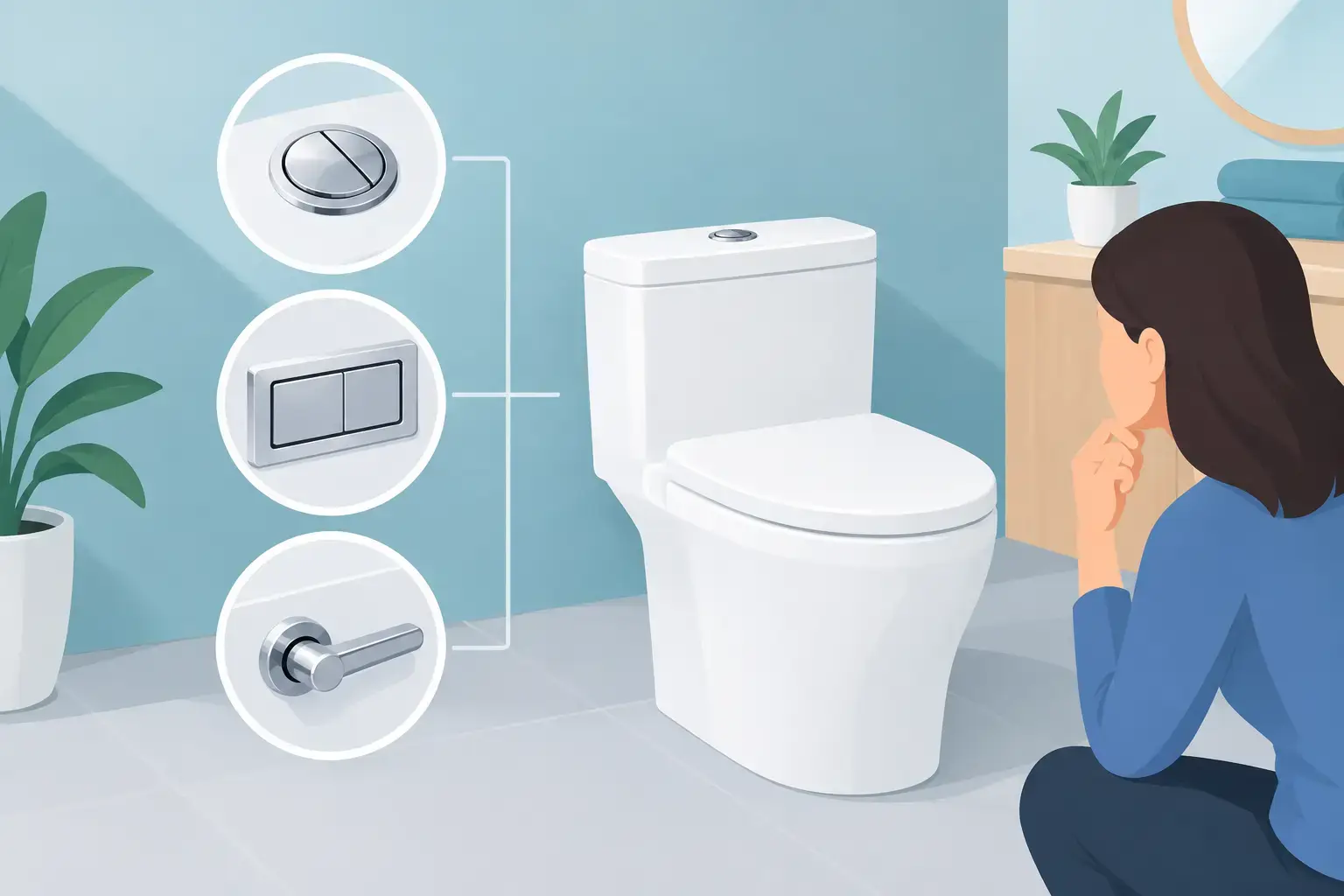
A toilet that flushes once but leaves paper behind, needs a second flush after a normal use, or occasionally threatens to overflow is not doing its job. When homeowners ask how to choose toilet flush performance, the short answer is this: choose a proven gravity-flush toilet with enough bowl wash and waste-moving power for your household, then make sure the toilet fits your bathroom and plumbing rough-in.
The biggest mistake is choosing solely by gallons per flush or by what looks good in a showroom. A 1.28-gallon toilet can outperform an older 1.6-gallon model when its trapway, bowl jets, and flush valve are designed well. The right choice should flush cleanly, refill dependably, fit the people using it, and avoid creating another replacement project a few years from now.
Start With the Flush Problems You Actually Have
Your current toilet tells you a lot about what to buy next. If it clogs repeatedly despite normal use, the issue may be a weak flush pathway, a partially blocked trapway, or an aging toilet with poor internal performance. If the bowl does not clear completely, you may need better rim wash and a more effective bowl-rinse design. If it runs after flushing, that is often a worn flapper or fill valve, but an older toilet with several recurring issues can be a better candidate for replacement than another repair.
A toilet that flushes normally but leaks at the base, rocks on the floor, has cracks in the tank or bowl, or shows persistent staining around the base needs more urgent attention. Those symptoms are not just annoying. They can damage flooring, create odors, and make a bathroom feel less clean to residents, guests, tenants, or potential buyers.
For most Northern Virginia homes, a modern, well-designed gravity toilet is the practical choice. It uses the weight of water from the tank to start the siphon and move waste through the trapway. Gravity toilets are familiar, quiet, easy to service, and available in strong-performing options from Kohler, American Standard, and TOTO.
How to Choose Toilet Flush Power
Flush power is not simply about a loud, dramatic rush of water. In fact, a very noisy flush is not automatically better. What matters is whether the toilet clears the bowl consistently, sends waste through the trapway without clogging, and rinses the bowl surface well enough to reduce leftover streaks.
Look beyond gallons per flush
Federal standards limit most new residential toilets to 1.6 gallons per flush, and many high-efficiency models use 1.28 gallons or less. That lower number can save meaningful water over the life of the toilet, especially in a busy household or rental property. But efficiency only pays off when the toilet clears the bowl on the first try.
A quality 1.28-gallon toilet is often the sweet spot. It provides strong everyday performance while using less water than the older toilets still found in many homes around Fairfax County, Loudoun County, Arlington, and Alexandria. If you are replacing an older 3.5-gallon or 5-gallon toilet, the water-use difference can be substantial.
For a powder room that sees light use, water efficiency may be your main focus. For a primary bathroom serving a family, choose a model known for dependable waste removal and bowl cleaning rather than chasing the lowest possible water number.
Pay attention to the trapway and flush valve
The trapway is the curved internal channel that carries waste from the bowl into the drain. A larger, smoothly glazed trapway generally helps reduce snagging and clogging. The flush valve matters too. A larger valve can release water faster into the bowl, creating a stronger initial flush.
These details are why two toilets with the same gallons-per-flush rating can behave very differently. They are also why replacing only the tank parts will not solve a toilet that has always been underpowered. If the fixture itself has a narrow or poorly performing waste path, it may be time to replace the whole toilet.
Choose single flush or dual flush based on real habits
A single-flush toilet is straightforward: one button or handle, one reliable flush volume. It is often the simplest choice for family homes, rentals, and households where you want guests and tenants to use the toilet without instructions.
Dual-flush toilets offer a lower-volume flush for liquid waste and a full flush for solid waste. They can reduce water use, but they add another operating choice and another set of components. They make sense for homeowners who value water conservation and will use both settings correctly. For a rental turnover or a home being prepared for sale, a high-performing single-flush toilet is frequently the more foolproof option.
Match the Bowl Shape and Height to the Household
Flush performance is only part of a good replacement. Comfort, footprint, and cleaning matter every day.
An elongated bowl projects farther from the wall but gives most adults a more comfortable seating area. It is the common choice for primary and hall bathrooms with enough room. A round-front bowl saves a few inches, which can make a real difference in a compact powder room where the door, vanity, or knee clearance is tight.
Height also changes how a toilet feels. Standard-height toilets sit lower and may be easier for children or shorter adults. Comfort-height models sit closer to chair height and are generally easier for many adults, older homeowners, and people with knee or mobility concerns. There is no universal best height. A comfort-height toilet can be an excellent upgrade, but a very tall seat is not ideal for every person in the home.
Do Not Skip the Rough-In Measurement
Before selecting a toilet, measure from the finished wall behind the toilet to the center of the floor bolts. In most homes, this is a 12-inch rough-in. Ten-inch and 14-inch rough-ins also exist, particularly in older homes or bathrooms with unusual layouts.
This is not a place to guess. A toilet that does not match the rough-in may sit too far from the wall, fail to fit at all, or require a different model. Also measure the available width, the space in front of the bowl, and the tank height if shelving or cabinetry is above it. A toilet can look compact online and still feel oversized once installed in a narrow bathroom.
Consider Cleaning Before You Choose Style
A skirted toilet has smooth sides that conceal the trapway. That means fewer contours around the base where dust collects and fewer awkward places to clean. It can be a worthwhile upgrade for homeowners who are tired of wiping around exposed curves and bolt caps, or for landlords who want a cleaner-looking bathroom between tenants.
The trade-off is cost. Skirted designs are typically more expensive than standard exposed-trapway toilets, and access during installation can differ by model. But for a bathroom renovation, a visible powder room, or a home where easy cleaning is a priority, the cleaner profile can justify the upgrade.
Bowl coating and rim design also deserve attention. A smoother bowl surface can help waste slide away more easily, while a rimless or specially engineered rinse system can reduce the places where grime accumulates. These features do not replace regular cleaning, but they can make a bathroom easier to maintain.
Choose the Right Tier for the Job
The best toilet is not always the most expensive one. A rental property, a home sale, and a long-term primary bathroom have different needs.
An Essential package, starting at $499, is a practical fit when you need a dependable, cost-conscious replacement for a rental, secondary bath, or sale prep. A Performance package, starting at $669, makes sense when stronger day-to-day flushing and more comfort options matter. Signature options start at $799 and are often where homeowners find upgraded designs, easy-clean features, and a more finished look. King’s Throne packages start at $1,049 for buyers seeking premium comfort, aesthetics, and advanced features such as bidet compatibility.
Specific pricing varies by toilet model, bathroom layout, and the features you choose. The useful question is not, “What is the cheapest toilet?” It is, “What replacement will work reliably for this bathroom without creating a new frustration?”
Make Installation Part of the Decision
A toilet can be excellent on paper and still perform poorly if it is not installed correctly. The toilet must sit level, seal properly at the flange, connect cleanly to the water supply, and remain stable on the finished floor. A toilet that rocks even slightly should not be ignored. Repeated movement can eventually compromise the wax seal below.
Professional replacement also removes the practical hassles: getting a heavy fixture home, carrying the old toilet out without scraping walls, and disposing of it legally. For a broken or leaking toilet, speed matters. ToiletKing handles delivery, old-fixture removal, installation, and disposal in one visit, with most replacements completed in under an hour.
If your toilet is clogging, leaking, rocking, or simply no longer fits the bathroom you want, do not let the decision drag on. Call (571) 326-8708 to discuss a replacement and book a free consultation. Ask about promo code FIVEOFF when you are ready to choose a toilet that flushes properly and makes the whole bathroom easier to live with.