
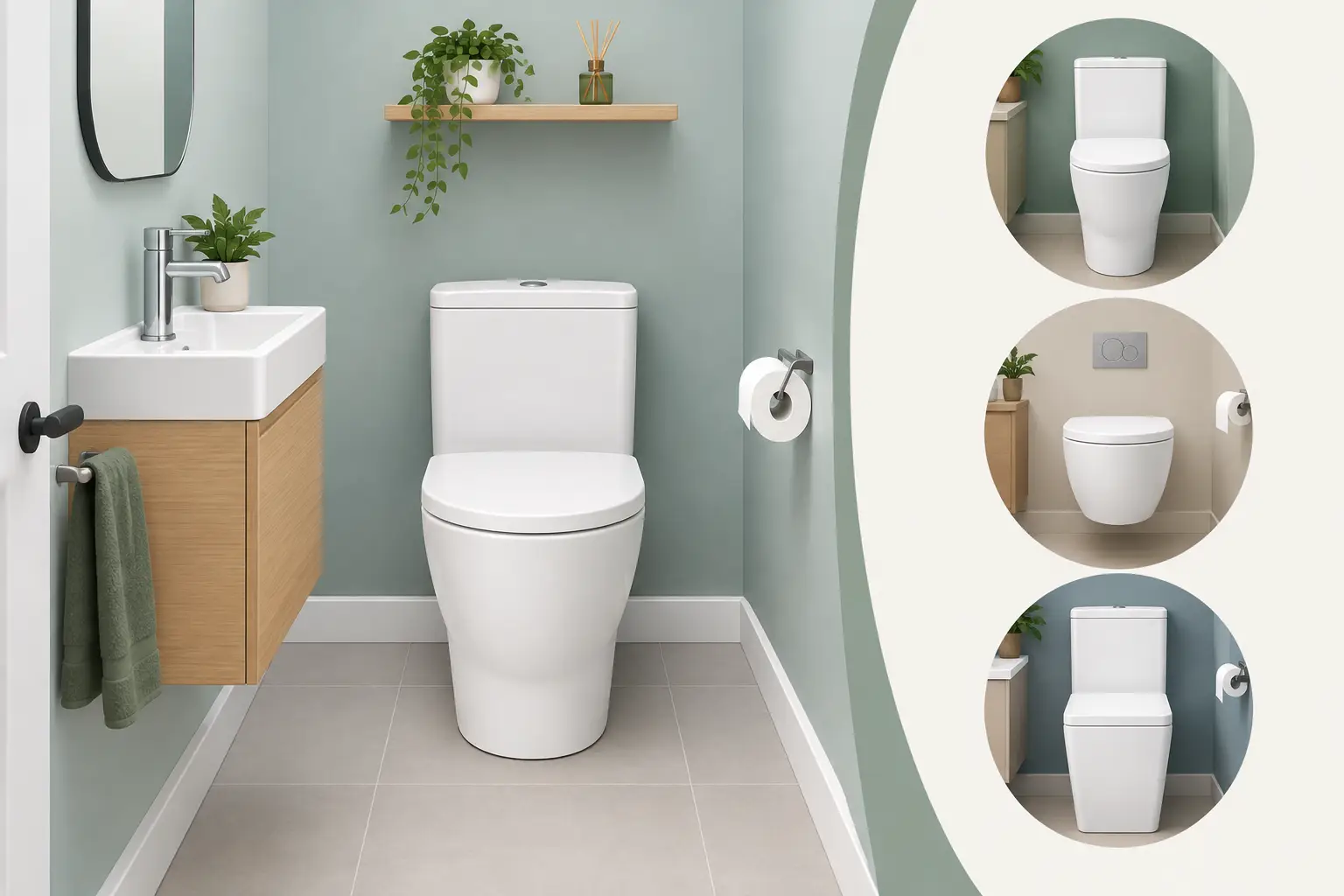
A toilet that sticks too far into a narrow bathroom can make the whole room feel harder to use. The best toilets for small bathrooms are usually compact models with a short projection, but the right choice also depends on bowl shape, rough-in size, seat height, and who uses the bathroom every day.
For most tight powder rooms, hall baths, condos, and rental units, a round-front toilet is the simplest way to gain usable floor space. If you want a more finished look and easier cleaning, a compact elongated or skirted model may be worth the added cost. The key is measuring before you choose – a toilet that looks compact in a showroom can still be too long for the clearance in front of it.
Start With the Space in Front of the Toilet
The most useful measurement is the toilet’s projection: the distance from the finished wall behind the tank to the very front of the bowl. A standard elongated toilet commonly projects around 28 to 31 inches. A compact round-front model may come in closer to 25 to 28 inches. Saving even two inches can be noticeable when the bathroom door nearly hits the bowl or someone has to turn sideways to reach the vanity.
Measure from the finished wall, not the baseboard, to the front edge of your current toilet. Then check the clear path to the door, shower, tub, and vanity. A bathroom can technically fit a toilet while still feeling cramped if the bowl blocks the natural walking path.
Also measure from the back wall to the center of the bolts at the toilet base. This is the rough-in measurement. Twelve inches is the common size in Northern Virginia homes, but 10-inch and 14-inch rough-ins do exist, especially in older homes or bathrooms that have been renovated more than once. Ordering a standard 12-inch toilet for a 10-inch rough-in can create a frustrating gap or prevent a proper installation.
The Best Toilet Styles for Small Bathrooms
Round-front toilets save the most room
Round-front toilets are usually the best practical answer when every inch matters. Their bowls are shorter than elongated bowls, which is why they remain popular for powder rooms, apartment bathrooms, and tight secondary baths. They are also often a sensible choice for landlords and sellers who need a reliable, clean-looking replacement without overspending on a bathroom that is not a main selling feature.
The trade-off is comfort. Taller adults may prefer the extra room provided by an elongated bowl. Round-front models work well in small spaces, but they are not automatically the best fit for every household.
Compact elongated toilets balance comfort and clearance
A compact elongated toilet is designed to provide the familiar shape of an elongated bowl without the full projection of a traditional elongated model. These are good candidates for a primary bathroom with limited depth, or for homeowners who want a more comfortable seat but cannot give up three or four inches of floor space.
Not every compact elongated toilet saves the same amount of space. Compare the actual listed projection, rather than relying on the phrase “compact” alone. A model that measures 28 inches may fit beautifully, while one closer to 30 inches may create the same door-clearance problem as the toilet you are replacing.
Skirted toilets make tight bathrooms easier to clean
Skirted toilets have smooth sides that conceal the trapway instead of exposing the curved passage behind the bowl. In a small bathroom, that design matters because the space around the toilet is usually the hardest spot to clean. There are fewer tight corners around the base, fewer dust-catching ridges, and less visual clutter.
A skirted model will not always be the smallest option, and installation can be more involved depending on the mounting system. Still, homeowners upgrading a small guest bath often find the cleaner profile worth it. It can make a modest bathroom look more intentional without changing the room layout.
Wall-hung toilets free up floor space, with a major catch
A wall-hung toilet keeps the bowl off the floor and places the tank inside the wall. Visually, it can make a small bathroom feel larger because the floor continues underneath the fixture. It is a strong design choice for a full renovation.
It is not usually a simple toilet replacement. The wall must be opened, a carrier frame must be installed, and plumbing often needs to be relocated. For a straightforward replacement, a compact floor-mounted toilet is typically faster, less disruptive, and more budget-friendly.
Bowl Height Matters as Much as Bowl Length
A compact toilet can have the right projection and still feel wrong if the height does not suit the people using it. Standard-height toilets generally sit lower, while comfort-height models sit closer to chair height. Comfort height can be easier for many adults, older family members, and anyone who has trouble standing from a lower seat.
In a children’s bathroom or a small half bath used by guests, standard height may be perfectly comfortable. In a main-floor bathroom used by parents or grandparents, comfort height is often the better daily choice. There is no universal winner – it depends on the users, not just the room dimensions.
When comparing toilet height, check whether the listed measurement includes the seat. Two models labeled similarly can feel noticeably different once the seat is installed.
Do Not Sacrifice Flushing Performance for a Smaller Footprint
Small bathrooms need toilets that work the first time. A weak flush is especially aggravating in a powder room where guests may be within earshot of the living area. Modern water-efficient toilets can use 1.28 gallons per flush while still delivering dependable performance, provided the bowl design and flush system are well engineered.
Look for a toilet from an established manufacturer such as Kohler, American Standard, or TOTO. The right model should clear the bowl consistently, refill normally, and avoid the recurring issues that lead people to replace a toilet in the first place: frequent clogs, phantom refilling, water around the base, or a handle that must be held down to complete a flush.
A toilet that rocks at the floor, leaks from the tank bolts, or has hairline cracks around the base should not be ignored just because it still flushes. Water can quietly damage flooring and subflooring long before a bathroom develops an obvious puddle.
One-Piece vs. Two-Piece in a Tight Bathroom
One-piece toilets combine the tank and bowl into a single unit. They have fewer exterior seams, tend to be easier to wipe down, and often give a small bathroom a cleaner, more upgraded appearance. The trade-off is that they can cost more and are heavier to maneuver into place.
Two-piece toilets have a separate tank and bowl. They are common, dependable, and available in many compact configurations. They can be a practical fit for rental properties, home sales, or a secondary bathroom where straightforward value matters most.
The best choice is not always the most expensive one. A well-sized two-piece toilet with a reliable flush can be a better investment than a premium one-piece model that compromises door clearance or does not match the needs of the household.
What Toilet Replacement Really Involves
Replacing a toilet in a small bathroom is not only about setting a new fixture on the floor. The old toilet has to be disconnected, carried out without scraping walls or flooring, and disposed of legally. The new toilet must sit level, seal correctly at the flange, connect without leaks, and be tested before the job is finished.
Small bathrooms add their own challenges. There may be little turning room for the fixture, tight access around a vanity, older shutoff valves, uneven tile, or a flange that sits too high or too low after a flooring update. Those details affect the work and can affect the final cost.
For homeowners in Fairfax County, Loudoun County, and throughout Northern Virginia, ToiletKing simplifies the decision with curated options across four package tiers. Essential packages start at $499, Performance packages start at $669, Signature packages start at $799, and King’s Throne packages start at $1,049. Specific pricing varies by toilet model, but the package approach includes delivery, removal of the old fixture, installation, and disposal – not a separate run to the store, a separate delivery appointment, and an old toilet left in the driveway.
A small bathroom does not need a tiny, uncomfortable toilet. It needs a toilet that fits the actual room, clears the door, flushes reliably, and is easy to live with afterward. To talk through the right replacement, call ToiletKing at (571) 326-8708 or book a free consultation at ToiletKingVA.com. Use promo code FIVEOFF when applicable.