
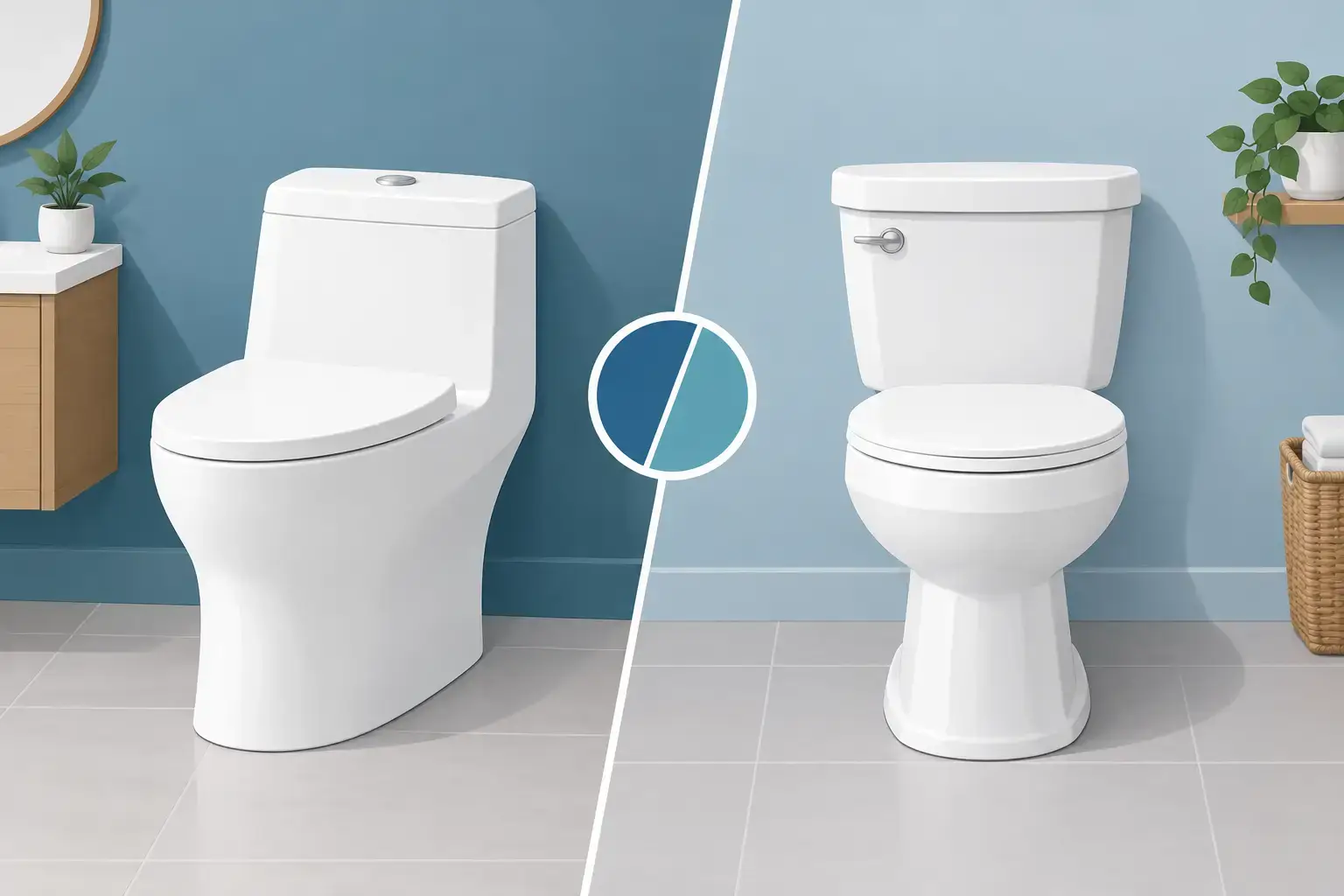
A toilet can look fine from across the bathroom and still be the source of a recurring leak, a weak flush, or an impossible-to-clean strip of grime behind the tank. When replacement time comes, one piece vs two-piece toilets is one of the first decisions homeowners face. The short answer: two-piece models are usually the practical, budget-conscious choice, while one-piece models cost more but offer a cleaner look and easier exterior cleaning.
The right answer depends on the bathroom, who uses it, and what you want from the replacement. A rental property or home headed for sale may need a dependable, familiar two-piece toilet. A primary bathroom renovation may be worth the upgrade to a one-piece or skirted design that makes weekly cleaning less of a chore.
One Piece vs Two-Piece Toilets at a Glance
A two-piece toilet has a separate tank and bowl. It is the traditional toilet design found in most Northern Virginia homes, and it remains popular because it is widely available, straightforward to transport, and generally less expensive.
A one-piece toilet has the tank and bowl molded into one continuous unit. There is no joint where the tank bolts to the bowl, giving it a lower-profile, more modern appearance. Many one-piece toilets are also easier to wipe down because there are fewer seams, bolt caps, and hard-to-reach edges.
Neither style automatically flushes better. Flush performance comes down to the specific model, trapway design, water use, and flushing technology. You can find excellent-performing toilets in both categories from Kohler, American Standard, and TOTO.
Why Two-Piece Toilets Remain the Default Choice
For many homes, a two-piece toilet is the sensible replacement. It gives you the most choices in height, bowl shape, flushing power, and price. If you are replacing a standard toilet in a hall bath, guest bath, rental, or home you plan to list soon, a quality two-piece model often checks every box without adding cost for features you may not need.
The separate components also matter on installation day. A tank and bowl can be carried into a tight bathroom individually. That can be useful in older homes with narrow staircases, sharp turns, or small powder rooms. The finished installation is still secure and clean, but the fixture is easier to handle before it is assembled.
The main trade-off is cleaning. The connection between the tank and bowl creates a horizontal ledge that catches dust. The exposed curves around the base, water line, and floor bolts can also take more effort to scrub. If you have ever tried to clean around the back of a conventional toilet base, you know why this becomes a deciding factor.
Two-piece toilets also have a tank-to-bowl gasket and mounting bolts. Those parts can eventually need attention on an older fixture. A slow leak at that connection often shows up as mineral streaks down the back of the bowl, moisture below the tank, or a musty smell that returns after cleaning. That does not mean every two-piece toilet is leak-prone. It simply has one more connection than a one-piece design.
When a One-Piece Toilet Is Worth the Higher Price
A one-piece toilet is often the better fit when easy cleaning and appearance are high priorities. Its continuous body eliminates the tank-to-bowl seam, so there is less hardware and fewer crevices to collect dust. For busy households, that is a practical advantage, not just a design preference.
These toilets also tend to look more intentional in an updated bathroom. A compact one-piece model can work particularly well in a smaller bathroom where a bulky tank makes the room feel crowded. Some models have a concealed trapway or skirted base, which hides the bends and openings normally visible along the side of the toilet.
The trade-off is upfront cost. One-piece toilets commonly cost more than comparable two-piece models, and their fully assembled construction makes them heavier and more awkward to carry into place. In a small bathroom, installers need to protect finished floors, walls, and vanity corners while maneuvering a heavier fixture. That is one reason professional delivery and installation can make the process much easier.
A one-piece design also does not eliminate every possible leak. The fill valve, flush valve, supply line, wax ring, and shutoff valve still deserve attention during replacement. The difference is that it removes the gasketed connection between the tank and bowl.
Cleaning Is Often the Real Deciding Factor
Customers sometimes begin by comparing price, then change their minds when they consider the cleaning routine. A conventional two-piece toilet has more contours around the base and a gap behind the tank. A smooth one-piece toilet, especially a skirted one, gives you broad surfaces that wipe clean quickly.
That can be especially valuable in a main bathroom, homes with young children, or properties where appearance matters for showings. It is less critical in a rarely used basement bathroom where a reliable standard toilet may be the better value.
Fit Matters More Than Most People Expect
Before choosing either style, confirm that the toilet will fit the room and connect correctly to the existing plumbing. The rough-in measurement – the distance from the finished wall behind the toilet to the center of the drain – is the first thing to verify. Twelve inches is common, but 10-inch and 14-inch rough-ins exist, especially in older homes.
Also consider bowl shape. An elongated bowl is generally more comfortable, but it extends farther into the room. In a tight water closet or powder room, a round-front bowl may preserve needed knee clearance. The difference can be just a couple of inches, but those inches matter when a door barely clears the bowl or a vanity sits close by.
Seat height is another everyday comfort issue. Standard-height toilets feel lower and may suit shorter users or children. Comfort-height toilets sit closer to chair height and are easier for many adults, older homeowners, and anyone with knee or mobility concerns. Both one-piece and two-piece toilets are available in comfort-height options.
Cost: Look Beyond the Fixture Price
A low fixture price does not tell you what a replacement will actually cost. A complete toilet replacement may involve delivery, carrying the new fixture into the home, disconnecting and removing the old unit, installing a new seal and supply connection, testing for leaks, and legally disposing of the old porcelain.
There can also be bathroom-specific factors. A damaged flange, soft flooring around the base, a corroded shutoff valve, or an unusually tight installation space can change the scope. Good installers identify those issues before treating the job as a simple swap. A toilet that rocks, has discoloration around the base, or leaves a brown water mark on the ceiling below should not be ignored while you shop.
For homeowners who want predictable pricing, ToiletKing offers bundled replacement packages that include delivery, removal, installation, and disposal. Essential options start at $499, Performance starts at $669, Signature starts at $799, and King’s Throne options start at $1,049. Specific pricing varies by toilet model and the features you choose.
Which Style Should You Choose?
Choose a two-piece toilet when you want the best range of dependable options at a lower starting cost, need a practical replacement for a rental or resale property, or have access constraints that make a fully assembled fixture difficult to bring inside.
Choose a one-piece toilet when you want fewer exterior seams, faster cleaning, and a more updated appearance. It is particularly appealing for a primary bathroom where the toilet gets daily use and the extra investment will be noticed every week.
If the old toilet is leaking at the base, constantly running, cracking, flushing poorly, or simply making the bathroom look dated, you do not have to coordinate a retailer, delivery service, installer, and disposal pickup. For homeowners in Fairfax County, Loudoun County, and across Northern Virginia, ToiletKing can help match the toilet to your bathroom and complete the replacement in under an hour. Call (571) 326-8708 or book a free consultation at ToiletKingVA.com. Use promo code FIVEOFF when applicable, and get the old fixture out of the way without letting a toilet problem take over your day.