
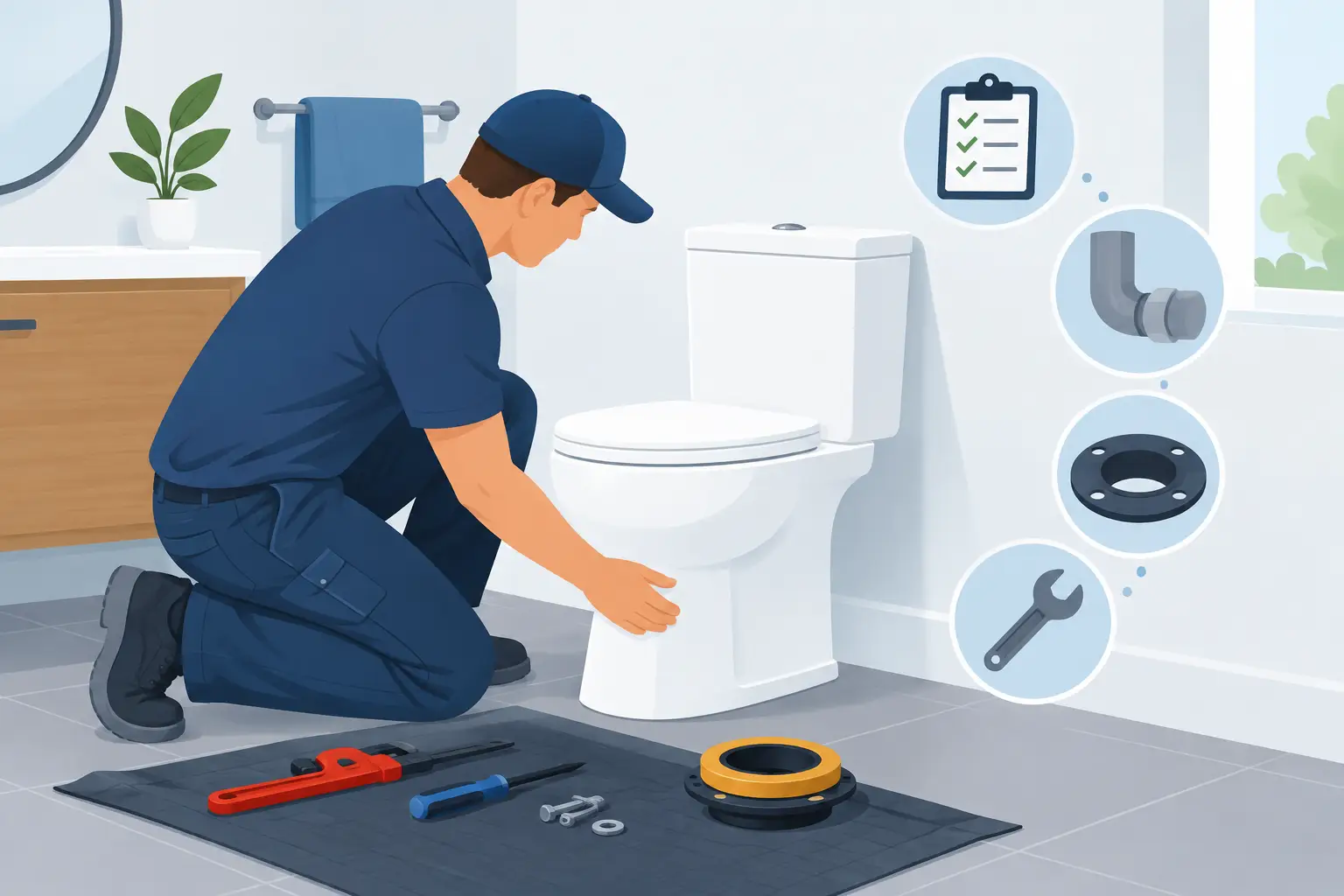
A toilet replacement should be a contained, one-visit job. Yet homeowners often discover a problem only after the old toilet is pulled: the new model does not fit the wall clearance, the floor is soft around the flange, or the quoted price did not include removal and disposal. Knowing how to avoid installation surprises starts with checking the details that are hidden by the toilet itself – before installation day.
For most homes in Fairfax County, Loudoun County, and Northern Virginia, the answer is not complicated. Measure the space correctly, choose a toilet that fits the existing plumbing, confirm what the price includes, and have an installer assess any warning signs around the base. A clear plan prevents the familiar mid-project question: “What happens now?”
Start With the Measurements That Actually Matter
The biggest fit issue is the rough-in measurement. This is the distance from the finished wall behind the toilet to the center of the drainpipe bolts. A 12-inch rough-in is common, but older homes may have a 10-inch or 14-inch rough-in. A toilet designed for the wrong rough-in can sit too far from the wall, leave an awkward gap, or simply not fit.
Do not measure from the baseboard. Measure from the finished wall. Baseboards, tile wainscoting, and thick trim can add enough depth to make a close-fitting toilet look wrong or create a clearance problem.
The room also needs enough space in front of the bowl and on each side. This matters especially when moving from an older round-front toilet to an elongated model. Elongated bowls are generally more comfortable for adults, but they extend farther into the room. In a tight powder room, that extra length can interfere with a door swing or make the space feel cramped.
Height is another decision worth making before the truck arrives. Standard-height toilets tend to work well for children or shorter household members. Comfort-height models sit a few inches taller and are often easier for adults, older homeowners, and anyone with limited knee mobility. Neither is automatically better. The right choice depends on who uses the bathroom and how much clearance the room allows.
Check for Signs the Job May Be More Than a Simple Swap
Most toilet replacements are straightforward, but the floor and connection beneath an old toilet deserve attention. A toilet that rocks when you sit down is not just annoying. It can mean loose mounting bolts, a failed wax seal, a damaged flange, or flooring that has deteriorated from a slow leak.
Look for staining at the base, a soft or spongy floor, grout cracks around the toilet, or a persistent sewer-like odor. Also pay attention to water that appears around the base after flushing. Condensation can create moisture on the tank during humid weather, but water at the floor line is different and should be investigated before a new toilet is installed.
A rusty shutoff valve or a stiff supply line can also change the scope of work. The valve is usually hidden behind the bowl until replacement day. If it does not turn reliably or leaks when operated, it may need to be addressed before the new toilet can be connected safely. A good installer explains that possibility upfront rather than treating it as an unexplained add-on after the old fixture is removed.
How to Avoid Installation Surprises in the Quote
A low toilet price is not the same as a complete toilet replacement price. Many homeowners price a toilet at a big-box store, then separately need delivery, installation labor, an old-fixture haul-away plan, and a way to dispose of porcelain legally. By the time those pieces are added, the project can cost more and take longer than expected.
Ask for a package price that clearly states what is included. At minimum, confirm the toilet model, delivery, removal of the existing toilet, installation materials, installation labor, testing, cleanup, and disposal. If the price is listed as a starting price, ask what causes it to vary. The answer may be the toilet model, bowl shape, height, flushing system, or design features such as a skirted base.
Skirted toilets are a good example of a useful trade-off. Their smooth sides hide the trapway, making them much easier to wipe down than a traditional exposed base with curves and bolt caps. They can also give a bathroom a cleaner, more updated look. But some skirted models use a more specialized connection system, and their price is often higher than a basic two-piece toilet.
For a rental property or a home being prepared for sale, a dependable, efficient standard model may be the practical choice. For a primary bathroom, it may be worth paying more for comfort height, a stronger flush, easier cleaning, or bidet compatibility. The important part is choosing intentionally, not finding out after delivery that the lower-priced option leaves out the feature you wanted.
Choose the Toilet Before Installation Day
Toilet selection should be based on more than color and price. Flush performance, water use, bowl shape, seat height, and ease of cleaning affect daily use long after installation is complete.
Modern water-efficient toilets use far less water than many older models while still providing strong flushing. That can make sense when replacing a toilet that clogs often, runs intermittently, or needs repeated double flushing. A weak flush is not always caused by the toilet itself, but if the fixture is old, stained, cracked, or hard to keep clean, replacement is often the more sensible route.
Brand and model matter too. ToiletKing installs curated options from Kohler, American Standard, and TOTO because replacement work goes better when the toilet, connection parts, and installation requirements are known in advance. This avoids the common problem of ordering a toilet online, receiving it damaged or incomplete, and discovering that the necessary parts are not in the box.
A complete service should also confirm that the fixture will be inspected and tested before the installer leaves. The toilet should be level, firmly secured, filled correctly, flushed more than once, and checked at the base and supply connection for leaks. Those checks take only a few minutes, but they are what separate a toilet that merely looks installed from one that is ready for normal use.
Prepare the Bathroom Without Creating Extra Work
Homeowners do not need to do demolition or disconnect plumbing before a scheduled replacement. In fact, forcing an old shutoff valve or trying to loosen corroded bolts can create a leak before help arrives.
What does help is clearing the path from the entry to the bathroom, removing rugs and personal items around the toilet, and making sure pets are secured. If the bathroom is in a condo, apartment, or managed property, check any building rules for service access, elevators, parking, or disposal timing. Those details can delay an otherwise quick replacement.
If you are a landlord or property manager, send the installer clear access instructions and make sure someone can approve a replacement decision if an unexpected condition is found. A cracked bowl or leaking tank can be urgent, but a damaged flange or soft floor may require a separate decision before the new toilet is set. Clear authorization avoids a tenant being left without a working bathroom while messages are being exchanged.
Know When Replacement Is the Better Call
A running toilet can sometimes be repaired, but replacement becomes more practical when repairs keep piling up. Hairline cracks in porcelain, a tank that sweats heavily, chronic clogging, a toilet that rocks, and repeated leaks at the base are all signs that the fixture may be nearing the end of its useful life.
Replacement can also be a planned upgrade. A dated low-profile toilet, an uncomfortable short bowl, or a hard-to-clean exposed trapway may work, but that does not mean it is serving the household well. Replacing it on your schedule gives you more choice than waiting for a failure on a weekend or during a home sale inspection.
The easiest way to avoid surprises is to treat toilet replacement as a full service, not a product purchase. Confirm the fit, understand the package, tell the installer about any rocking or moisture around the base, and choose the features that make sense for the room. That preparation turns a stressful bathroom problem into a short, predictable appointment.
If your toilet is leaking, loose, outdated, or simply no longer worth repairing, call ToiletKing at (571) 326-8708 to schedule a free consultation. Ask about current package options and use promo code FIVEOFF where applicable. A broken toilet does not have to take over your day.