
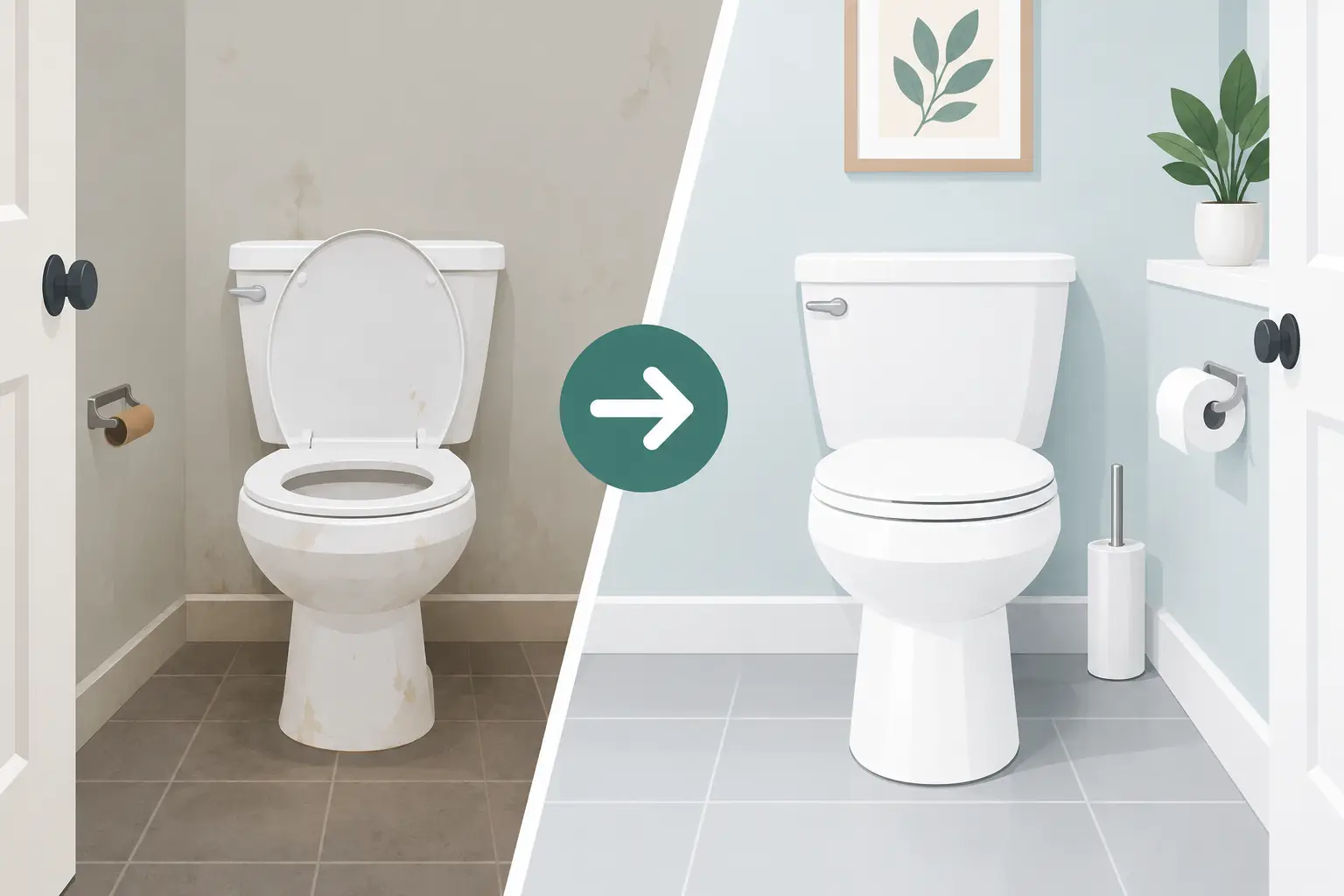
A rental turnover toilet example usually starts with a call nobody wants during a tight move-out window: the toilet rocks, the tank sweats, the bowl is stained beyond cleaning, or the flush is weak enough that a new tenant will notice on day one. For most landlords, the right answer is not to repair every aging part. It is to install a dependable, water-efficient toilet that looks clean, flushes consistently, and does not create another maintenance ticket next month.
The practical rental turnover toilet example
Picture a two-bathroom condo in Reston between tenants. The hall bath has a 15-year-old round-front toilet. It flushes, but it needs a second flush for paper, the tank handle sticks occasionally, and the base shifts slightly when someone sits down. The bowl has a permanent gray ring under the waterline, and the seat hinges are yellowed.
A landlord could replace the flapper, handle, seat, and wax ring, then scrub the bowl and hope the weak flush is acceptable. That approach may cost less today, but it leaves an old fixture in service with several known complaints. If the fill valve begins running after the new tenant moves in, someone has to schedule another visit, coordinate access, and deal with a preventable interruption.
For this turnover, a basic elongated, comfort-height toilet is usually the better choice. It gives the bathroom a more current look, is easier for many adults to use than a low round bowl, and provides a stronger, more reliable flush than the aging fixture. The old toilet is removed, the new unit is delivered and installed, the base is secured, and the old fixture is taken away for legal disposal. The property is ready for photos, showings, or move-in without a toilet sitting in the garage.
That is a good rental replacement because it solves the actual turnover problem: reliable function with a clean, predictable finish. It does not over-improve one bathroom while ignoring the owner’s budget for paint, flooring, cleaning, and other make-ready work.
When replacement makes more sense than a repair
Not every worn toilet needs to be replaced. A newer toilet with a leaking flapper, loose seat, or faulty fill valve can often be put right. But in rental properties, the condition of the fixture matters as much as the single failed part.
Replacement is often the smarter call when the bowl is etched or permanently stained, the porcelain is cracked, the toilet rocks at the floor, or the tank-to-bowl hardware is badly corroded. A rocking toilet deserves prompt attention. It can mean the mounting bolts have loosened, the toilet was not properly supported, or the seal below the toilet has been disturbed. Left alone, it can damage flooring and allow odors or moisture to escape around the base.
Repeated clogs are another turnover clue. Sometimes the issue is a blockage in the drain line, which a new toilet will not fix. But an older low-performance toilet with a narrow trapway or weak flush may be the reason tenants keep reaching for the plunger. If the toilet is old, unattractive, and unreliable, replacing it is generally more practical than rebuilding it piece by piece.
Water use also changes the math. Older toilets may use far more water per flush than a modern high-efficiency model. In a property where the owner pays water, or where there are several bathrooms and frequent occupancy changes, that ongoing waste is worth considering.
Choosing the right toilet for a turnover budget
The best toilet for a rental is not automatically the cheapest model available, and it is not always the most upgraded model either. The right choice depends on the property, tenant expectations, and whether the owner is preparing for a standard lease, a premium rental, or a sale.
For many turnovers, ToiletKing’s Essential package, starting at $499 depending on the toilet model, fits the job well. It is designed for owners who need a functional replacement without turning a single bathroom fixture into a major project. A well-chosen Essential toilet can be the sensible answer for a clean, dependable unit in a typical rental.
A Performance option, starting at $669, may make more sense when flush performance is the main concern or when the bathroom gets heavier use. In a larger family rental, a toilet that clears the bowl well can reduce those frustrating “it clogged again” messages.
For a newer townhome, an upscale condo, or a rental competing at the top of its local market, a Signature package starting at $799 can be worth considering. Better styling and easier-clean features can help the bathroom show better between tenants. King’s Throne options, starting at $1,049, are generally for owners who want a premium fixture, upgraded design, or specific comfort and feature considerations.
The tier is only part of the decision. Price varies by the exact toilet model within each package, so an upfront recommendation should account for bowl shape, height, flushing needs, and the existing bathroom layout.
Round bowl or elongated bowl?
Round bowls save a few inches in a tight powder room or narrow hall bath. If the existing toilet sits close to a vanity or door swing, measure before choosing an elongated model. An elongated bowl is usually more comfortable and familiar to adult tenants, but only if the room has enough clearance.
Standard height or comfort height?
Comfort-height toilets sit a little taller and are often easier for adults, older residents, and anyone with knee or mobility concerns. They are a strong default for many rentals. Standard-height toilets can still be appropriate in a bathroom used primarily by small children or where matching existing fixtures matters.
Skirted or standard exposed-trapway design?
A skirted toilet has smooth sides that hide the bends and contours of the trapway. It is easier to wipe down, which is attractive for a higher-end rental or sale preparation. A conventional exposed-trapway toilet is usually more budget-friendly and remains a practical choice for a straightforward turnover.
Inspect the floor before scheduling the install
The toilet is only one part of the turnover decision. Before replacement, look closely at the area around its base. Soft vinyl, swollen laminate, dark staining, a persistent sewer odor, or dried discoloration at the back edge can point to prior leakage. A toilet may look fine from above while the flooring underneath tells a different story.
Also check the shutoff valve. If it is seized, corroded, or dripping when touched, that can affect the work involved. A professional installer should identify visible concerns before setting a new toilet rather than forcing a fresh fixture onto a questionable connection.
Measure from the finished wall behind the toilet to the center of the floor bolts when possible. Most homes use a standard rough-in measurement, but older properties and certain bathroom layouts can differ. This small check helps avoid ordering a toilet that does not fit the existing drain position.
Why bundled replacement helps during a turnover
Turnovers have a deadline. The cleaning crew may be waiting, painters may be scheduled, listing photos may be booked, and a new lease may begin in days. Coordinating a retailer delivery, a plumber, and a disposal plan for an old porcelain toilet creates more opportunities for delay.
A bundled replacement keeps the job simple: select the toilet, have it delivered, remove the old fixture, install the replacement, and take away the debris. For Fairfax County, Loudoun County, and Northern Virginia owners managing properties from a distance, that one-visit approach is often as valuable as the fixture itself.
A typical replacement can be completed in under an hour when the existing setup is straightforward and the correct toilet is on hand. That does not mean every bathroom is identical. Hidden floor damage, a problematic shutoff valve, unusual rough-in dimensions, or a toilet that has been cemented or improperly installed can add time. But those are exactly the situations where clear communication before and during the visit matters.
A simple standard for rental-ready bathrooms
A rental toilet should be stable, cleanable, efficient, and ordinary in the best sense of the word. Tenants should not have to jiggle a handle, wait for a tank to stop running, or wonder why the base moves. Owners should not have to spend the first week of a new lease responding to a problem that was visible at turnover.
If your fixture is showing its age, ToiletKing can help you choose a replacement package and handle delivery, removal, installation, and disposal in one visit. Call (571) 326-8708 for a free consultation, and use promo code FIVEOFF when applicable. A clean, reliable toilet is one of the smallest turnover decisions that can prevent an outsized headache later.