
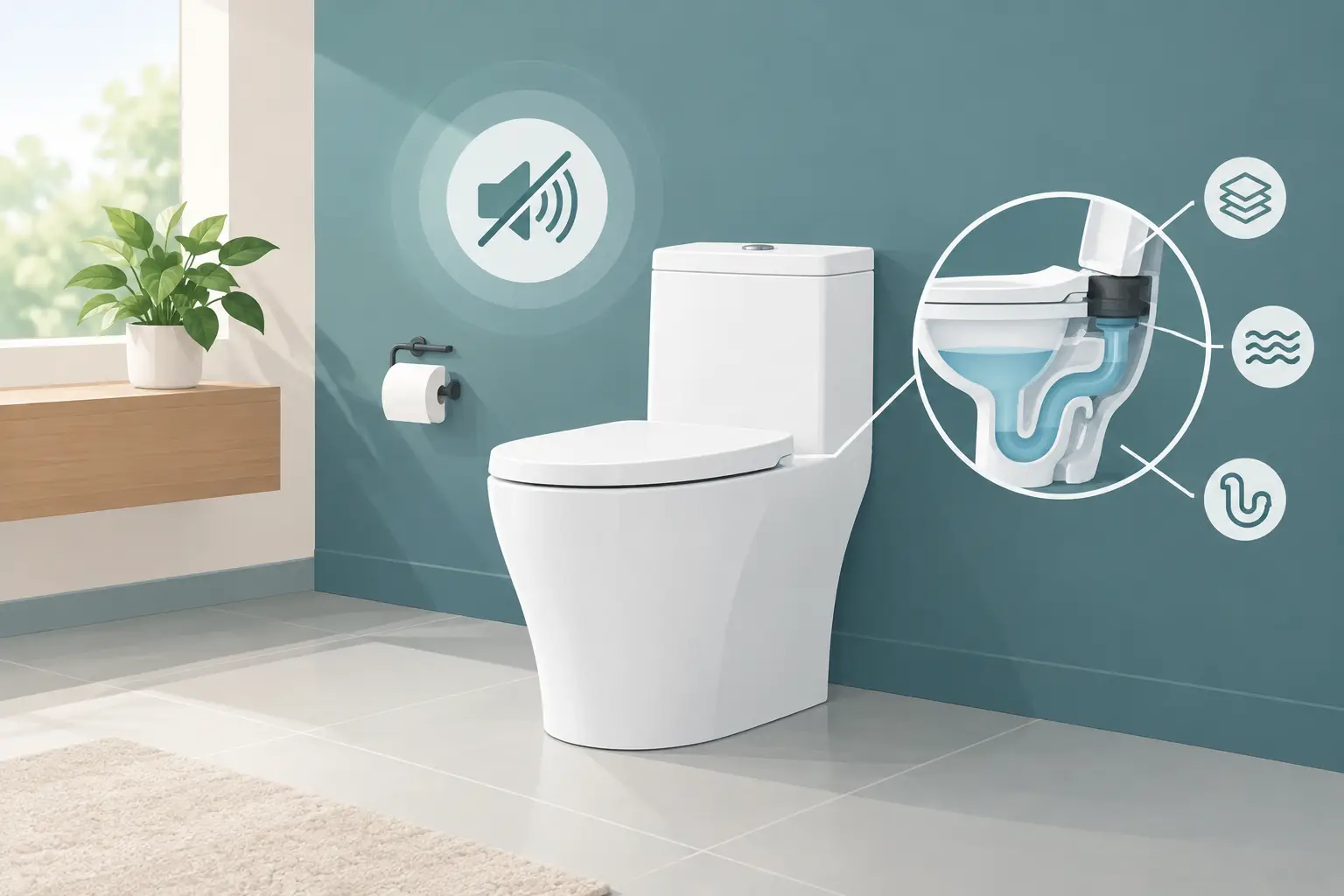
A toilet that sounds like a freight train at 2 a.m. can make a small bathroom feel even smaller. Quiet toilets can make a real difference in bedrooms near bathrooms, shared homes, condos, and rental properties, but a quiet flush is not simply about buying the lowest-decibel model on the shelf. The tank, fill valve, drain layout, installation, and condition of the existing plumbing all affect what you hear.
For most homeowners, the best answer is a modern, efficient toilet with a controlled flush and a quality fill valve. If your current toilet groans while filling, bangs after flushing, whistles intermittently, or sends water rushing through the pipes long after use, replacement may be the cleaner solution than continuing to live with the noise.
What Makes a Toilet Quiet?
The loudest part of an older toilet is often not the flush itself. It is the refill cycle. Older fill valves can hiss, squeal, chatter, or produce a sharp spray sound as the tank refills. A worn valve may also take several minutes to shut off completely, especially if mineral buildup is affecting the internal parts.
Modern toilets typically use better-designed fill valves that refill more evenly and shut off cleanly. You will still hear water moving – a toilet cannot flush silently – but the sound is shorter, more controlled, and less disruptive. In practical terms, the difference is often between a quick, contained whoosh and a flush that seems to echo through the hallway.
The bowl and trapway design matter too. A well-engineered toilet moves waste efficiently without requiring a long, turbulent flush. This is one reason toilet design matters more than a simple gallons-per-flush number. A weak low-flow toilet can be noisy because it needs repeat flushing. A newer water-efficient model with strong bowl wash can use less water and get the job done the first time.
Tank insulation helps with condensation, not usually noise
Some toilets have insulated tanks. This feature is useful in humid bathrooms because it reduces tank sweating, the condensation that can drip onto flooring. It does not usually transform the flush volume. If quiet operation is your goal, prioritize the flushing system and fill valve over tank insulation.
Bathroom construction changes what you hear
A toilet in a first-floor powder room with a concrete slab will sound different from one upstairs beside a nursery. Hardwood floors, open floor plans, thin interior walls, and bedrooms directly below a bathroom can all make ordinary plumbing noise more noticeable.
That does not mean you need a major renovation. It means setting realistic expectations. A quieter toilet can reduce the sound created at the fixture, but it cannot completely eliminate water noise traveling through old drain lines inside a wall.
Signs Your Current Toilet Is No Longer Quiet Enough
A single loud flush is not always a replacement issue. A refill valve can sometimes be adjusted or replaced. But when the noise comes with age, poor performance, or visible wear, a new toilet is often the more sensible investment.
Watch for these common signs: a high-pitched squeal as the tank fills, random refilling when no one has used the toilet, a persistent hissing sound, clanking from the tank hardware, repeated flushing to clear the bowl, or a flush that ends with gurgling. Homeowners also notice that older toilets often develop a rougher, louder sound over time as internal components wear down.
A toilet that rocks at the base, leaks around the floor, has hairline cracks in the porcelain, or needs frequent internal repairs should not be judged on noise alone. Those are replacement signs. In a rental property or a home being prepared for sale, installing a modern toilet can solve the noise complaint while also improving appearance and water efficiency.
Quiet Toilets vs. Quiet-Close Seats
These terms are easy to confuse. A quiet toilet refers to the sound of flushing and refilling. A quiet-close or soft-close seat refers to the lid and seat lowering slowly instead of slamming.
A soft-close seat is worth considering in almost any household. It prevents the sharp bang of a dropped lid, which is often more startling than the flush itself. It is especially useful for families with children, late-night bathroom trips, and properties where durability and a cleaner look matter.
Still, a soft-close seat does not fix a noisy fill valve or a weak flushing system. If your toilet wakes people up during the refill cycle, focus on the toilet mechanics first.
Choosing a Quieter Replacement Toilet
There is no single “quietest toilet” that fits every bathroom. The best choice depends on your rough-in measurement, bathroom layout, budget, preferred height, and the type of flushing performance you need.
A standard 12-inch rough-in is common in Northern Virginia homes, but it should always be confirmed before ordering. The rough-in is the distance from the finished wall behind the toilet to the center of the drain opening. Choosing a toilet without checking this measurement can create an installation problem before the new fixture ever enters the bathroom.
Comfort-height toilets are another consideration. Their seat height is similar to a chair, which many adults, older residents, and taller homeowners find easier to use. Standard-height toilets can work well in smaller bathrooms or homes with young children. Height does not determine noise, but it does determine whether the new toilet feels right every day.
For homeowners who want a cleaner, more updated bathroom, skirted toilets are worth a look. Their smooth sides cover the trapway, eliminating the curved porcelain areas that collect dust and make cleaning awkward. They can be quieter in operation depending on the model, but their main advantage is easy cleaning and a more finished appearance.
ToiletKing installs curated Kohler, American Standard, and TOTO toilet options. The Essential tier starts at $499 for a dependable, functional replacement. Performance options start at $669, while Signature toilets start at $799 for customers who want upgraded features and design. King’s Throne options start at $1,049 and can make sense for a bathroom upgrade where comfort, appearance, easy cleaning, or bidet compatibility are priorities. Pricing varies by the specific toilet model and installation requirements.
Do You Need a New Toilet or Just a New Fill Valve?
If the toilet is relatively new, flushes well, sits firmly on the floor, and has no cracks or leaks, a fill valve issue may be isolated. A plumber or qualified toilet technician can determine whether the noise is coming from the valve, supply line, shutoff valve, or something beyond the fixture.
Replacement becomes more practical when the toilet has multiple problems at once. For example, a 20-year-old toilet that is loud, uses excessive water, stains easily, requires two flushes, and has a loose seat may not be worth repeatedly repairing. The small repair costs add up, and you still end up with an outdated fixture.
A new installation also gives you a fresh wax seal, secure mounting, new supply connection where appropriate, and the peace of mind that the old toilet is removed and legally disposed of. That matters when the existing toilet has been leaking slowly at the base, even if the leak is not obvious every day.
Installation Details That Affect Noise and Performance
A good toilet can still disappoint if it is installed poorly. The toilet needs to sit level and solidly on the finished floor. It should not rock when someone sits down, and the tank hardware and water connection should be properly checked before the installer leaves.
The installer should also test the flush and refill cycle. This is where unusual sounds become obvious. A controlled refill, proper water level, and clean shutoff are signs that the new toilet is functioning as it should.
For homeowners in Fairfax County, Loudoun County, Arlington, Alexandria, and nearby Northern Virginia communities, a focused replacement service can remove much of the hassle. Rather than arranging delivery, finding someone to install the fixture, and figuring out how to dispose of heavy porcelain, the entire replacement can be handled in one visit. ToiletKing delivers the new toilet, removes the old one, installs the replacement, and handles disposal, with most installations completed in under an hour.
If a loud, unreliable toilet is disrupting your home, you do not have to keep troubleshooting it one noisy flush at a time. Call ToiletKing at (571) 326-8708 to schedule a free consultation, and ask about promo code FIVEOFF when selecting your replacement.