
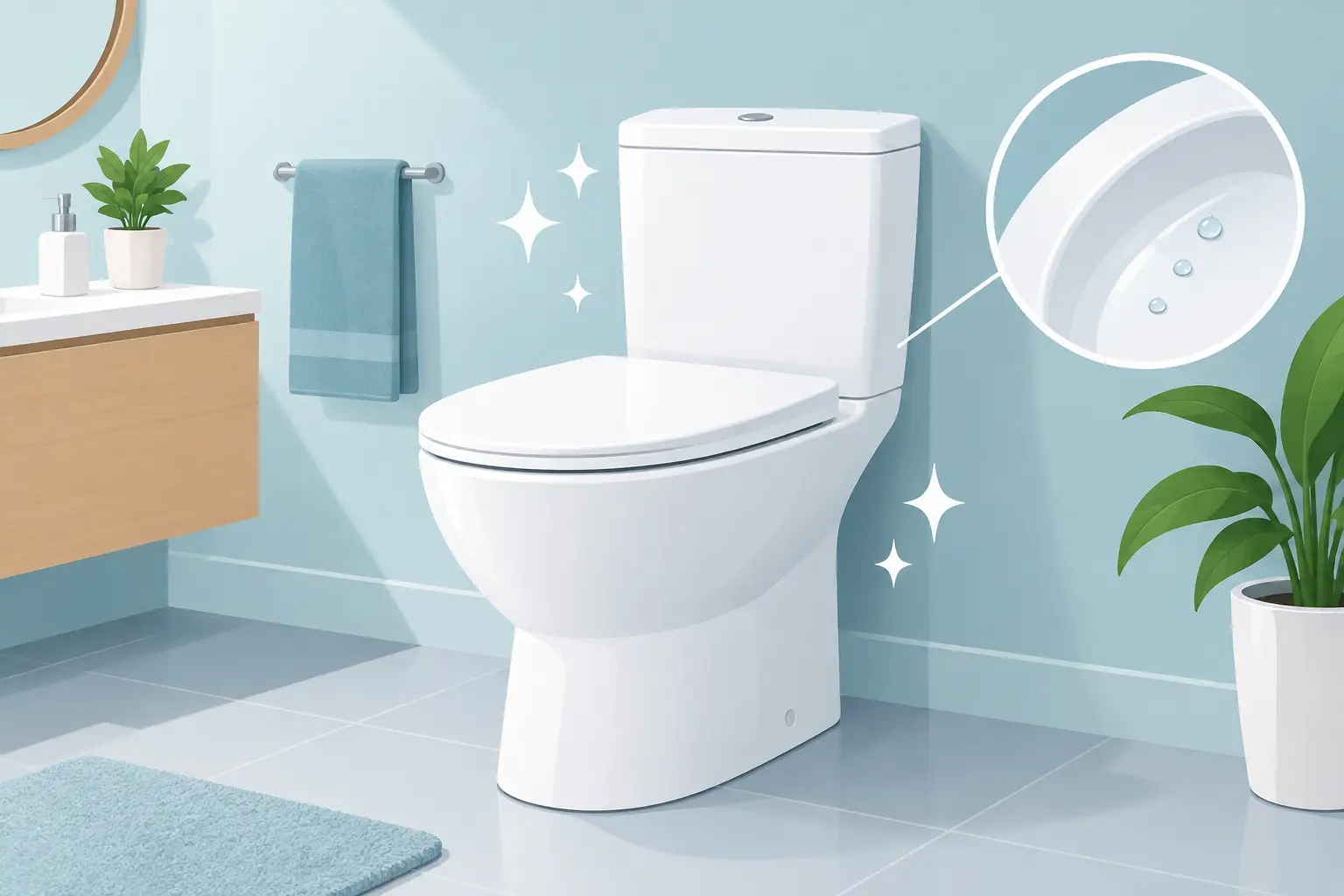
A toilet can look clean from the doorway and still be collecting dust, hair, and grime around the bolts, behind the tank, and under the rim. If you are replacing an old fixture, knowing how to choose an easy-clean toilet means looking beyond color and price. The best choice has fewer exposed crevices, a bowl that flushes thoroughly, and a shape that lets you reach the areas that normally get ignored.
For most homes, the practical answer is a skirted, comfort-height toilet with an elongated bowl, a smooth-sided base, and a strong, water-efficient flush. It will usually cost more than a basic exposed-trapway model, but the difference shows up every week when cleaning takes minutes instead of a full bathroom workout.
Start With the Areas That Are Hardest to Clean
The underside and back of a standard toilet are where cleaning frustration starts. On many older toilets, the trapway – the curved passage that carries waste from the bowl to the drain – is visible along the side. Its molded bends collect dust, and there is very little room to get a cloth around it. The narrow space between the tank and wall is another familiar trouble spot, especially in bathrooms with limited ventilation.
Before choosing a model, picture how you would wipe it down. Can you run a cloth across the side in one pass? Can you reach the floor around the base without working around multiple contours? Are the bolt caps simple and secure, or likely to trap moisture and debris? These details affect the day-to-day experience more than a decorative tank lid ever will.
A toilet does not need to be expensive to be easy to maintain. But the cheapest models often save money by using more traditional shapes and exposed components. That can be the right call for a rental turnover, a home sale, or a secondary bathroom where budget is the priority. Just go in knowing what you are trading off.
Choose a Skirted Base When Cleaning Is the Priority
A skirted toilet has smooth panels running along the lower sides of the bowl, covering the trapway. Rather than cleaning around curves, joints, and casting details, you wipe a flat or gently curved surface. For households with children, pets, or frequent guests, that simpler exterior makes a noticeable difference.
Skirted designs also give a bathroom a cleaner, more finished look. They work especially well in updated powder rooms and primary bathrooms, where an exposed trapway can make even a new toilet look dated.
There is one trade-off: skirted toilets can require a little more care during installation because the mounting access is concealed. That is not a reason to avoid them, but it is a reason to make sure the replacement is measured and installed correctly. The existing rough-in measurement, usually 12 inches from the finished wall to the center of the drain, still matters. Some homes in Fairfax County, Loudoun County, and older parts of Northern Virginia have 10-inch or 14-inch rough-ins, which can narrow the available choices.
Look for a Rim That Is Easier to Keep Fresh
The bowl rim is where many toilets quietly become difficult to clean. A conventional rim has an internal channel that directs water around the bowl during a flush. Over time, minerals from the water can build up in the small holes underneath it. You may notice uneven flushing, brown streaks beginning under the rim, or a toilet that needs frequent brushing despite regular cleaning.
Rimless or fully glazed rim designs reduce hidden areas where buildup can develop. They direct water into the bowl in a more open, visible way, making it easier to see where cleaning is needed. They are not maintenance-free, and hard water can still leave deposits, but there are fewer concealed passages to worry about.
A fully glazed trapway is another worthwhile feature. Glazing creates a smoother surface inside the waste passage, helping material move through more cleanly. It is mainly a flushing-performance feature, but it can also reduce the chance of residue clinging inside the fixture.
Do Not Treat Flush Performance as a Separate Issue
An easy-clean toilet needs a flush that does its job the first time. Weak flushing creates bowl streaks, repeat flushes, and more frequent brushing. That is why a good replacement decision combines easy-clean exterior design with proven bowl rinse and waste removal.
Look for a toilet designed to use 1.28 gallons per flush or less while still providing strong performance. Modern water-efficient toilets from brands such as Kohler, American Standard, and TOTO can outperform many older 3.5-gallon fixtures. Less water does not automatically mean less cleaning – a poorly designed low-flow toilet can be frustrating – so the bowl wash and flushing system matter more than the gallon number alone.
Pay attention to what your current toilet is telling you. A bowl that regularly needs two flushes, leaves paper behind, gurgles, or develops persistent streaking may be due for replacement rather than another round of cleaning products. Hairline cracks at the base, recurring leaks near the tank bolts, and movement when someone sits down are also signs not to ignore.
Pick the Bowl Shape and Height for Your Household
An elongated bowl is generally easier to keep clean than a round-front bowl because it provides more room in the bowl and a slightly more forgiving target area. It is a popular choice for primary bathrooms and guest bathrooms, provided the room has enough clearance in front of the toilet.
Comfort-height toilets sit roughly chair height, typically around 17 to 19 inches from floor to seat top. They are easier for many adults, taller users, and people with mobility concerns to use. Standard-height models are lower and may be more comfortable for shorter adults and young children. Cleaning is not the main deciding factor here, but a toilet that fits the people using it is less likely to be stressed, loosened, or used awkwardly.
If you are replacing a toilet in a compact half bath, measure before falling in love with an elongated model. The easier-clean choice still has to fit the room, clear the door, and leave enough legroom.
Consider the Seat, Lid, and Bidet Plans
The seat is a small part of the toilet, but it gets handled constantly. A soft-close seat prevents slamming and is easier on the hinges over time. Quick-release hinges are even more useful for cleaning because the seat can be lifted off without wrestling with narrow gaps around the attachment points. That lets you wipe the porcelain behind and beneath the seat properly.
If you may add a bidet seat later, choose a toilet with enough space around the tank and a shape compatible with common bidet-seat designs. Bidet compatibility is especially worth considering during a bathroom update, when you want a fixture that will still suit your needs a few years from now.
Avoid assuming every one-piece toilet is automatically easier to clean. A one-piece design removes the joint between tank and bowl, which is helpful, but some have decorative contours that create their own dust-catching edges. A well-designed two-piece toilet with a smooth-sided base may be easier to maintain than a heavily styled one-piece model.
Match the Toilet to the Property and Budget
For a rental property, a straightforward, efficient toilet with a dependable flush and readily available replacement parts is often the smart choice. ToiletKing’s Essential packages start at $499 and can suit cost-conscious replacements where function and clean installation are the priority.
For homeowners who are tired of scrubbing around an exposed base, a Performance or Signature option may make more sense. These packages start at $669 and $799 respectively, with specific pricing depending on the toilet model. Skirted designs, upgraded flushing, comfort height, and cleaner lines are often where the added value appears.
King’s Throne packages start at $1,049 for homeowners looking for a more premium bathroom upgrade, including higher-end design and bidet-ready options. The best choice depends on the bathroom, who uses it, and how long you plan to stay in the home. A seller may not need every premium feature. A homeowner replacing a 20-year-old toilet in a primary bath may decide the daily cleaning savings are worth it.
Make Sure Installation Does Not Create a Cleaning Problem
Even the right toilet can become a headache if it is installed poorly. A toilet that rocks slightly can break the wax seal over time. Water at the base, a sewer odor, or staining around the floor line should never be dismissed as normal. The toilet should sit solidly, flush correctly, and be caulked appropriately where needed while leaving any potential leak visible.
A professional replacement also avoids the awkward part many homeowners do not want to manage: carrying an old porcelain toilet through the house and finding a legal disposal option. ToiletKing handles delivery, removal, installation, and disposal in under an hour for most standard replacements.
If you are choosing between toilet styles or trying to replace one quickly, call ToiletKing at (571) 326-8708 or book a free consultation at ToiletKingVA.com. Use promo code FIVEOFF where applicable. A toilet should make bathroom cleanup less of a chore, not give you more places to scrub.