
A toilet can look like a simple fixture until it starts rocking at the base, leaking onto the floor, flushing weakly, or showing stains that never truly come clean. If replacement is the answer, homeowners often ask how toilet removal works and whether the old fixture will become their problem. It should not. A properly managed replacement includes disconnecting the old toilet, removing it without damaging the bathroom, preparing the connection for the new unit, and legally disposing of the old fixture.
For a standard replacement with an accessible shutoff valve and a sound floor connection, the physical removal and installation are usually completed in one visit in under an hour. The key is knowing what is under the toilet before anyone starts lifting porcelain.
How toilet removal works, step by step
The process begins before the toilet is unbolted. The installer confirms the new toilet will fit the bathroom, verifies the rough-in measurement from the wall to the drain center, and checks whether the shutoff valve is accessible. Most homes have a 12-inch rough-in, but older homes and tight bathrooms can have 10-inch or 14-inch rough-ins. Ordering the wrong configuration can turn a quick swap into a delay.
Next, the water supply is shut off at the valve behind or beside the toilet. The tank is flushed to empty most of the water, then the remaining water in the tank and bowl is removed. This step matters more than people expect. A toilet that is merely flushed still holds water in its internal trapway, and carrying it out without properly clearing that water can leave a trail across the bathroom.
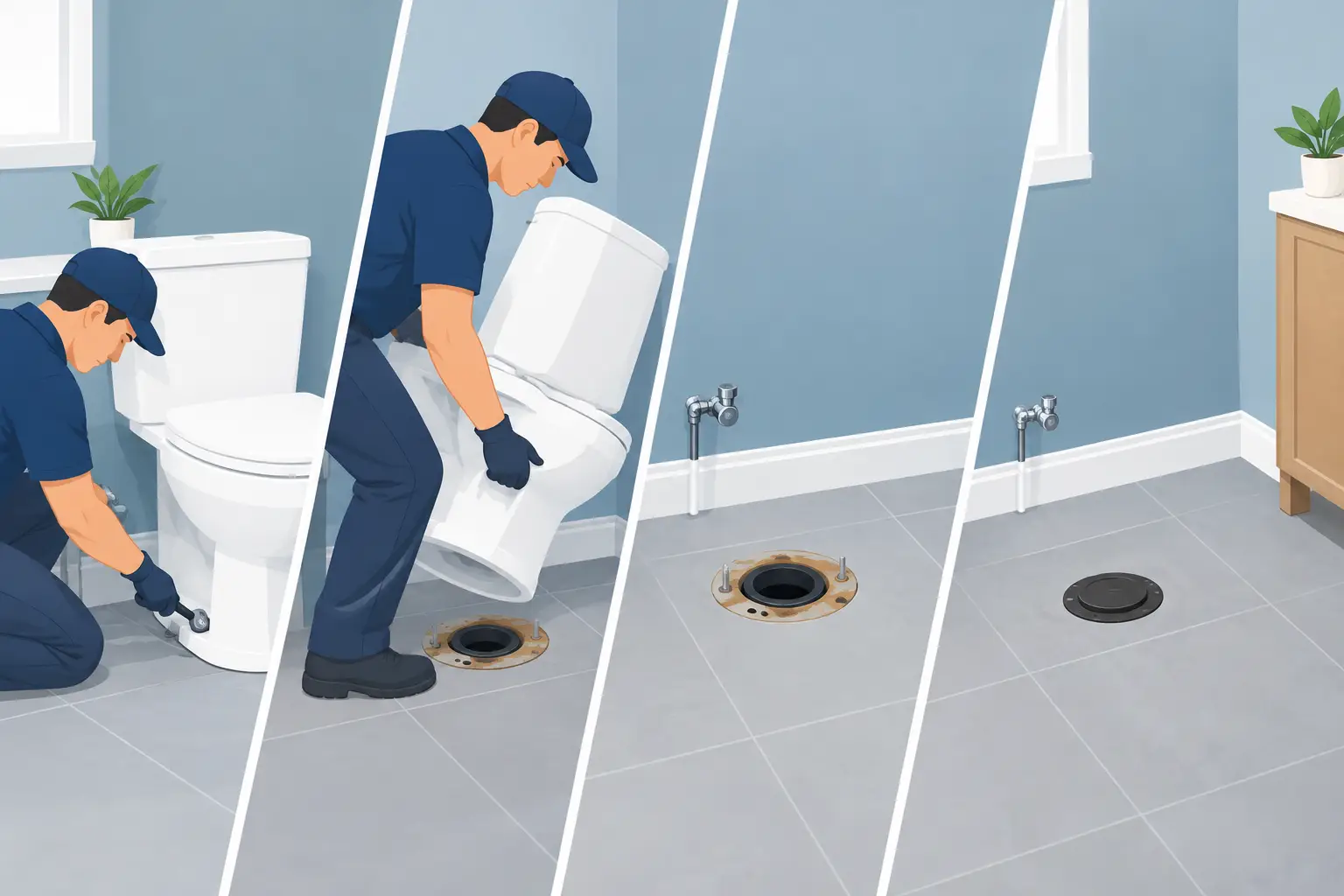
Once the supply line is disconnected, the tank may be removed from a two-piece toilet before the bowl comes out. Separating the pieces makes the fixture safer to handle, especially in smaller bathrooms, upstairs hall baths, and homes with narrow turns. One-piece toilets are removed as a single unit, so they require careful lifting and a clear path out.
The bowl is secured to the floor with bolts at its base. After removing the caps and nuts, the installer gently rocks the toilet to break the old wax seal, then lifts it straight up and off the drain. Porcelain is heavy, awkward, and brittle. This is why pulling a toilet by yourself is not always the money-saving project it appears to be. A cracked bowl, chipped tile, or dropped tank can add cost quickly.
With the toilet off, the real condition of the connection is visible. The old wax ring is scraped away, the flange around the drain opening is inspected, and the floor is checked for moisture damage. A clean, solid flange and stable finished floor keep a standard replacement moving quickly. If the flange is broken, sits too low, or the subfloor is soft from a long-term leak, that needs to be addressed before a new toilet is installed. Setting a new toilet over a compromised connection simply invites another leak.
What happens after the old toilet comes out
The new toilet is positioned over a fresh seal and aligned with the floor bolts. It is lowered carefully so the outlet seats evenly over the drain. The mounting nuts are tightened just enough to secure the bowl without stressing the porcelain. Over-tightening is a common DIY mistake and can crack the base, sometimes immediately and sometimes weeks later.
The installer then attaches the tank on a two-piece model, connects a new water supply line when needed, turns the water back on, and checks every connection. The toilet is flushed repeatedly while the base, supply connection, tank bolts, and surrounding floor are inspected for leaks. It should sit level and stable, with no side-to-side movement when someone sits down.
A small bead of caulk is typically applied around the front and sides of the base. This gives the installation a finished look and helps keep mop water and everyday bathroom grime from working underneath. Leaving a small section at the back uncaulked can allow an unnoticed leak to show itself on the floor rather than staying trapped beneath the toilet.
Finally, the old fixture is carried out for legal disposal. Toilets are not curbside trash in many communities because of their weight and material. Leaving the old porcelain in a garage, on a porch, or beside the curb creates a disposal chore that most people do not want after paying for a replacement. Full-service replacement should leave the bathroom ready to use and the old toilet gone.
What can make removal take longer?
Most toilet replacements are straightforward, but an honest assessment includes the situations that change the timeline. A toilet that has been leaking slowly may have stained or softened the flooring around its base. Corroded bolts can snap during removal. An old shutoff valve may be difficult to operate safely, and some bathrooms have tile or flooring installed tightly around the base of the existing toilet.
The biggest issue is usually not the porcelain itself. It is the condition of the flange, floor, and water shutoff behind it. If the toilet rocks when you sit down, there is discoloration at the base, or the bathroom has a persistent musty smell, mention it before scheduling. Those clues help set realistic expectations.
A replacement provider can identify whether the connection is ready for a standard install. Extensive floor repair or broader plumbing work is a separate scope from replacing a toilet, and it is better to know that upfront than to discover it after the old fixture is already removed.
Why professional removal is usually the cleaner choice
DIY toilet removal is possible for an experienced homeowner with the right tools, a safe lifting plan, and a way to dispose of heavy porcelain. But the job has a few unforgiving details: preventing spills, protecting flooring, choosing the correct seal, aligning the toilet properly, and confirming the base does not leak after multiple flushes.
Professional removal also makes selection easier. A rental owner replacing a basic failing toilet may prioritize dependable performance and cost. A homeowner remodeling a primary bathroom may want a comfort-height, skirted model that is easier to clean and looks more finished. Those choices affect the fixture price, but they do not change the basic removal process.
For Northern Virginia homeowners, landlords, and sellers, the most practical option is often a bundled replacement rather than trying to coordinate delivery, a plumber, and disposal separately. ToiletKing provides delivery, removal, installation, and legal disposal in one appointment. Options range from the Essential tier, starting at $499, to Performance starting at $669, Signature starting at $799, and King’s Throne starting at $1,049. Exact pricing varies by toilet model and bathroom requirements.
Prepare your bathroom for a faster appointment
You do not need to do much before a toilet replacement, but a clear path helps. Remove rugs, small storage items, and anything sitting behind the toilet. If the bathroom is upstairs, clear stairs and hallways of obstacles. Let the installer know about tight parking, gate access, pets, or a toilet that is currently leaking.
If the toilet is leaking from the base, avoid repeatedly flushing it until it is replaced. A leak at the floor is not always a failed wax ring, but every flush can add water where it does not belong. Place towels around the base if needed and keep the area as dry as possible.
A broken toilet does not have to take over your day. If you need a straightforward replacement in Fairfax County, Loudoun County, or elsewhere in Northern Virginia, call ToiletKing at (571) 326-8708 for a free consultation. Ask about current availability and use promo code FIVEOFF where applicable.