
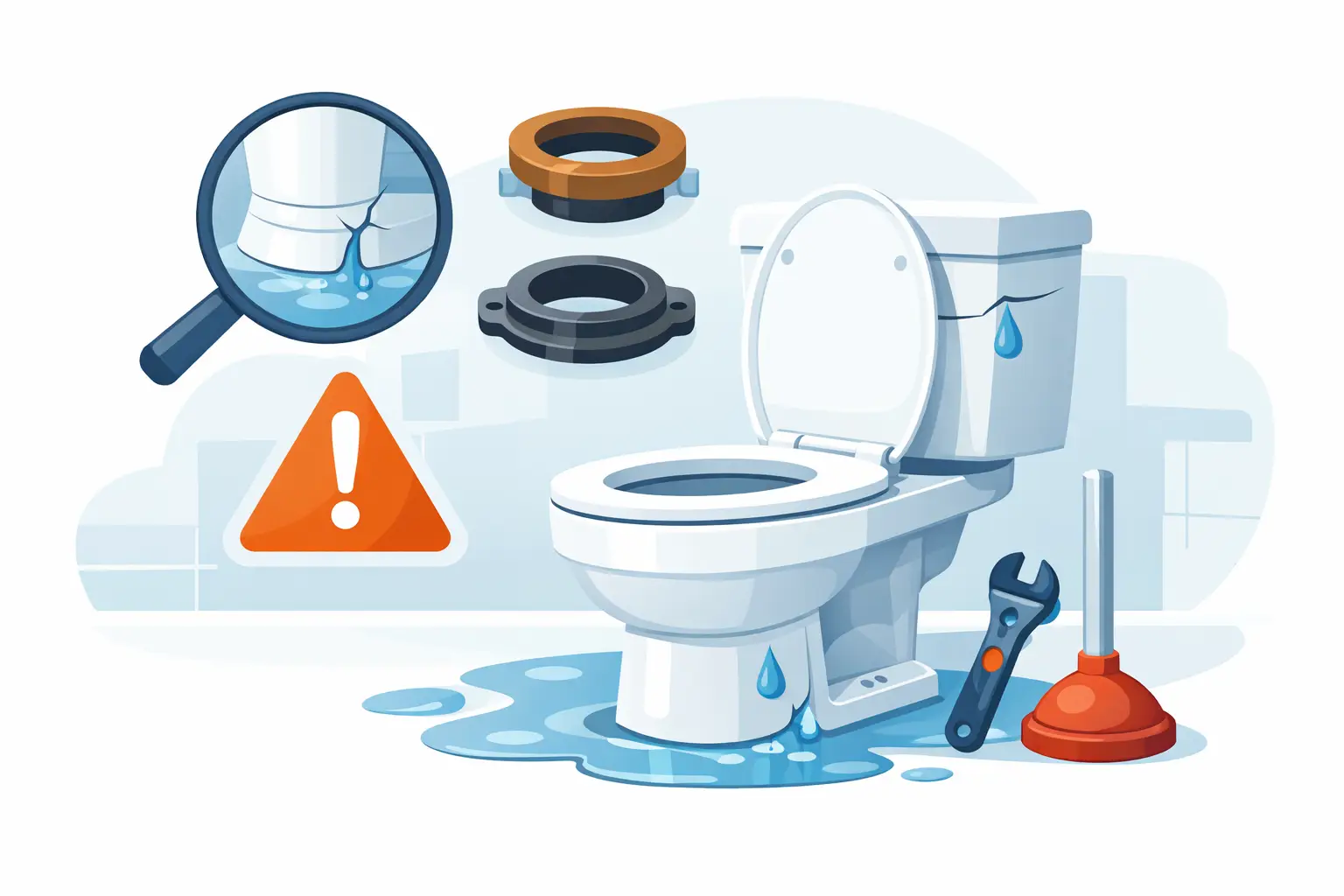
Water around a toilet base is not a mess to keep mopping up. A toilet leaking at base replacement may be the right answer when the leak happens after flushing, the toilet rocks on the floor, or the porcelain itself is damaged. The sooner you identify the source, the better your odds of avoiding a soft bathroom floor, stained ceiling below, or a much larger cleanup.
First, confirm the water is coming from the base
Dry the floor completely, then place a few sheets of toilet paper around the toilet’s footprint. Flush once and watch closely. If water appears at the bottom of the bowl after the flush, the seal between the toilet and drain is a likely suspect. That seal is commonly a wax ring, although some installations use a wax-free seal.
Not every puddle means the base seal has failed. Water running down from the tank bolts, a supply-line connection, or condensation on a cold tank can travel to the floor and make the base look guilty. A clogged toilet can also overflow from the rim. Those situations need a different solution than replacing the fixture.
The key clue is timing. A leak that shows up only when the toilet is flushed is far more likely to involve the connection underneath the toilet. Do not ignore it just because the floor dries afterward. Wastewater can work under flooring where you cannot see it.
6 signs toilet leaking at base replacement is smarter than another patch
Replacing only the seal can make sense on a newer, solid toilet with no other problems. But lifting a toilet, resetting it correctly, and then discovering it is cracked, loose, or constantly clogging is frustrating and expensive. Replacement is often the cleaner decision when several warning signs show up together.
1. The bowl is cracked or the porcelain is damaged
A hairline crack near the base, especially one that gets damp after a flush, is not a cosmetic issue. Porcelain does not reliably repair in a way that makes a toilet safe to use long term. If water is escaping through the bowl or base, replace the toilet rather than trying to seal the crack from the outside.
2. The toilet rocks when you sit down
A toilet should sit firmly on the finished floor. Even slight movement can compress or break the seal below, allowing water out with each flush. Sometimes the issue is as simple as improper shimming or loose mounting hardware, but rocking can also point to damaged flooring around the flange.
Avoid aggressively tightening the bolts at the base. Over-tightening can crack porcelain. If the floor feels soft, spongy, or visibly stained, the condition below the toilet needs to be evaluated before any new fixture is installed.
3. The leak keeps returning after a new seal
A fresh wax ring should not be a short-lived fix. When a toilet has been reset and water returns at the base, look beyond the ring itself. The toilet may not be sitting level, the flange may be too low or damaged, or the floor may have changed after tile or other flooring was installed.
This is where a replacement appointment can still be useful, but there is a trade-off: a new toilet cannot correct a failed drain connection or rotten subfloor by itself. A good installer will not hide an underlying condition just to finish an install. If prep or separate repair is needed first, it should be addressed before setting the new toilet.
4. The toilet is old and has other failure signs
A base leak is a bad time to keep investing in a toilet that already runs, flushes weakly, clogs often, or has a worn, difficult-to-clean bowl. Older toilets can use far more water per flush than modern efficient models. If the fixture is already coming out, replacing it can be more practical than paying to reset an aging toilet and hoping the next part does not fail.
This is especially common in rental homes and homes being prepared for sale. A straightforward new toilet removes one visible maintenance concern and gives the next occupant a clean, dependable fixture.
5. The base has been caulked over to hide a leak
Caulk can make a toilet look finished, but it is not a repair for water escaping from underneath. In fact, a heavy bead around the entire base can hold leaked water out of sight until flooring damage becomes obvious. Local installation practices and bathroom conditions vary, but no amount of caulk substitutes for a sound toilet, secure mounting, and a properly made drain seal.
If you see discolored caulk, mildew that keeps returning at the base, or a persistent odor near the toilet, do not just recaulk over it. Find the source first.
6. You want a better-fitting toilet anyway
Replacement becomes an easy decision when the existing toilet is low, dated, difficult to clean, or simply wrong for the room. Comfort-height models are typically easier for many adults to use because the seat sits closer to chair height. Standard-height toilets can still be the better fit for shorter adults or young children.
A skirted toilet has smooth sides that hide the trapway, so there are fewer awkward curves to clean around. That upgrade costs more than a basic two-piece toilet, but many homeowners feel it is worth it in a primary bathroom or a newly remodeled space. For a landlord, seller, or secondary bath, a reliable basic model may be the sensible choice.
What a proper toilet replacement involves
A base leak is not the project to rush with a tube of adhesive and a few online instructions. The old toilet has to be shut off, drained, disconnected, lifted without damaging the floor, and removed. The mounting area and connection below must be inspected before the new toilet is set, leveled, secured, tested, and cleaned up.
DIY replacement can work for an experienced homeowner when the floor is sound, the flange is in good condition, and the new toilet matches the existing rough-in. The risk is that toilets are heavy, porcelain chips easily, and the details underneath are hidden until the old fixture comes off. A toilet that is even slightly unstable can create another leak.
For homeowners and property managers who want one visit and a predictable price, ToiletKing provides the toilet, delivery, removal, installation, and legal disposal of the old fixture. Standard replacements are typically completed in under an hour once the installation area is ready and there are no concealed floor or drain issues.
Choosing the right replacement after a base leak
The right toilet is not automatically the most expensive one. It should match the bathroom, the people using it, and the property’s purpose.
For a rental unit, guest bathroom, or home sale, the Basic package at $489 is designed for a functional, cost-conscious replacement. The Standard package at $639 is a practical step up for homeowners who want a dependable everyday toilet. Deluxe options start at $799 and are often a good fit when easy cleaning, stronger flushing performance, or a more refined look matters. King’s Throne packages start at $1,175+ for buyers looking at premium designs, higher-end features, and bidet-compatible setups.
Kohler, American Standard, and TOTO all make dependable options, but model selection still matters. A compact elongated bowl can add comfort without crowding a smaller bathroom. A round-front bowl can preserve clearance in a tight powder room. Before selecting, measure from the wall behind the toilet to the center of the floor bolts and check the space in front and beside the bowl.
What to do before the replacement visit
If the toilet is actively leaking after every flush, limit use until it can be addressed. Put down towels to protect the floor, but do not rely on them as a solution. If there is a bathroom below and you see staining or dripping on its ceiling, stop using the fixture.
Clear personal items from around the toilet and make sure the path from the entry to the bathroom is accessible. A replacement team needs room to remove the old fixture safely and bring in the new one. Taking a quick photo of the existing toilet, including the space around it, can also help confirm whether you need a compact model, comfort height, or a particular finish.
A leaking toilet does not have to turn into a week of calls, store pickups, and an old bowl sitting in the garage. For replacement help in Fairfax County, Loudoun County, and across Northern Virginia, call (571) 326-8708 or book a free consultation at ToiletKingVA.com. Use promo code FIVEOFF where applicable. The most helpful next step is simple: stop flushing a toilet that is leaking at the base and get a clear answer before the floor pays the price.