
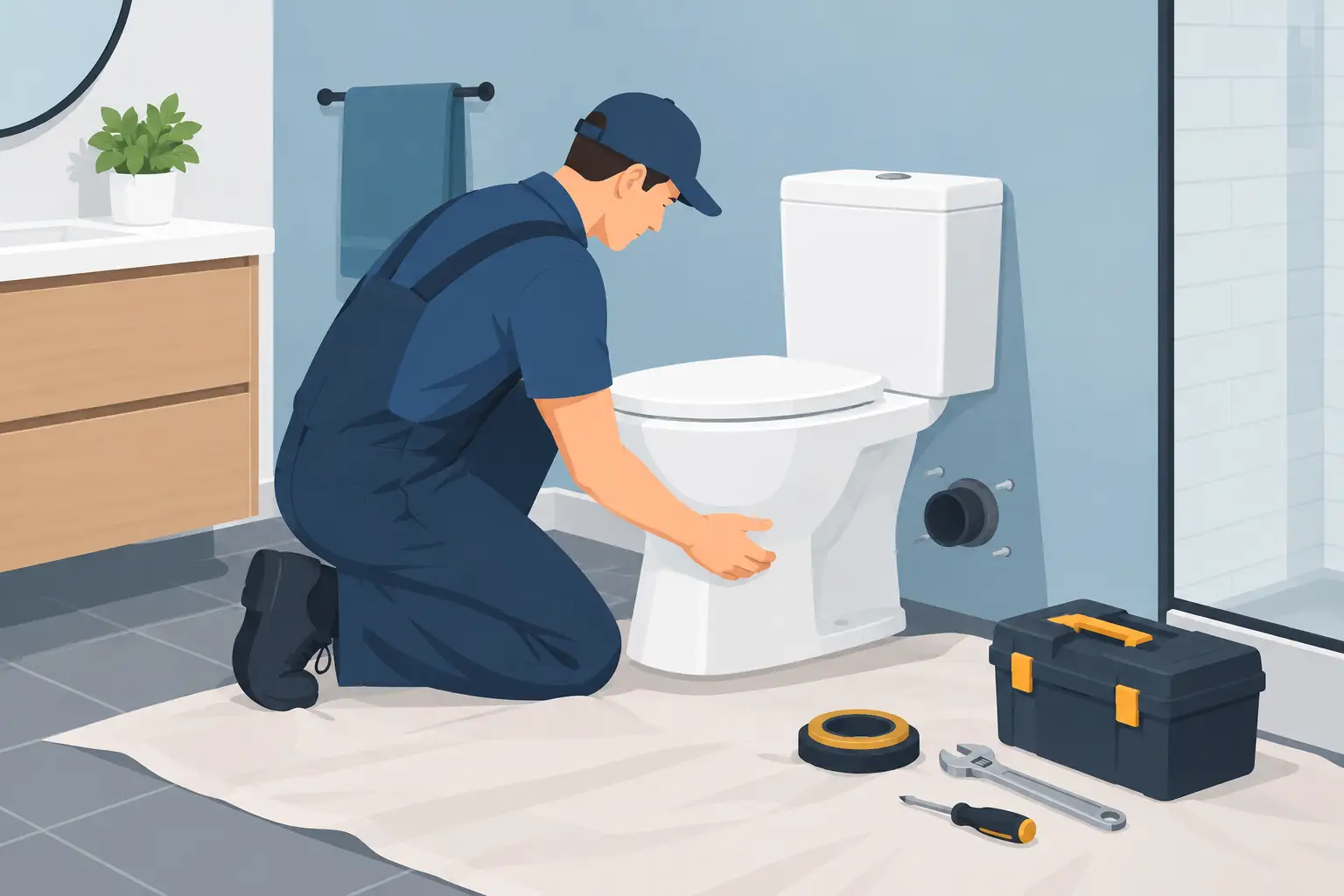
A toilet replacement can sound messy because it involves an old fixture, water, and a connection to the drain. But is toilet installation messy when it is handled correctly? Usually, no. A professional replacement should be a contained job: the water is shut off, the bowl is drained, the work area is protected, and the old toilet leaves with the installer instead of sitting in your garage or curbside.
The mess people worry about is real only when a toilet has been leaking for a while, the shutoff valve does not work, or the old wax seal has failed badly. Even then, the goal is not to make a bathroom look like a construction site. It is to identify the issue, protect the floor, replace the toilet properly, and leave the room clean and usable.
What Makes Toilet Installation Messy in the First Place?
Most toilet replacements are cleaner than homeowners expect. Toilets hold water in the tank and bowl, but both are drained before the fixture is disconnected. There may be a small amount of residual water in the trapway, which is why experienced installers keep the toilet upright and use protective materials during removal.
The potentially unpleasant part is underneath the old toilet. A toilet sits on a wax ring or similar seal that closes the gap between the toilet outlet and the drain flange in the floor. When the toilet is lifted, there can be old wax, dust, and sometimes staining around that area. A good installer removes the old seal completely before setting the new toilet. Covering it up or rushing that step is how odors, rocking, and leaks show up later.
A replacement can be messier when the old toilet has a specific problem. A wax-ring leak can leave discoloration around the base. A slow tank leak can damage the wall or flooring behind the toilet. If a toilet has been overflowing, there may be a sanitation cleanup issue separate from the installation itself. These are not reasons to panic, but they do affect what the installer finds once the toilet comes out.
What a Clean Toilet Replacement Looks Like
A clean installation follows a straightforward sequence. First, the water supply is shut off and the toilet is flushed and drained. The installer disconnects the supply line, removes the old toilet, and protects the surrounding floor while moving it out.
Next comes the part that matters most for a leak-free result: cleaning the mounting area, checking the flange, and fitting a new seal. The replacement toilet is set, leveled, bolted without overtightening, connected to the water supply, and tested with several flushes. The technician should check for movement at the base and inspect both the supply connection and the floor seal for leaks.
Finally, the old fixture and packaging should be removed from the home. That is a big part of keeping the project from feeling messy. Homeowners in Fairfax County, Loudoun County, and throughout Northern Virginia often want a replacement because their existing toilet is leaking, cracked, hard to clean, or simply outdated. The last thing they need is an old porcelain toilet left behind for them to figure out.
With a focused replacement service, delivery, removal, installation, and legal disposal can happen in one visit. In a typical straightforward bathroom, the actual replacement can be completed in under an hour. The condition of the existing plumbing connection, flooring, and flange can change that timing, but the process itself should be organized and controlled.
The Situations That Can Add Cleanup or Time
Not every bathroom is a simple lift-out-and-set job. A reputable installer should be upfront when the old toilet reveals a condition that needs attention before a new one can be safely installed.
A failed wax seal or soft flooring
If you see a brownish ring at the toilet base, notice a sewer smell, or feel the toilet move when you sit down, the wax seal may have failed. Water can get beneath the toilet and soak into flooring over time. Vinyl may discolor, tile grout may darken, and wood subflooring can become soft.
Replacing the toilet will stop the old fixture from continuing to cause trouble, but it cannot erase existing floor damage. If the floor is soft enough that the toilet cannot sit securely, repair work may be needed before installation. That is a condition issue, not ordinary installation mess.
A damaged or corroded flange
The flange is the fitting anchored to the floor that the toilet bolts onto. It is hidden until the old toilet is removed. A cracked, broken, or badly corroded flange can prevent the new toilet from being secured properly.
This is why replacing a toilet is not just about getting a new bowl into the room. The fixture must sit level and stable. A toilet that rocks even slightly can eventually compromise the seal below it.
A stubborn shutoff valve or supply connection
The small valve near the floor or wall should shut the toilet water off completely. In older homes, it may be stiff, corroded, or unable to stop the flow. A supply line can also show rust, mineral buildup, or a deteriorated rubber seal.
These are manageable findings, but they are worth addressing rather than reconnecting a new toilet to a questionable part. Clean work also means avoiding a preventable drip after the installer leaves.
The old toilet has been overflowing
An overflow is different from a normal toilet replacement. If wastewater reached the floor, the bathroom needs appropriate cleaning and disinfection before or alongside the replacement. If the overflow came from a clog farther down the drain line, that drainage issue may need to be resolved before a new toilet can be tested normally.
Can You Keep the Bathroom Clean During Installation?
Yes. Before the appointment, clear toiletries, bath mats, wastebaskets, and anything stored around the toilet. If there is a cabinet tight against the fixture, remove anything that could get in the way. Give the installer a clear route from the entry to the bathroom, especially if the replacement toilet must go upstairs.
If your toilet is actively leaking, place towels around the base and avoid using it until it can be replaced. Do not keep tightening the mounting bolts or caulking over a leak. Overtightening can crack porcelain, and caulk can hide water that is still getting under the toilet.
It also helps to mention what you have noticed when scheduling. A toilet that rocks, leaks at the base only after flushing, has a visible crack, or takes multiple flushes to clear gives useful context. So does an upstairs bathroom, narrow stairway, or unusually tight water closet. Those details help set expectations before the technician arrives.
DIY Replacement Versus Professional Installation
A capable homeowner can replace a toilet, but the job is often messier when someone has not handled an old fixture before. Toilets are heavy, awkward, and easy to chip against a wall, vanity, or doorway. More importantly, a poor seal at the base may not reveal itself until after several uses.
DIY also leaves practical questions: How will you transport the new toilet home? Where will the old one go? Does your locality accept it for disposal? What happens if the flange is damaged after the old toilet is removed? Saving on labor can make sense for someone with the tools, disposal plan, and confidence to handle surprises. For many homeowners, landlords, and sellers, a bundled replacement is simpler and more predictable.
ToiletKing offers curated Kohler, American Standard, and TOTO options with delivery, old-toilet removal, installation, and disposal included. Packages range from the Essential tier starting at $499 to Performance starting at $669, Signature starting at $799, and King’s Throne starting at $1,049. Specific pricing varies by toilet model and bathroom conditions, but the point is clear: you should know what your replacement involves before the work begins.
Choosing a Toilet That Is Easier to Keep Clean
A replacement is a good opportunity to reduce future cleaning, not just solve today’s problem. Skirted toilets hide the trapway, so there are fewer curves and crevices to wipe down. Comfort-height models can be easier for many adults to sit on and stand from, though a standard-height toilet may suit smaller children or households that prefer a lower seat.
Water-efficient toilets can also improve performance without wasting water, but flushing quality matters more than a label alone. A toilet that leaves paper behind, requires repeat flushes, or clogs often is not doing its job well. The right choice depends on bathroom space, rough-in measurement, user needs, cleaning preferences, and budget.
A toilet replacement should leave you with a clean bathroom, a stable fixture, and no old porcelain to deal with. If your toilet is leaking, rocking, cracked, or simply ready for an upgrade, call (571) 326-8708 or book a free consultation at ToiletKingVA.com. Use promo code FIVEOFF when applicable, and let the replacement be the easy part of your day.