
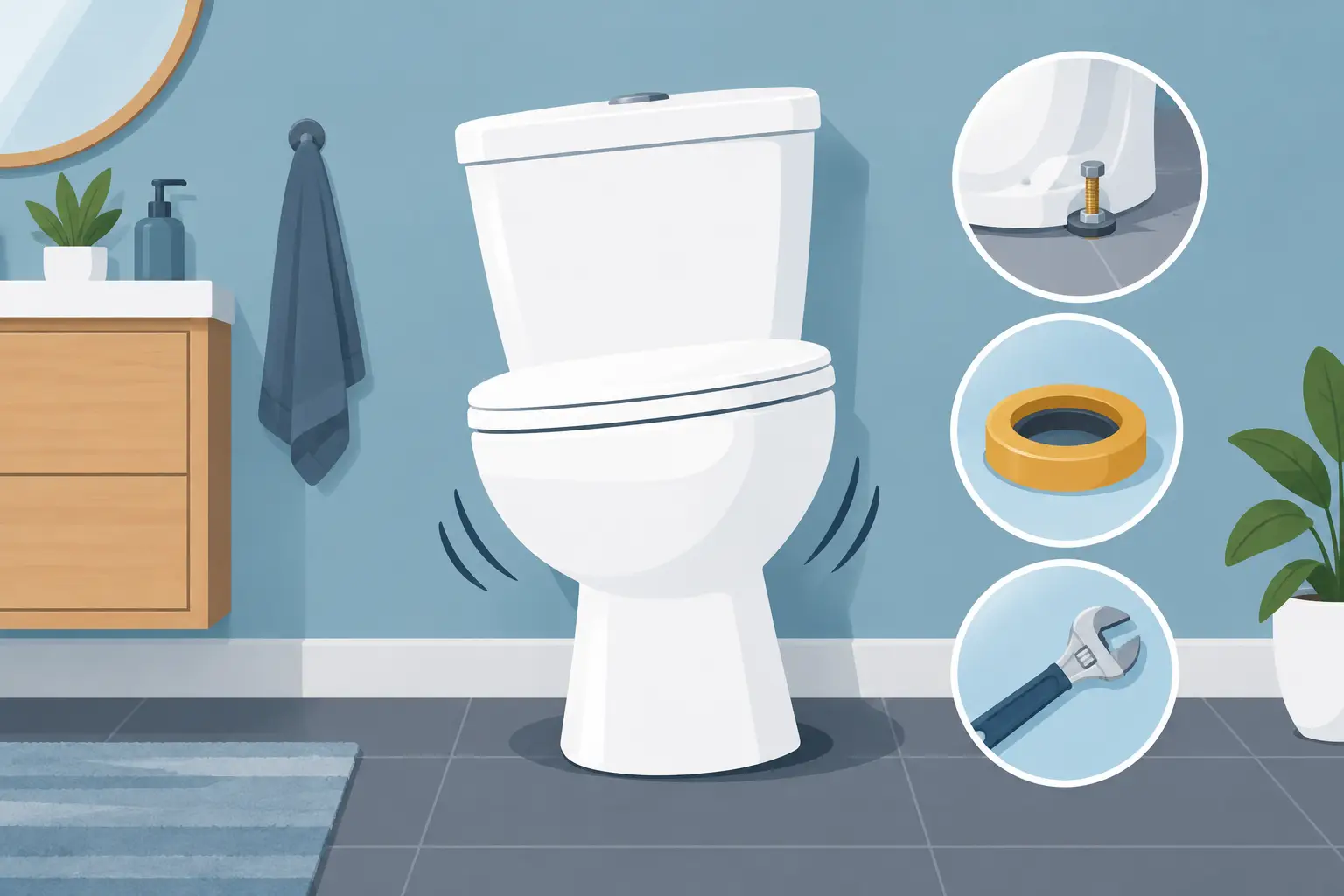
A toilet that shifts when you sit down is not something to ignore. If you are asking, “why does toilet rock,” the short answer is that the toilet is no longer sitting firmly and evenly on the finished floor. Sometimes the fix is simple. Other times, that movement points to a failing wax seal, a damaged flange, soft flooring, or a toilet that is ready to be replaced.
The important part is this: a rocking toilet can break the watertight seal beneath its base. Once that happens, small leaks can reach the subfloor without producing a dramatic puddle. The bathroom may smell musty, the flooring may begin to feel soft, or the ceiling below may eventually show staining. A toilet should feel solid every time you use it.
Why Does a Toilet Rock in the First Place?
Most toilets rock because the base is not fully supported. The porcelain may be sound, but one edge is sitting slightly above the floor, allowing it to pivot when weight shifts. In homes throughout Fairfax County, Loudoun County, and Northern Virginia, we commonly see this after new tile or luxury vinyl flooring has been installed around an existing toilet.
The most common causes are an uneven floor, loose closet bolts, an incorrectly set toilet flange, a deteriorated wax ring, or a cracked toilet base. More than one issue can be present at once. For example, a floor can be slightly uneven, the toilet may start moving, and that movement can then compromise the wax ring below.
The floor is uneven
Bathroom floors are rarely perfectly flat, especially in older homes. Tile can sit a fraction of an inch higher in one area, grout can create a raised edge, or a wood subfloor can settle over time. That small difference is enough to make a toilet move at the front, side, or back of the base.
A properly installed toilet can often be stabilized with durable toilet shims placed where the gap exists. Those shims should be trimmed flush and the toilet should be tested again before the base is caulked. Caulk is a finishing material, not a solution for a loose toilet.
The closet bolts are loose or corroded
The bolts at the base of the toilet secure it to the flange underneath the floor. Loose nuts can let the toilet shift. Corroded bolts can lose their grip altogether, particularly in bathrooms where a slow leak has been present for a long time.
It is tempting to tighten the nuts until the toilet stops moving. Be careful. Porcelain is unforgiving, and overtightening can crack the toilet base. A hairline crack around a bolt cap may not leak immediately, but it can turn a minor installation issue into a replacement job.
The wax ring has lost its seal
The wax ring sits between the toilet outlet and the drain opening. It is designed to seal the connection, not to hold the toilet in place. When a toilet rocks, it can compress, distort, or pull away from that wax seal.
A failed wax ring does not always create water on the bathroom floor. You might instead notice a sewer-gas odor, staining around the base, moisture at the edge of the flooring, or a toilet that becomes unstable shortly after someone reseats it. If the toilet has been moving, replacing the wax ring is generally part of setting it correctly again.
The flange is too low, broken, or loose
The toilet flange is the fitting connected to the drainpipe and secured to the floor framing. It needs to sit at the right height relative to the finished floor and remain firmly attached. New flooring is a frequent reason flange height becomes an issue. If tile was added without adjusting the flange, the toilet may not seat correctly over a standard wax ring.
A cracked cast-iron flange, broken plastic flange, or flange that has pulled loose from the floor can also allow movement. This is not a place for guesswork. The toilet needs to come up so the flange, floor condition, and drain connection can be inspected properly.
The toilet itself is cracked
A crack in the base is less common, but it is a clear replacement situation. Look closely around the bolt holes and along the lower skirt of the bowl. Do not confuse a surface mark with a structural crack, but any visible crack that appears to open, discolor, or leak is a reason to stop using the toilet until it can be replaced.
A cracked toilet cannot be reliably repaired. Even if it seems stable after shimming or tightening, porcelain under load can fail without much warning.
Is a Rocking Toilet an Emergency?
It depends on what else you are seeing. A toilet that moves slightly but has no odor, visible moisture, cracked porcelain, or soft floor is usually not a middle-of-the-night emergency. Still, it should be addressed soon, before repeated use damages the seal below it.
Treat it as urgent if water appears around the base after flushing, the floor feels spongy, the toilet visibly shifts several times during use, or you smell sewer gas. Those signs suggest the problem may be beyond a simple shim. If water is actively leaking, limit use of that toilet until it is evaluated.
For landlords and property managers, a rocking toilet deserves prompt attention even in an otherwise functional bathroom. A tenant may not notice a slow leak until flooring, drywall, or the ceiling below has already been affected. The replacement cost of a toilet is usually far less than the cost of repairing hidden water damage.
What You Can Check Before Calling for Help
Start with a quick visual check. With the toilet lid down, gently press on each side of the bowl. Notice where it lifts or pivots. Then check for moisture, staining, or a gap between the toilet base and floor. If bolt caps are missing, you may be able to see whether the nuts are obviously loose or badly corroded.
Do not keep testing it aggressively, and do not put a thick bead of caulk around a moving base to make it look stable. Caulk can hide the gap while the toilet continues to move underneath. It can also make it harder to spot a future leak at the base.
If the toilet is otherwise in good condition, a professional may be able to reset it with the correct support and a new seal. But replacement often makes more sense when the toilet is old, cracked, inefficient, heavily stained, or already removed for flange and floor work. A toilet that has required repeated tightening is rarely a good candidate for another quick fix.
When Replacement Is the Better Move
A rocking toilet is a good moment to consider whether the fixture still meets your needs. Older toilets may use substantially more water per flush, flush inconsistently, and have worn internal components that keep requiring attention. A low-profile, outdated bowl can also be uncomfortable for older adults or anyone who prefers a taller seat height.
For a rental turnover or home sale, an Essential toilet package starting at $499 can be a practical way to replace a visibly worn fixture with a dependable new model. Homeowners who want a stronger flush, water efficiency, or comfort-height seating may prefer a Performance package starting at $669 or a Signature option starting at $799. Skirted designs and bidet-compatible options can be worth considering when easier cleaning and a more finished bathroom look matter.
The real cost factor is not just the toilet model. It is whether the existing connection is in good shape, whether the flooring is stable, and whether the fixture can be installed without uncovering broader floor or drain work. A reputable replacement provider should be direct about what is included and what needs separate attention.
A Stable Toilet Should Feel Boring
After installation, a toilet should not wiggle, creak, or shift at all. It should sit level, flush properly, and have a clean, finished base without relying on excessive caulk to hide movement. Delivery, removal of the old fixture, installation, and legal disposal should also be handled as one organized job – not four separate errands.
If your toilet rocks and you are ready for a straightforward replacement, ToiletKing serves Fairfax County, Loudoun County, Arlington, Alexandria, and the wider Northern Virginia area. Call (571) 326-8708 or book a free consultation at ToiletKingVA.com. Ask about promo code FIVEOFF when selecting your new toilet. A loose toilet can feel like a small annoyance, but getting it handled now helps keep it from becoming a flooring or leak problem later.