
A toilet can work without working well. Maybe it needs two flushes to clear the bowl, the handle sticks, the base has started to discolor the floor, or cleaning around the bolts feels like a job nobody wants. Toilet upgrades are not just about a nicer-looking bathroom. The right replacement can improve flushing, reduce water use, make the seat height more comfortable, and remove a fixture that has become a constant source of small frustrations.
For homeowners, landlords, and sellers in Northern Virginia, the best upgrade is usually the one that solves the actual problem without creating a bigger project. That means choosing the right height, shape, flush performance, and design – then having the old toilet removed and the new one installed correctly in one visit.
Which Toilet Upgrades Are Worth It?
The most worthwhile toilet upgrades tend to fall into four categories: better flushing, water efficiency, easier cleaning, and improved comfort. You do not need every premium feature to get a noticeable improvement. A rental bathroom may need a dependable, budget-conscious replacement, while a primary bathroom may justify a skirted model or a bidet-ready toilet.
Start with the reason you are replacing the toilet. If the current fixture clogs regularly despite normal use, flushing performance should be the priority. If the bowl is old, stained, and difficult to keep clean, a modern glazed bowl and cleaner exterior design may matter more. If a parent, grandparent, or anyone with limited mobility uses the bathroom, seat height is often the change they notice immediately.
A new toilet is also a sensible choice when the existing one is leaking from the base, rocking on the floor, cracked, or repeatedly requiring internal repairs. Replacing a flapper is one thing. Chasing recurring tank leaks, fill-valve problems, and weak flushes in an aging fixture is another.
Upgrade the Flush Before You Upgrade the Look
A good-looking toilet that leaves paper behind or requires a second flush gets old fast. Modern toilets from Kohler, American Standard, and TOTO can provide substantially better bowl clearing than many older fixtures while using less water per flush.
Older toilets may use 3.5 gallons or more each time. Most current high-efficiency models use 1.28 gallons per flush, and some use even less. The water savings are real, particularly in a household with several people or in a rental property with frequent turnover. But lower water use should not mean accepting weak performance. The internal trapway design, bowl rinse, and flush valve all affect how well a toilet clears waste.
For a busy family bathroom, choose a model with a reputation for reliable single-flush performance rather than selecting solely by gallons per flush. For a powder room that sees lighter use, a basic water-efficient toilet may be all you need. A professional replacement provider can help match the fixture to the room and your priorities without turning a simple toilet replacement into a research project.
The real signs of a weak toilet
A toilet does not have to overflow to be a poor performer. Frequent plunging, a lazy swirl that fails to clear the bowl, paper hanging in the trap after flushing, and a bowl that needs constant brushing are all practical signs that replacement may be smarter than more repair.
Comfort Height vs. Standard Height
Seat height is one of the biggest differences people feel after a replacement. Standard-height toilets generally sit closer to the traditional 15-inch bowl height, before the seat is added. Comfort-height models are typically closer to chair height, often around 17 to 19 inches with the seat.
Comfort height can make sitting down and standing up easier for taller adults, older homeowners, and anyone with knee or hip discomfort. It is a popular upgrade in primary bathrooms and accessible living situations. It also gives a bathroom a more current feel without changing the footprint of the room.
There is a trade-off. Standard height may be more comfortable for shorter adults and young children because their feet can rest more naturally on the floor. In a home with a mix of users, think about who uses that bathroom most. A guest bathroom is usually a safe place for comfort height, while a children’s bathroom may be better suited to standard height.
Skirted Toilet Upgrades Make Cleaning Easier
Traditional toilets have exposed bends, bolt caps, and supply connections around the base. They work perfectly well, but they collect dust and make cleaning awkward. A skirted toilet covers much of that lower profile with smooth sides, creating a cleaner, more finished appearance.
The advantage is practical, not just cosmetic. Instead of wiping around curves and hard-to-reach openings, you clean a smooth exterior surface. That is especially useful in a primary bathroom, a rental between tenants, or a bathroom where appearance matters for a home sale.
Skirted designs usually cost more than conventional models, and some require more careful placement during installation. They are not necessary for every bathroom. But if cleaning time and a streamlined look are high on your list, they are one of the most satisfying toilet upgrades available.
Consider Bowl Shape and Bathroom Space
Round-front toilets project less into the room, which can make them a practical choice for tight powder rooms. Elongated bowls extend farther forward but provide more seating room and are often considered more comfortable for adults.
Measure before assuming an elongated toilet will fit. In a narrow bathroom, a few extra inches can affect door clearance, walking space, or whether a vanity drawer opens fully. The rough-in measurement – the distance from the finished wall behind the toilet to the center of the drain – matters too. Many homes use a standard 12-inch rough-in, but older homes and certain layouts can be different.
This is where a quick consultation helps. A toilet may look standard from across the room while having a nonstandard rough-in, limited side clearance, or flooring that complicates the base seal. These are normal replacement details, but they should be identified before installation day whenever possible.
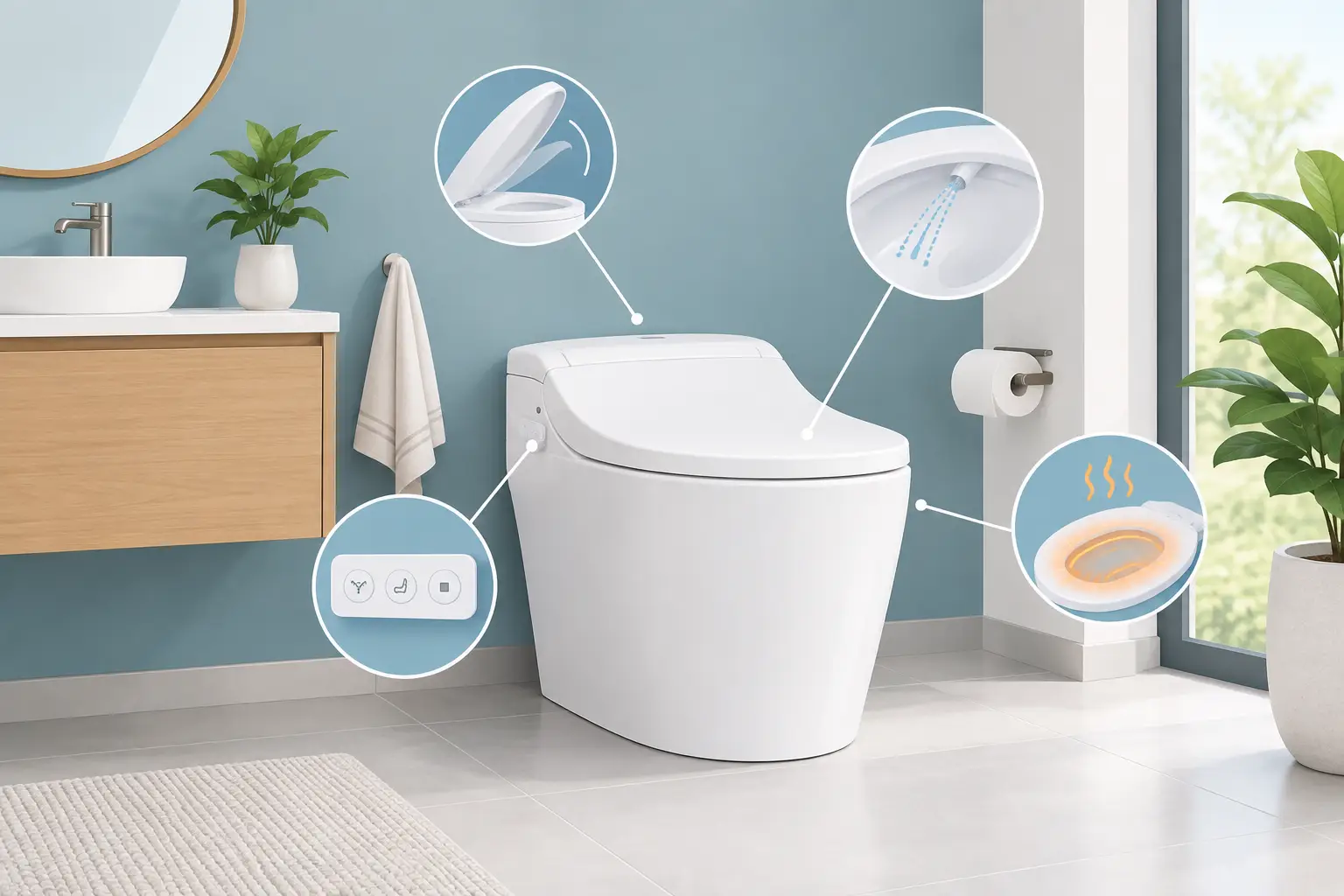
Bidet-Ready Features Are a Practical Upgrade
A bidet seat can be added to many modern toilets, but not every bathroom is equally prepared for one. The toilet needs compatible seat mounting, and electric bidet seats usually need a nearby GFCI outlet. If there is no outlet close enough, that electrical work needs to be handled separately before choosing an electric model.
Bidet-ready toilets can still be a smart choice even if you are not installing a bidet seat immediately. They give you options later, particularly in a primary bathroom where comfort and hygiene features are more valuable. Just do not buy a premium bidet toilet because it sounds appealing without checking the electrical and space requirements first.
What a Toilet Upgrade Really Costs
The fixture price is only part of the cost. A complete replacement should account for delivery, bringing the new toilet into the home, removing the old fixture, setting and sealing the new one, testing it, and legally disposing of the old toilet. If those items are not included up front, a low product price can become a less attractive final bill.
At ToiletKing, bundled replacement packages begin at $489 for a Basic option, $639 for Standard, $799 for Deluxe, and $1,175 and up for King’s Throne selections. Those tiers make it easier to choose based on function and finish instead of sorting through dozens of models with unclear installation costs.
The price can change when a bathroom has an unusual rough-in, significant flooring issues around the base, a hidden flange problem, or access challenges such as tight stairs. A reputable installer should explain those possibilities plainly. Most straightforward replacements, however, should not require an all-day appointment or multiple vendors.
Do Not Ignore a Leak at the Base
A small amount of water around the toilet base is not something to watch for a few more months. Sometimes it is condensation or a nearby splash. But if water appears after flushing, the toilet rocks, or there is a persistent odor near the base, the seal beneath the toilet may be compromised.
That does not automatically mean the floor is badly damaged. Still, waiting can allow moisture to affect flooring, subflooring, and the ceiling below in a multi-level home. When the fixture is already old or inefficient, replacement is often the cleaner decision than repeatedly addressing symptoms.
A toilet replacement should leave the bathroom cleaner, more dependable, and easier to use than it was that morning. If you are weighing options in Fairfax County, Loudoun County, or elsewhere in Northern Virginia, call (571) 326-8708 for a free consultation. Ask about promo code FIVEOFF, then choose the upgrade that will make the bathroom one less thing to think about.