
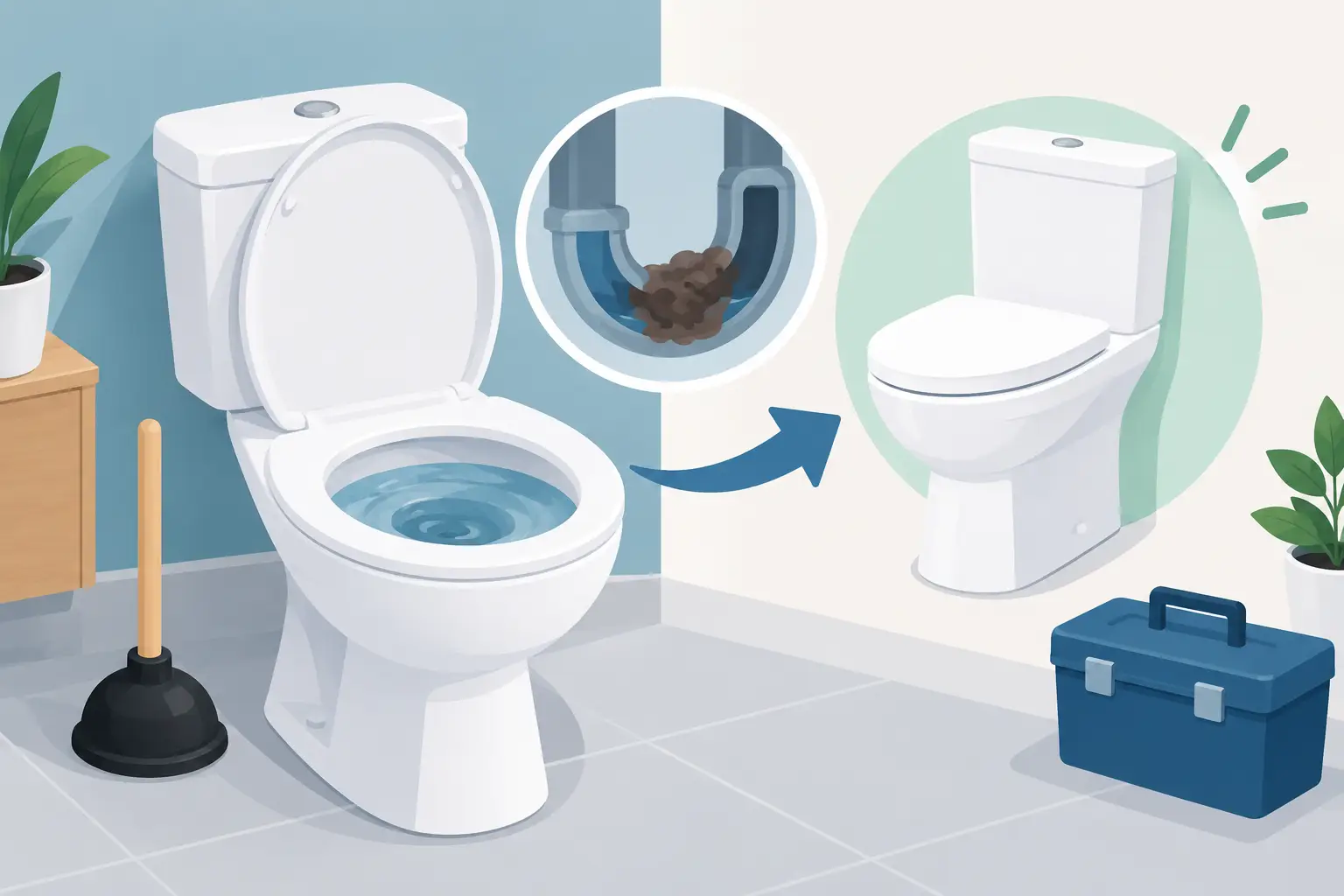
A plunger is supposed to be an occasional household tool, not permanent bathroom equipment. When you are searching for a toilet constantly clogging replacement, the real question is whether you have a simple blockage or a fixture that has reached the end of its useful life. If the bowl backs up repeatedly despite normal use, replacement is often the cleaner, more dependable answer.
A new toilet will not correct every drain problem. But when the toilet itself has weak flushing performance, internal wear, a poor trapway design, or damage you can see, installing a better model can end the cycle of plunging, overflowing, and worrying about the next flush.
When a constantly clogging toilet should be replaced
One isolated clog after too much paper is not a reason to replace a toilet. Repeated clogs under ordinary use are different, particularly if you need to plunge every week or if the bowl rises near the rim before finally draining.
Older low-flow toilets are a frequent culprit. Many early water-saving models used less water without having the bowl and trapway engineering to move waste effectively. They may require two flushes, leave paper behind, or clog when used normally. A modern WaterSense toilet can use far less water than an older fixture while still providing a stronger, more consistent flush.
The pattern matters. If the toilet has always been temperamental, replacement is more likely to help. If a toilet that worked well for years suddenly begins clogging, the issue may be farther down the drain line. A replacement specialist can assess whether the fixture shows clear failure signs, but a persistent blockage in the plumbing system needs the appropriate diagnostic work before a new toilet is installed.
Signs the fixture itself is the problem
A toilet is a stronger candidate for replacement when clogs come with visible wear or poor performance. Watch for a bowl that never seems to flush cleanly, a weak swirl instead of a decisive siphon, or water that climbs high before draining. Mineral buildup under the rim can restrict the rinse holes, especially in older toilets, and internal passages are not always practical to restore.
Cracks are another clear line. A crack in the porcelain tank or bowl can worsen without warning and may lead to a damaging leak. Hairline staining around the base, recurring moisture at the floor, or a toilet that rocks when someone sits down also deserves prompt attention. Sometimes the fix is at the seal or mounting hardware, but an old, stained, inefficient toilet is often not worth repeatedly addressing piece by piece.
It is also reasonable to replace a toilet that works but looks dated, is difficult to clean, or sits uncomfortably low. For a home seller, landlord, or property manager, a reliable new fixture is usually a much better handoff than a toilet with a history of clogs and a plunger sitting beside it.
Replacement will not solve every clog
Before buying a new toilet, consider what is happening elsewhere in the home. If multiple fixtures drain slowly, tubs gurgle when the toilet flushes, or sewage backs up into a shower or lower-level drain, the problem is unlikely to be limited to the toilet. Replacing the fixture without addressing a drain-line issue will not solve it.
The same is true if a small object has fallen into the bowl and lodged beyond the visible opening. Toothbrushes, children’s toys, air freshener holders, and wipes can create a stubborn obstruction. Wipes marked “flushable” are a particularly common problem because they do not break down like toilet paper.
Still, homeowners often know when their toilet has been a weak performer from day one. If it clogs with reasonable use, needs multiple flushes, has a slow bowl refill, and looks like it belongs to another decade, a replacement is a practical upgrade rather than a gamble.
What to choose instead of another clog-prone toilet
Flush performance should come before color, style, or a bargain price. Look for a modern toilet from a proven manufacturer such as Kohler, American Standard, or TOTO, with a properly engineered trapway and flushing system designed to clear the bowl in one flush. The best choice depends on the bathroom and who uses it.
Height, bowl shape, and flush performance
Comfort-height toilets are several inches taller than traditional standard-height models. They are often easier for adults, taller household members, and people with knee or mobility concerns to use. Standard height can be a better fit for young children or a bathroom where a lower seat feels more natural. There is no universal winner, but choosing the right height prevents buyer’s remorse after installation.
An elongated bowl offers more room and is the most common choice in primary bathrooms. A round-front bowl saves valuable inches in a tight powder room, condo bathroom, or rental unit. Measure before selecting, including the distance from the wall to the center of the floor bolts, known as the rough-in. Most homes use a 12-inch rough-in, but 10-inch and 14-inch versions exist. Getting this measurement wrong can delay a same-day replacement.
For households tired of clogs, do not focus only on gallons per flush. A well-designed 1.28-gallon toilet can outperform an older 1.6-gallon model by a wide margin. The engineering of the flush valve, bowl wash, siphon action, and trapway matters more than simply adding water.
Easy-clean upgrades that make sense
Skirted toilets have smooth sides that conceal the trapway. They cost more than a conventional exposed-trapway toilet, but they are much easier to wipe down and create a cleaner, more finished look. That trade-off makes particular sense in a frequently used bathroom or a home where appearance and cleaning time matter.
Bidet-ready and bidet-seat-compatible models are also worth considering during replacement. An electrical outlet may be needed for a full-featured bidet seat, so check the location before selecting one. For a straightforward rental turnover or pre-listing update, a durable, conventional model may be the more cost-conscious choice.
What toilet replacement actually costs
The total cost is more than the porcelain fixture on a retail shelf. Someone still needs to transport a heavy, fragile toilet, remove the old one without damaging flooring, install new connection materials, test every flush, and legally dispose of the old fixture. A low sticker price can become less appealing once delivery, labor, supplies, and disposal are arranged separately.
ToiletKing packages those steps together: delivery, old-toilet removal, professional installation, testing, and disposal. For Northern Virginia customers, the Essential tier starts at $499 and is designed for functional, cost-conscious replacements. Performance starts at $669, Signature starts at $799, and King’s Throne starts at $1,049. Specific pricing varies by toilet model and bathroom conditions.
Factors that can affect the final choice include the toilet’s rough-in, whether the floor is level, the condition of the existing shutoff valve, access to the bathroom, and the features you want. A basic replacement can be exactly right for a rental property. A skirted comfort-height model may be the better long-term value in a primary bath.
Why professional installation is usually the easier route
A toilet installation looks simple until the old toilet is off the floor. The bowl is heavy, porcelain edges can chip tile, and the seal at the floor must be correct. Tightening the mounting bolts too aggressively can crack porcelain, while leaving them loose allows the toilet to rock and can compromise the seal over time.
Professional installation also means the old fixture does not remain in a driveway, garage, or curbside pile. For busy homeowners, landlords coordinating turnovers, and real estate professionals preparing a listing, having the entire job completed in one visit is often the point. ToiletKing focuses solely on toilet replacement and typically completes delivery, removal, installation, and disposal in under an hour.
If your toilet is constantly clogging and you are tired of treating every flush like a risk, do not wait for an overflow to force the decision. Call ToiletKing at (571) 326-8708 or book a free consultation through ToiletKingVA.com. Use promo code FIVEOFF where applicable, and choose a replacement that lets the bathroom get back to being the least dramatic room in the house.