
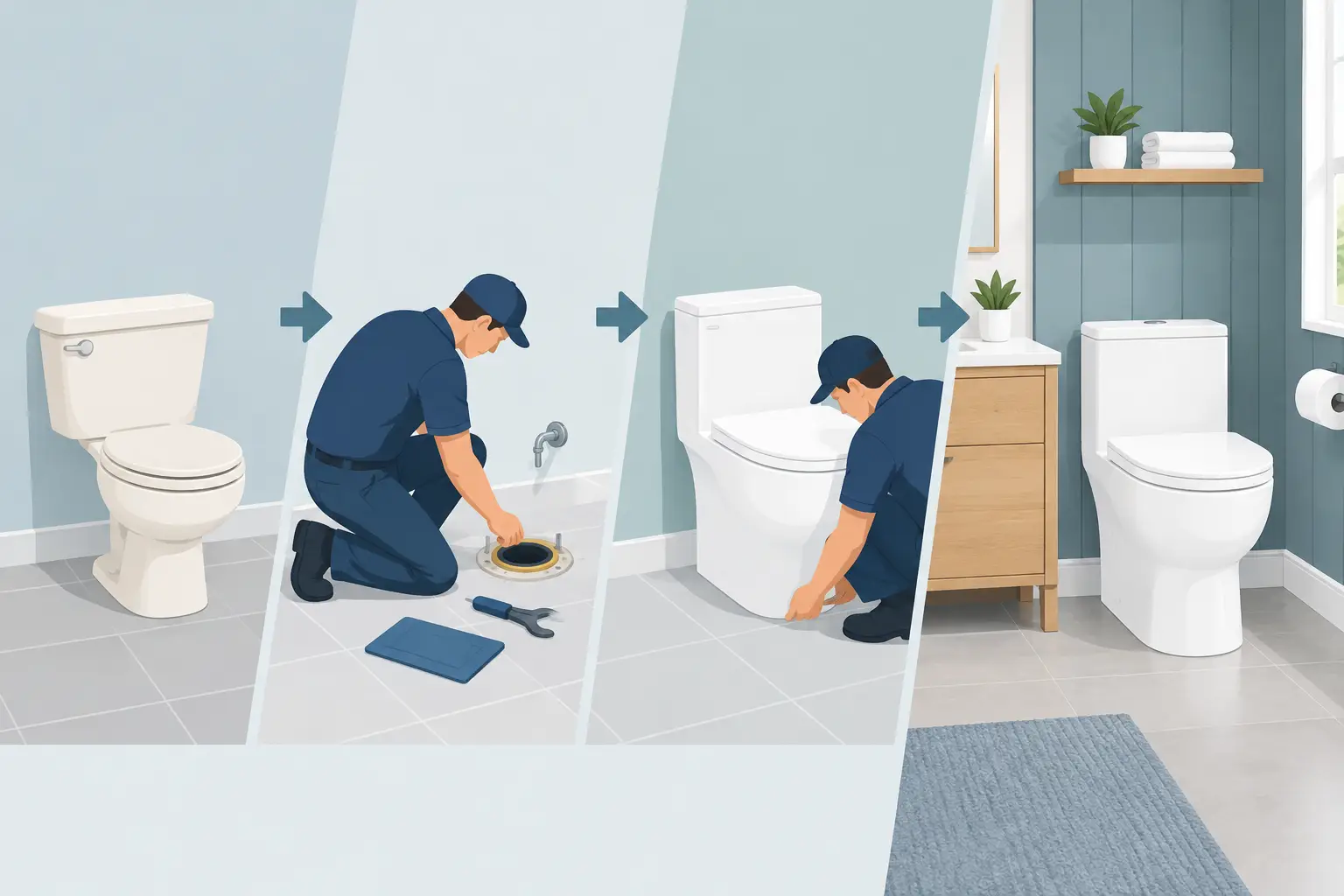
A toilet replacement should not turn into a weekend project involving a pickup truck, a plumbing appointment, and an old fixture sitting in the garage. The toilet upgrade process is much simpler when one team brings the new toilet, removes the old one, installs and tests the replacement, and takes the old fixture away.
For most straightforward replacements, the hands-on work takes under an hour. The key is choosing a toilet that fits the bathroom, suits the people using it, and solves the reason you are replacing the old one in the first place.
When a Toilet Upgrade Makes More Sense Than Another Repair
Some toilet problems are obvious. A crack in the tank or bowl, water on the floor near the base, or a toilet that rocks when someone sits down should be dealt with promptly. A failed wax ring can allow water to seep beneath the toilet, where it can damage flooring or the subfloor without announcing itself right away.
Other signs build slowly. You may have a toilet that needs two or three flushes, clogs more often than it used to, refills randomly in the middle of the night, or has stains and mineral buildup that no amount of cleaning seems to remove. Parts inside the tank can often be replaced, but an older toilet with recurring issues may no longer be worth maintaining.
Replacement is also a practical upgrade when the toilet simply does not fit the household. A low, round-front toilet can feel cramped for taller adults or difficult for an older family member to use. In a rental property, a visibly dated or unreliable toilet can create avoidable tenant calls. For a home headed to market, a clean, modern replacement can make a small bathroom look cared for without remodeling the whole room.
The Toilet Upgrade Process in One Visit
A professional replacement starts before anyone enters the bathroom. The installer needs the basics: whether the toilet is round-front or elongated, whether space is tight near a vanity or tub, the approximate rough-in measurement from the wall to the center of the drain, and any known problems such as a loose base or slow leak. Photos of the existing toilet and surrounding space are especially helpful for avoiding surprises.
1. Choose the right toilet and package
The best choice is not always the most expensive model. For a landlord, seller, or homeowner replacing a basic builder-grade toilet, an Essential package starting at $499 can be a sensible, functional option. A Performance package starting at $669 is often a good fit when stronger flushing and everyday durability matter most.
For homeowners who want a more finished look and easier cleaning, Signature packages start at $799. These options can include upgraded designs, including styles with cleaner lines and features that reduce the hard-to-reach areas around the bowl. King’s Throne packages start at $1,049 and are intended for higher-end bathroom upgrades, including models with premium design features or bidet compatibility. Specific pricing varies by toilet model within every tier.
Toilet height matters as much as appearance. Standard-height toilets can work well for children and shorter adults. Comfort-height toilets are typically a better choice for many adults because sitting down and standing up requires less bend in the knees. Elongated bowls offer more front-to-back room, while round-front bowls can be the smarter choice in a compact powder room where every inch counts.
2. Deliver the new fixture and protect the work area
On installation day, the new toilet is brought into the home rather than left on a curb or in a driveway for the homeowner to move. The installer clears a safe path, protects the immediate work area, and shuts off the water supply to the existing fixture.
This step sounds simple, but it prevents a common headache: homeowners often discover too late that a boxed toilet is heavy, awkward around stairs, and not something they can comfortably maneuver through a narrow bathroom door.
3. Remove the old toilet and inspect what is underneath
Once the water is disconnected and the bowl is drained, the old toilet is lifted off the flange at the floor. This is the point where the real condition of the installation becomes visible. A professional should look for damaged bolts, deteriorated sealing material, soft flooring around the base, or a flange that sits too low or is not properly secured.
Most toilet replacements are routine. However, hidden water damage, a badly corroded shutoff valve, or a broken flange can add work beyond a standard replacement. It is better to know about an underlying issue clearly than to cover it up and hope for the best. A toilet should sit solidly on the floor with no rocking and no seepage at the base.
4. Install, level, and test the replacement
The new toilet is set with a fresh seal, secured, connected to the water supply, and carefully leveled. Leveling is not cosmetic. A toilet that shifts under weight can eventually compromise the seal below it.
Then comes the test that matters: the toilet is flushed, the tank is allowed to refill, and all connection points are checked for leaks. The installer should confirm that the flush works correctly, the fill valve stops at the proper level, and the toilet is stable. A quick final cleanup leaves the bathroom ready to use, not a work zone that needs another hour of attention.
5. Remove and legally dispose of the old fixture
An old toilet is heavy, dirty, and not accepted in every curbside collection program. Hauling it away is part of a complete replacement service, not an extra chore for the homeowner. Proper disposal also means you do not have to figure out whether your vehicle can carry a porcelain fixture without damage.
What Can Affect Replacement Cost and Timing?
Package pricing is useful because it combines the product with delivery, removal, installation, and disposal. Still, a few conditions can affect what is required on site. A standard replacement is fastest when the existing plumbing layout is sound, the shutoff valve operates normally, the floor is stable, and the new toilet uses the same rough-in size.
Bathrooms in older homes can present more variables. Tile installed around an old toilet may make the finished floor height different from the original installation. A toilet that has been leaking for months can leave softness around the base. Tight spaces can limit which bowl shape or tank profile will fit. These are not reasons to panic, but they are reasons to provide accurate photos and discuss the bathroom before scheduling.
Water efficiency is another consideration. Older toilets may use far more water per flush than a modern model. A newer WaterSense-style toilet can reduce water use while still performing well, provided it has a flushing system suited to the home. The cheapest toilet is not a bargain if it routinely clogs or needs repeated flushing.
DIY or Professional Installation?
DIY installation can look easy in a video because the room is empty, the floor is level, and every part cooperates. In a real bathroom, the difficult moments tend to be a seized supply connection, corroded closet bolts, an uneven floor, or discovering that the new toilet does not clear the wall or vanity as expected.
A homeowner who is comfortable lifting heavy porcelain, shutting off water, measuring the rough-in, and handling disposal may choose to do it themselves. But the savings can disappear quickly after buying tools, delivery, a new supply line, sealing materials, and arranging disposal. A professional replacement is usually the better fit when speed, cleanliness, and a properly tested installation matter more than spending a Saturday on the bathroom floor.
For homeowners, landlords, and property managers in Fairfax County, Loudoun County, and throughout Northern Virginia, ToiletKing keeps the replacement focused on one clear job. There is no need to coordinate a retailer, a delivery service, an installer, and a disposal plan.
If your toilet is leaking, unstable, outdated, or simply no longer working the way it should, call (571) 326-8708 to schedule a free consultation. Mention promo code FIVEOFF when it applies, and get the bathroom back to normal without making a broken toilet the center of your day.