
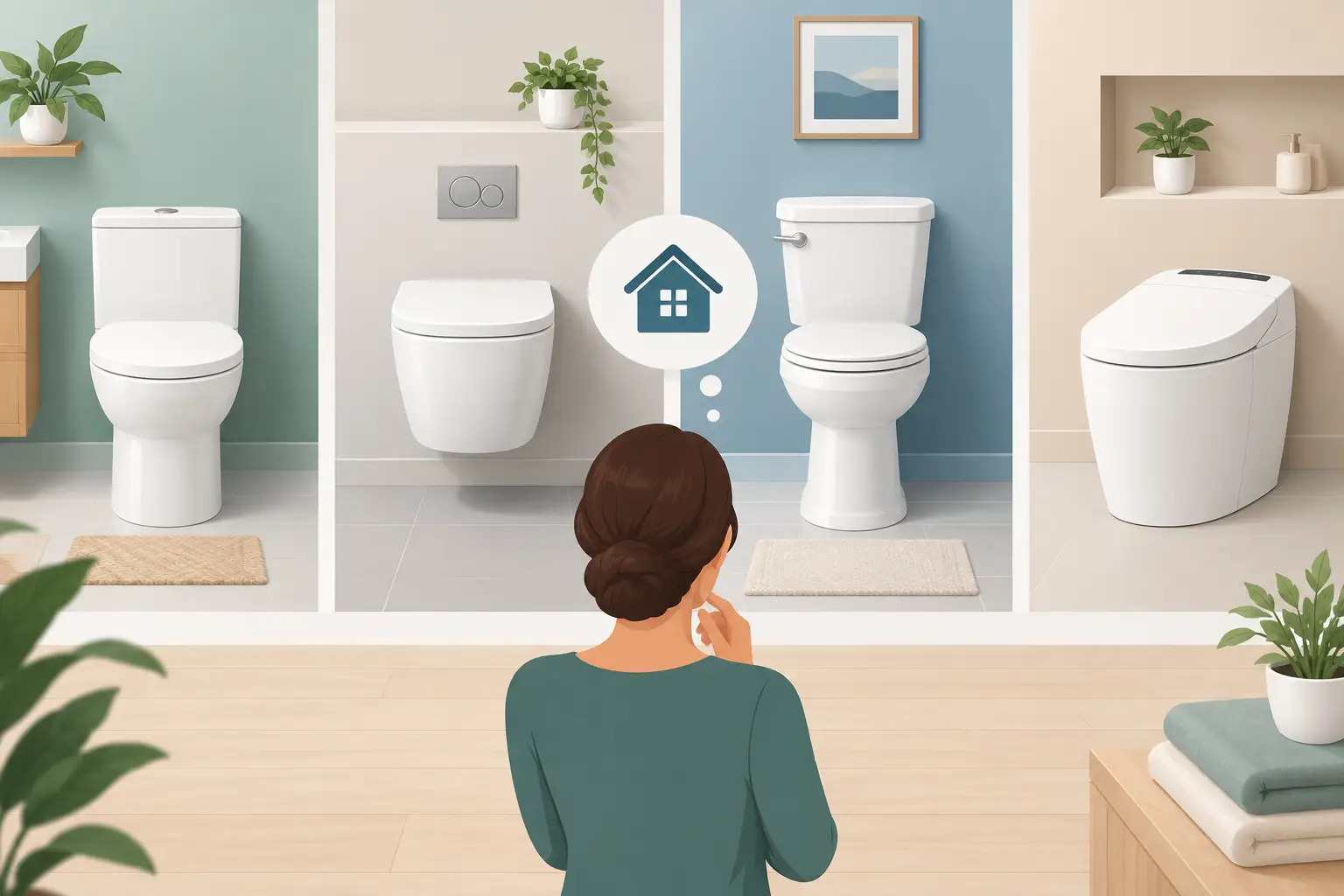
A toilet replacement should not turn into a weekend of comparing measurements, arranging delivery, and figuring out how to get a 90-pound old fixture out of the house. The practical answer to how to choose a toilet package is to start with fit and installation needs, then choose the comfort, flushing performance, and finish that make sense for the bathroom and budget.
For most homeowners, the right package is not the most expensive toilet on the shelf. It is the one that fits the existing plumbing, works reliably for the people using it, looks right in the room, and includes everything needed to remove and replace the old unit without surprises.
Start With the Reason You Are Replacing It
A cracked tank, a toilet that rocks at the floor, recurring leaks around the base, or a bowl that clogs far more often than it should are all solid reasons to replace rather than keep repairing. We also see toilets with stained, rough bowl surfaces that never quite come clean, outdated colors, weak flushing, and tanks that sweat badly during humid weather.
For a landlord or home seller, the goal may simply be a clean, dependable replacement that will not create a call-back. For a homeowner renovating a primary bath, easy cleaning, comfort height, quiet flushing, and a more finished appearance may matter more. Deciding what problem you are solving keeps the selection focused.
A package is especially helpful when the toilet has failed suddenly. If water is appearing at the base, first make sure it is not just condensation or an obvious supply-line drip. A leak at the floor can point to a failed wax seal, but it can also reveal a loose toilet, damaged flange, or a crack that was hidden from view. Replacement is often the cleaner choice for an older fixture with several issues at once.
How to Choose a Toilet Package by Fit First
Before comparing styles, confirm the basics. The most common rough-in measurement is 12 inches, measured from the finished wall behind the toilet to the center of the floor bolts. Ten-inch and 14-inch rough-ins exist, particularly in older homes, and choosing the wrong one can stop an otherwise simple install.
The finished wall is what matters, not the baseboard. Measure from the wall above the baseboard, and account for any thick tile, paneling, or trim that reduces the available space. In Northern Virginia homes, tight powder rooms and older bathroom layouts are common enough that depth matters just as much as rough-in size.
Also consider the shutoff valve location, flooring condition around the base, and whether the toilet sits close to a vanity, tub, or door swing. An elongated bowl is usually more comfortable for adults, but it projects farther into the room than a round-front bowl. In a compact half bath, that extra length can make the room feel cramped or interfere with the door.
If you are not sure about measurements, a consultation before ordering is worth it. It is much easier to select the right toilet than to discover on installation day that a new bowl blocks a drawer or leaves too little knee room.
Pick the Right Height for the People Using It
Standard-height toilets generally sit around 15 inches from the floor to the top of the bowl, before the seat is added. They are familiar, often work well for children, and are a sensible choice for rental properties or secondary bathrooms.
Comfort-height toilets are closer to chair height, typically around 17 to 19 inches to the bowl rim. They are popular with taller adults, older homeowners, and anyone who finds standing up from a lower seat uncomfortable. A comfort-height toilet can make a daily difference in a primary bathroom, but it is not automatically best for every household. Some shorter adults and young children prefer a standard-height bowl because their feet sit more securely on the floor.
This is one of those choices where the bathroom’s main user matters more than a showroom trend. If a toilet is being replaced in a home where aging in place is part of the plan, comfort height is usually a smart upgrade. If it is going into a kid’s bathroom or a small rental unit, standard height may be the better fit and the better value.
Compare Flush Performance, Not Just Gallons
Most current toilets use 1.28 gallons per flush, which is a meaningful improvement over older models that may use 3.5 gallons or more. Water efficiency matters, but low water use should not mean weak performance. A toilet that needs a second flush regularly is frustrating and can erase the savings.
Look for proven flushing systems from established manufacturers such as Kohler, American Standard, and TOTO. Bowl wash, trapway design, and the size and shape of the flush valve all affect real-world performance. In plain terms, you want a toilet that clears waste effectively, rinses the bowl well, and does not leave you reaching for the plunger every few weeks.
For a busy household, stronger, consistent flushing is worth paying for. For a lightly used guest bath, a dependable standard model may be all you need. Avoid choosing solely by a flashy feature list. The toilet still needs to flush well years after installation, not just sound impressive in a product description.
Decide Whether Easy Cleaning Is Worth the Upgrade
Two-piece toilets have a separate tank and bowl. They are common, dependable, and generally the most budget-friendly option. Because replacement parts are widely available, they are a practical fit for rentals, sellers, and homeowners who want a straightforward toilet without extra design cost.
One-piece toilets have the tank and bowl molded together. Their smooth shape creates fewer seams where dust and grime collect, and many people prefer their cleaner, more modern look. They often cost more, but they can be a good upgrade in a primary bath or a visible powder room.
Skirted toilets go a step further by covering the curved trapway on the sides of the bowl. Anyone who has cleaned behind a conventional toilet knows why this matters. There are fewer tight corners around the base, so routine cleaning is faster and less unpleasant. A skirted design can be particularly appealing for homeowners who want a polished bathroom or for property managers trying to simplify turnover cleaning.
The trade-off is price and, in some cases, access to installation hardware. That does not make skirted toilets difficult when installed properly, but it is a reason to have the work handled by a toilet replacement specialist rather than treating it as a quick, no-planning swap.
Match the Package Tier to the Job
A clear package price should cover more than the fixture. A complete replacement includes delivery of the new toilet, removal of the old one, professional installation, and legal disposal. That is the real comparison to make when evaluating cost. A low store price can become less attractive once you add delivery, parts, labor, hauling, and disposal.
ToiletKing keeps the choices simple with four installed package levels. The Basic package starts at $489 and is designed for functional, cost-conscious replacements. It is a strong fit for rental homes, listings, and secondary bathrooms where reliability matters more than appearance upgrades.
The Standard package starts at $639 and gives homeowners room to choose a more comfortable or refined option without moving into premium pricing. Deluxe packages start at $799 and are where easy-clean designs, stronger flushing, and upgraded styling often make the most sense. King’s Throne packages begin at $1,175+ for homeowners who want a higher-end bathroom feature, including premium designs and bidet-compatible options.
The best tier depends on the room. Spending more on a powder-room toilet that guests see every day can be reasonable. Spending less on a rarely used basement bathroom can be just as smart. The point is to choose intentionally, not assume every toilet in the house needs the same level of finish.
Do Not Overlook What Happens Under the Toilet
A proper replacement is about more than setting a new bowl on a wax ring. The installer should check that the toilet is stable, the supply connection is secure, the flush is working correctly, and there are no leaks at the base or tank connection. A toilet that rocks even slightly can eventually break the seal and damage the flooring beneath it.
Old bolts can be corroded, shutoff valves can be stiff, and flooring installed around an old toilet can expose an unprotected gap when the footprint changes. These are normal factors that affect the job. Upfront consultation and package pricing help identify them before the appointment rather than turning them into an unpleasant surprise afterward.
For homeowners in Fairfax County, Loudoun County, and across Northern Virginia, a focused replacement service can usually complete delivery, removal, installation, and disposal in under an hour once the right toilet is selected. That means no coordinating a retailer, a plumber, and a hauling service while an unusable bathroom sits out of commission.
If you have a leaking, unstable, outdated, or hard-to-clean toilet, do not wait for the problem to become a damaged-floor problem. Call ToiletKing at (571) 326-8708 or book a free consultation at ToiletKingVA.com. Use promo code FIVEOFF where applicable, and choose a package that leaves you with a toilet that fits the room and one less thing to worry about.