
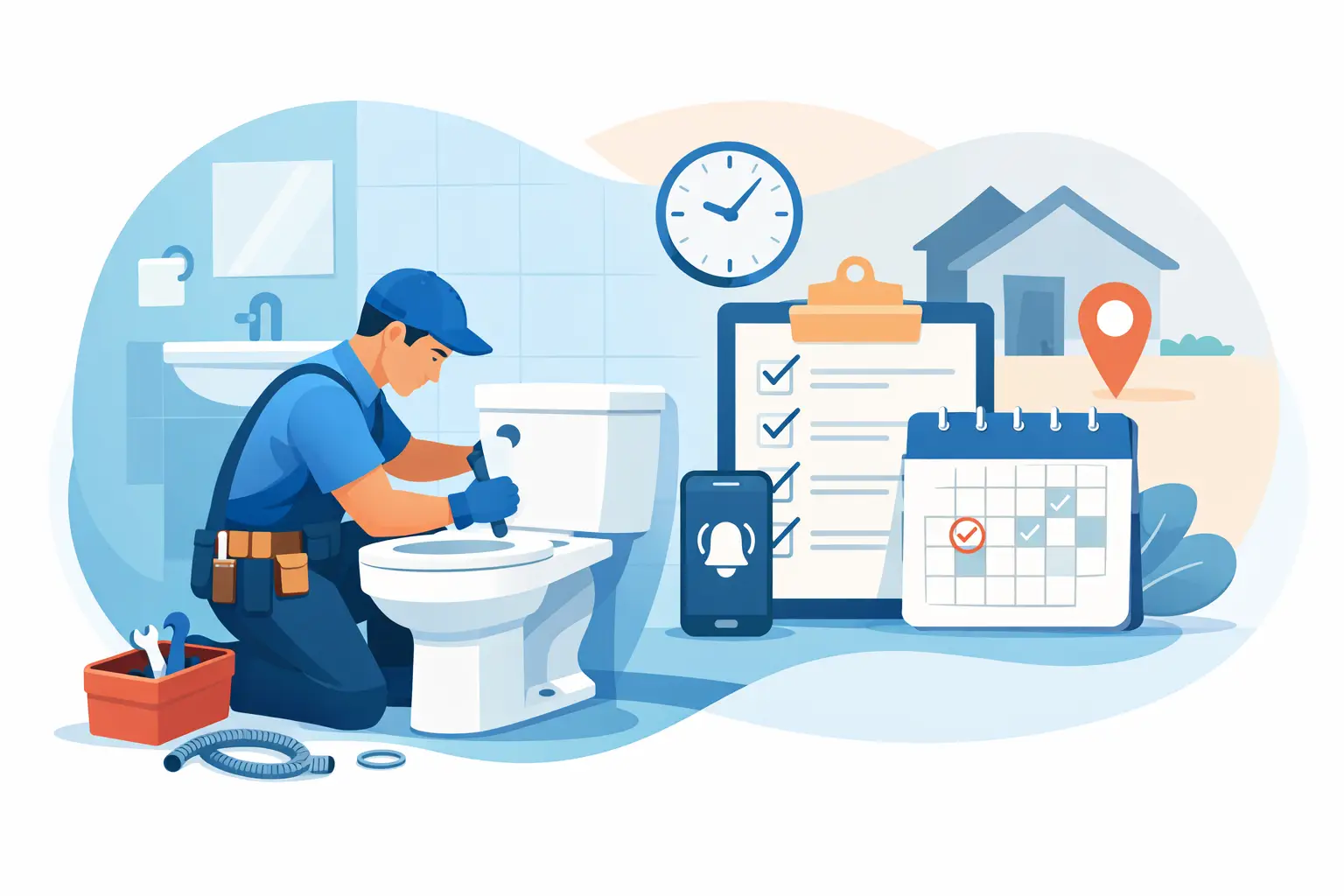
A toilet that rocks at the base, leaves water on the floor, flushes weakly, or needs the handle held down is more than an annoyance. It can make one bathroom hard to use and turn a normal morning into a scramble. This toilet installation appointment guide explains what to do before the installer arrives, what a proper replacement visit includes, and the few conditions that can change the plan.
For most straightforward replacements, the work is simple: choose the toilet, clear a path, and let the installer handle delivery, removal, installation, and legal disposal of the old fixture. In Fairfax County, Loudoun County, and throughout Northern Virginia, a standard replacement can often be completed in under an hour once the technician is on site.
Start by choosing the right replacement
The best toilet is not always the most expensive one. It is the one that fits the bathroom, the people using it, and the reason you are replacing the old fixture.
A Basic package at $489 is often a practical choice for landlords, home sellers, or anyone replacing a functional but cracked, stained, or unreliable toilet without adding upgrades. A Standard package at $639 gives homeowners a solid everyday replacement with a more upgraded feel. Deluxe options start at $799 and are popular when appearance and easy cleaning matter, especially for a primary bathroom. King’s Throne packages begin at $1,175+ for customers who want premium design, enhanced flushing, bidet compatibility, or a major visual upgrade.
Before booking, think about bowl shape and height. An elongated bowl gives more front-to-back room and is preferred by many adults, but it can feel oversized in a very tight powder room. Round-front bowls save space. Comfort-height toilets sit a little higher than traditional models, which many homeowners find easier on the knees and back. Standard-height models can be a better fit for shorter users or homes with young children.
Skirted toilets are another decision worth making before the appointment. Their smooth sides hide the trapway, so there are fewer tight corners to wipe around. They look cleaner and are easier to maintain, but they usually cost more than a conventional exposed-trapway toilet. For a rental turnover, that trade-off may not matter. For a bathroom you clean every week, it often does.
What to do before your toilet installation appointment
You do not need to dismantle anything or turn off the water hours ahead of time. A few small steps make the visit safer and faster.
Clear toiletries, bath mats, trash cans, scales, and decorative items away from the toilet area. The installer needs room to bring the new fixture in, remove the old one, and work around the shutoff valve without bumping shelves or cabinets. If the route from the entry to the bathroom is narrow, move shoes, small tables, or other obstacles out of the way as well.
Make sure an adult who can approve the work is available. This matters most in rental properties, occupied homes, and homes where the bathroom has an unusual issue that needs a decision. If you are a landlord or property manager, provide tenant access instructions in advance and confirm whether there is parking, a gate code, or a building rule for service professionals.
It also helps to let the installer know about anything unusual before the appointment. That includes a toilet that is actively leaking, a shutoff valve that appears corroded, flooring that feels soft near the base, or a toilet that has been rocking for months. These details do not automatically prevent replacement, but they help avoid surprises.
If the toilet is still in use, flush it normally before the appointment. Do not pour drain chemicals, bleach tablets, or improvised sealants into or around the fixture to get it through one more day. Chemicals can create an unpleasant and unsafe work area, while caulk or adhesive around the base can hide evidence of a leak.
What happens during the installation visit
A professional replacement begins with a quick confirmation of the toilet selection and the condition of the existing installation. The installer checks the space, supply connection, shutoff valve area, and base of the toilet before removal. This is not wasted time. A toilet may look like a simple swap from across the room, but a loose base, damaged flooring, or an aging valve can change what is visible once the fixture is lifted.
Next, the water is shut off, the old toilet is disconnected, and the remaining water is managed carefully. The old fixture is removed from the bathroom rather than left in a garage, at the curb, or for the homeowner to deal with later. The installation area is cleaned and prepared for the new toilet.
The new fixture is then set, secured, connected, and tested. A good final check includes more than one flush. The installer should verify that the bowl refills correctly, the base is stable, the water connection is dry, and the flush works as expected. A toilet that flushes once is not necessarily finished if the tank continues running or a small drip appears at the supply line.
With a focused toilet replacement service, delivery, removal, installation, and legal disposal are handled as one package. That avoids the usual chain of errands: selecting a toilet at a store, arranging delivery, finding someone to install it, and figuring out where an old porcelain fixture can legally go.
When a replacement may need a different plan
Most toilet appointments are routine. Still, it is better to be direct about the exceptions than to promise that every bathroom is identical.
A toilet that has been leaking at the base can sometimes leave behind damaged subflooring. Flooring that feels spongy, discoloration that extends beyond the base, or a toilet that visibly shifts when someone sits down may point to a condition beneath the fixture. The toilet itself may need replacing, but the underlying surface must also be safe and stable before a new fixture is secured.
The shutoff valve is another common variable. If the valve will not turn, is heavily corroded, or begins leaking when operated, that condition has to be addressed before the new toilet can be placed into reliable service. Older homes can also have nonstandard rough-in measurements or clearance issues caused by a vanity, radiator, door swing, or unusually close wall.
This is why photos and a clear description during the consultation are helpful. A straightforward appointment should be fast, but speed should never mean forcing a new toilet onto a bad foundation or ignoring a connection that is already failing.
A practical toilet installation appointment checklist
The day before, confirm the toilet model or package, remove personal items from the work area, and make sure the route to the bathroom is clear. On appointment day, have someone available to provide access and mention any known leaks, rocking, weak flushing, or valve problems. After installation, test the flush, look around the base and supply connection for moisture, and ask any questions before the technician leaves.
If you are replacing a toilet before listing a home, do not wait until the final walk-through to handle it. Buyers notice hairline cracks, stained bowls, loose seats, and toilets that take two flushes. For a rental, a replacement before a tenant move-in is usually easier than coordinating access after the unit is occupied.
A broken toilet does not have to take over your day. For a clear, bundled replacement quote and a free consultation, call ToiletKing at (571) 326-8708. Ask about promo code FIVEOFF when scheduling, then let a focused replacement team take the old fixture away and leave the bathroom ready to use.