
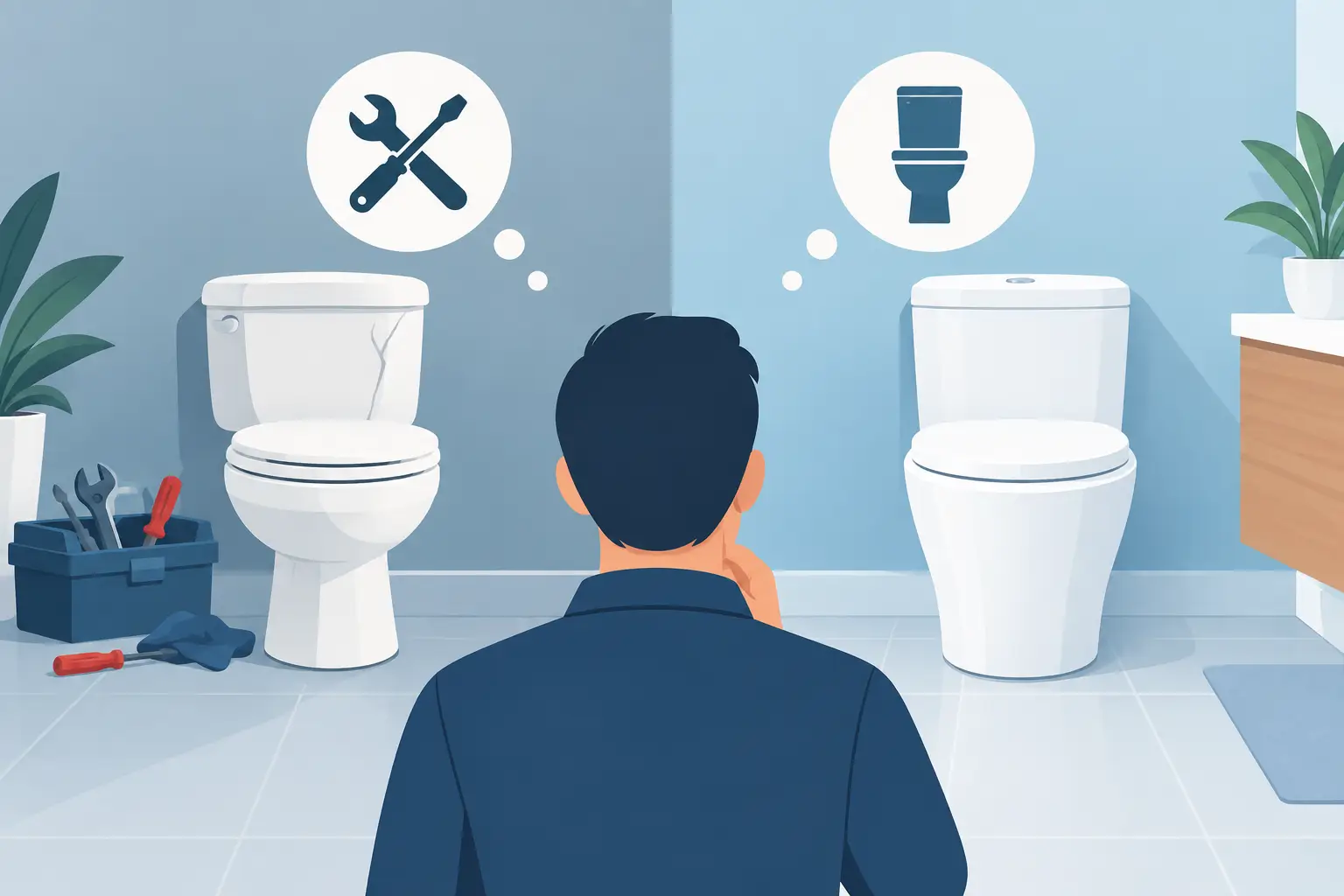
A toilet that runs all night, rocks when someone sits down, or leaves water at the base is more than an annoyance. It can waste water, damage flooring, and turn a small bathroom issue into an urgent decision. With toilet replacement versus repair, the right answer usually comes down to one question: is this a simple, isolated failure, or is the fixture itself nearing the end of its useful life?
A flapper, fill valve, or handle can often be a sensible repair. But a cracked bowl, recurring base leak, weak flush, or toilet that has needed several fixes in a short period usually points toward replacement. For homeowners, landlords, and sellers in Fairfax County, Loudoun County, and throughout Northern Virginia, replacement can be the faster and more predictable option when the toilet is clearly failing.
Toilet replacement versus repair: the quick answer
Repair makes sense when the toilet is in good physical condition and one replaceable part has failed. A toilet that runs because the flapper no longer seals, for example, may need a modest part rather than a new fixture. The same is often true for a loose handle or a fill valve that will not shut off.
Replacement makes more sense when there is damage to the porcelain, instability at the floor, repeat repairs, poor flushing performance, or an outdated design that no longer fits the bathroom or household. A new toilet also gives you a clean reset: new fixture, new internal components, fresh mounting hardware, and a better chance to improve comfort and water use at the same time.
The key is not to keep paying for small repairs simply because each one seems cheaper than a replacement. Three service calls, a persistent leak, and an old low-performance toilet can cost more in frustration and property risk than changing the fixture once.
When a repair is usually the practical choice
Most toilets have a few parts designed to wear out. If the porcelain bowl and tank are sound, the toilet sits firmly on the floor, and it has otherwise performed well, a targeted repair can be reasonable.
A constantly running toilet is the classic example. You may hear a faint hiss after flushing, see water trickling into the bowl, or notice the tank refilling on its own every few minutes. Often, the flapper is warped or the fill valve is no longer shutting off properly. Those are component problems, not necessarily toilet problems.
A weak flush can also be repairable if it is caused by a partial blockage, a poorly adjusted tank water level, or clogged rim holes. Before assuming the fixture is finished, consider whether the toilet previously flushed well and whether the issue appeared suddenly. A sudden change points more toward a part or drainage issue than an aging bowl.
Repair may also be the sensible short-term choice in a rental property that is being renovated soon. If the toilet works reliably after a simple fix and the bathroom is scheduled for a full update within months, there may be little value in replacing it immediately.
Signs replacement is the safer investment
Some toilet problems should not be treated as recurring maintenance. A visible crack in the bowl or tank is one of them. Porcelain does not flex or heal. Even a hairline crack can spread, and a tank crack can release a surprising amount of water quickly. A cracked toilet should be replaced rather than patched.
Water around the base needs attention, too. Sometimes the source is condensation or a spill, but water that returns after each flush may indicate a failing seal beneath the toilet. If the fixture is older, rocks at the floor, or has already been reset once, replacing the toilet can be a more dependable decision. Repeated movement can damage the seal and allow water to reach the subfloor.
Look closely at the condition of the porcelain and hardware. Staining that never comes clean, deep scratches, crazing in the glaze, rusted bolts, a corroded tank interior, and a lid that no longer fits securely all add up. None of these alone always requires a new toilet, but together they tell you the fixture has had a long service life.
Then there is performance. Older toilets may need a second flush, clog easily with normal use, or leave residue because the bowl rinse is weak. That becomes especially frustrating in a busy household, a rental, or a home being prepared for sale. Modern toilets from Kohler, American Standard, and TOTO are designed to use less water while delivering more consistent flushing than many older fixtures.
The real cost comparison is larger than the part price
The price of a replacement part can look attractive, but it is not the full comparison. Consider the age of the toilet, how often it has needed attention, the chance of water damage, and whether the repair addresses the cause rather than just the symptom.
For example, replacing a flapper on a ten-year-old toilet that otherwise works well is a different decision from replacing a flapper on a 25-year-old toilet that rocks, clogs, and has a stained bowl. In the second case, the flapper may stop the running water, but it does not solve the bigger ownership problem.
Replacement pricing also varies for good reasons. Toilet height, flushing system, bowl shape, easy-clean features, bidet compatibility, and the condition of the existing installation all affect the final choice. A basic, dependable replacement can be the best fit for a rental or a home sale, while a homeowner planning to stay may prefer a skirted design or upgraded flushing performance.
At ToiletKing, bundled replacement packages include the toilet, delivery, removal of the old fixture, installation, and legal disposal. Essential options start at $499, Performance options start at $669, Signature options start at $799, and King’s Throne options start at $1,049. Specific pricing varies by toilet model within each tier, but the package approach helps avoid the usual scramble of buying a toilet, arranging delivery, finding an installer, and figuring out what to do with the old one.
Replacement can improve the bathroom, not just fix a problem
If you are replacing anyway, it is worth choosing a toilet that improves daily use. Comfort-height toilets sit a little taller than traditional standard-height models and are often easier for adults, taller users, and people with mobility concerns to use. They are a frequent upgrade in primary bathrooms and homes where owners expect to age in place.
Bowl shape matters in smaller bathrooms. An elongated bowl generally offers more comfort, while a round-front bowl can preserve valuable clearance in a tight powder room. A professional can help confirm that the new fixture fits the available space and works with the existing rough-in before installation day.
Skirted toilets are another practical upgrade. Their smooth sides hide the trapway and eliminate many of the hard-to-clean curves found on traditional toilets. They cost more than basic models, but homeowners who are tired of cleaning around exposed bends often find the difference worthwhile.
Water efficiency should be part of the decision as well. An older toilet may use several gallons per flush, while newer high-efficiency models use far less. The savings depend on household use, but the immediate benefit is often better flushing with less waste. That is a meaningful improvement for a busy family, a landlord managing water costs, or a seller updating a dated bathroom.
Do not ignore an unstable or leaking toilet
A toilet that rocks is not something to live with. The movement may be slight, but every shift can stress the seal at the floor. You may first notice a faint sewer odor, discoloration around the base, loose bolts, or flooring that feels soft nearby. Those signs deserve prompt attention because hidden moisture can travel beneath vinyl, tile, or wood flooring.
Likewise, do not assume every base leak is a simple repair without checking the bigger picture. If the toilet is old, visibly worn, and already due for an upgrade, replacement often lets you address the failing fixture before it creates another disruption. A broken toilet does not have to ruin your day, but postponing a clear replacement decision can make the next failure more inconvenient.
A simple way to make the call
Ask yourself whether the toilet has one isolated issue or several. If it is structurally sound, stable, and reliable except for one worn internal part, repair may be enough. If it has cracks, leaks at the base, frequent clogs, poor flushing, recurring repairs, or a dated look you already want to change, replacement is usually the cleaner long-term answer.
For a fast, straightforward toilet replacement in Northern Virginia and the Washington, DC metro area, call ToiletKing at (571) 326-8708. You can book a free consultation through ToiletKingVA.com, and use promo code FIVEOFF where applicable. The best time to replace a failing toilet is before a small puddle becomes a flooring problem.