
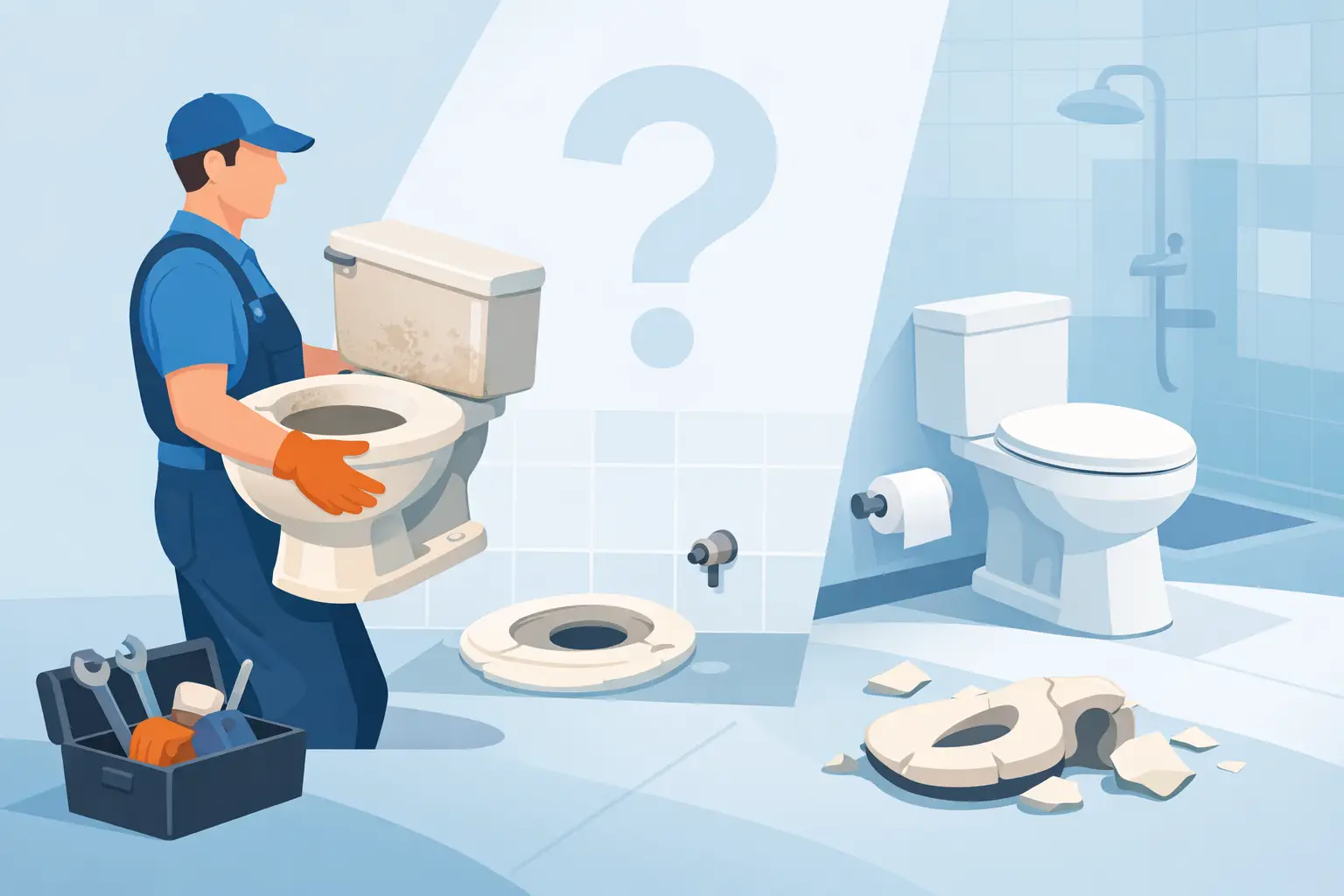
A toilet replacement should not leave you with a heavy, dirty old fixture sitting in the driveway. Can installers remove old toilets? Yes, when removal and disposal are part of the replacement service. A full-service toilet installer disconnects the existing toilet, carries it out, installs the new one, and takes the old fixture for proper disposal.
That is different from buying a toilet at a retailer and hiring someone only for installation. In that situation, removal may be an added charge, or you may be told to arrange disposal yourself. Before scheduling, ask one plain question: “Does the quoted price include removal and legal disposal of my old toilet?”
For homeowners, landlords, and sellers in Fairfax County, Loudoun County, and the wider Northern Virginia area, that distinction matters. Toilets are awkward, porcelain is breakable, and an old fixture can weigh 70 to 120 pounds before you account for residual water.
Can Installers Remove Old Toilets During Replacement?
They can, provided the company offers a complete replacement package and the toilet is reasonably accessible. In a standard replacement, the installer shuts off the water, empties the bowl and tank, disconnects the supply line, removes the mounting hardware, lifts the old toilet from the flange, and prepares the floor for the replacement.
The old toilet is then loaded out of the home rather than left at the curb. Reputable installers do not put a used toilet into your household trash bin. Porcelain fixtures need to be taken to an approved disposal or recycling facility according to local requirements.
At ToiletKing, removal, installation, delivery, and disposal are bundled with the toilet selection. That means customers do not need to coordinate a delivery window, find a separate installer, then figure out what to do with a cracked or outdated toilet after the job is done. For a straightforward replacement, the work is typically completed in under an hour.
What Old Toilet Removal Usually Includes
Removal is more than lifting the toilet and carrying it outside. The work should include protecting the immediate work area, disconnecting the existing fixture safely, and checking the condition of the connection beneath it before the new toilet goes in.
A good installer will look at the wax ring area, closet bolts, shutoff valve, supply line, and toilet flange. These are small parts, but they determine whether a new toilet sits firmly and stays leak-free. A toilet can look perfectly fine from above while the wax seal below has been slowly leaking into the subfloor.
The usual removal-and-replacement process looks like this:
- The installer confirms the new toilet’s size, bowl shape, and rough-in fit the bathroom.
- The water is shut off, the old toilet is drained, disconnected, and removed.
- The floor connection and surrounding area are checked before the new seal and toilet are installed.
- The new toilet is secured, tested through multiple flushes, cleaned up, and the old fixture is taken away.
That testing step is worth paying attention to. After installation, the toilet should flush normally, refill properly, have no seepage at the base, and sit without rocking. A toilet that moves even slightly can eventually compromise the wax seal underneath.
When Removal Is Simple and When It Is Not
Most toilet removals are routine. The bathroom has a clear path to the door, the shutoff valve works, the fixture is a normal residential toilet, and the floor flange is in usable condition. Those are the jobs that move quickly.
Sometimes an installer uncovers an issue that changes the scope. The most common examples are a corroded shutoff valve, broken closet bolts, a damaged flange, tile that has been built up too high around the base, or soft flooring from an old leak. These are not reasons to panic, but they can require additional parts, time, or a different repair plan before a new toilet can be secured correctly.
Access can matter, too. A main-level bathroom with a nearby exterior door is easier than a tight upstairs powder room reached by narrow stairs. The installer still handles the fixture, but difficult access should be discussed when you schedule. It helps avoid surprises on installation day.
Very old toilets can also be heavier than expected. Older one-piece models and cast-iron fixtures are especially challenging. A modern two-piece toilet is usually easier to carry out because the tank and bowl can be handled separately. The old toilet’s condition matters as well. A cracked bowl should be moved carefully because broken porcelain edges are sharp.
Why DIY Disposal Is Often the Hardest Part
Many homeowners can picture removing a toilet after watching a few videos. What they do not picture is getting the old one out of a hallway without scraping walls, managing the water left in the trapway, loading it into a vehicle, and finding a facility that accepts it.
There is also the issue of the floor connection. Once the toilet is lifted, you have an open drain in the bathroom. The old wax ring must be removed, the flange needs inspection, and the new toilet has to be set squarely on fresh sealing material. If it is installed crooked, overtightened, or placed over a damaged flange, the result can be a leak that shows up later instead of immediately.
DIY may make sense for an experienced homeowner with the right tools, a reliable vehicle, and a simple, accessible bathroom. But it is rarely the convenient option for a landlord preparing a rental, a seller facing a listing deadline, or a homeowner dealing with an active leak. A bundled replacement eliminates several separate errands and leaves the bathroom usable the same day.
Does Old Toilet Disposal Affect the Price?
It can. Some companies quote labor only, then add charges for hauling, disposal, delivery, a new supply line, or basic installation materials. That is why a low installation price can become less attractive once every necessary piece is added.
A transparent quote should tell you whether it includes the toilet, delivery, removal, installation, disposal, standard connection materials, and testing. It should also explain what may cost extra if the installer finds a failed shutoff valve, a damaged flange, or a floor problem that prevents a safe installation.
For a simple replacement, package pricing is easier to compare. ToiletKing’s Basic package begins at $489, Standard starts at $639, Deluxe begins at $799, and King’s Throne options begin at $1,175. The right choice is not always the most expensive one. A Basic model can be a sensible fit for a rental or home sale, while a Deluxe skirted toilet can make more sense for a homeowner who wants easier cleaning and a more finished look.
Choose the New Toilet Before the Old One Comes Out
The best replacement is one that fits the space and the people using it. Comfort-height toilets are popular for adults who prefer a seat closer to chair height, while standard-height toilets can work well in bathrooms used regularly by children or shorter adults. Elongated bowls generally offer more room, but a round-front model can preserve valuable clearance in a compact bathroom.
Also consider flushing performance and water use. An older toilet may use 3.5 gallons per flush or more. A newer high-efficiency model uses far less water while often providing a stronger, more reliable flush. That can be a practical upgrade if the current toilet clogs often, runs between flushes, has hairline cracks, or leaves a persistent stain line that never truly comes clean.
If your toilet is leaking at the base, rocking on the floor, cracking, or simply making the bathroom look dated, do not let old-fixture disposal become the reason you postpone replacement. Call (571) 326-8708 to discuss a full-service toilet replacement, or book a free consultation at ToiletKingVA.com. Use promo code FIVEOFF when applicable, and you can have the old toilet gone and the new one working without turning the project into a weekend chore.