
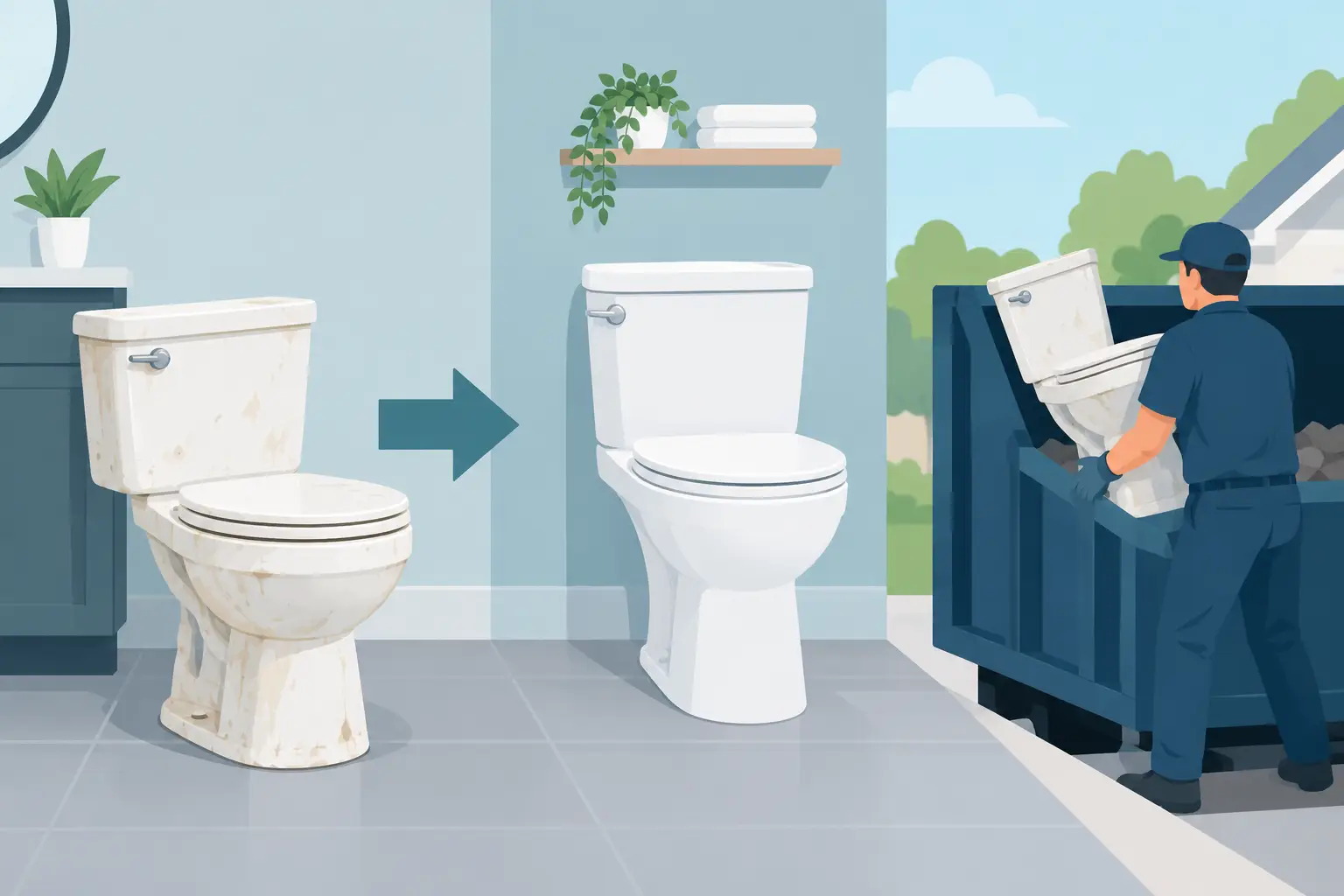
A toilet can look like a simple piece of porcelain until it is sitting in your hallway, dripping from the trap, with nowhere appropriate to go. Old toilet disposal is one of the least convenient parts of a replacement project, especially when a homeowner is already dealing with a leak, a cracked bowl, or a toilet that will not flush reliably.
The short answer is this: an old toilet usually should not be left at the curb or placed in a regular household trash bin. It needs to be removed carefully, transported properly, and disposed of through an approved solid-waste or recycling process. When replacement is handled as one bundled service, you do not have to lift a heavy fixture, find a vehicle that can carry it, or wonder whether your local pickup will take it.
Why old toilet disposal is more involved than it looks
Most toilets weigh between 60 and 120 pounds, and older models can be surprisingly heavy. The bowl and tank are awkward to carry, the glazed porcelain chips easily, and there is often residual water trapped inside even after the supply is shut off and the toilet is flushed.
That is why the removal step matters. A toilet should be disconnected from the water supply, emptied, unbolted from the floor, and lifted without damaging the finished flooring, baseboards, doorway corners, or the flange beneath it. If the wax seal tears or the bowl shifts during removal, there can be unpleasant water and residue around the base. This is not a job most people want to perform before loading the fixture into an SUV.
There is also the question of what is underneath. On a straightforward replacement, the flange is secure and the floor around it is solid. But when an old toilet has leaked slowly for months, technicians sometimes find softened flooring, corroded bolts, or a flange sitting too low after a bathroom floor upgrade. Those conditions affect installation, but they also reinforce why the old fixture should be removed cleanly and the connection inspected before a new toilet goes in.
Can you put an old toilet at the curb?
Usually, no. Curbside collection rules vary by locality and waste provider, but toilets are commonly treated as bulky construction or renovation debris rather than regular trash. Some facilities accept porcelain fixtures at designated drop-off sites. Others require a scheduled bulk pickup, while some private haulers handle them as part of a renovation load.
A toilet should never be abandoned beside a dumpster, placed in a recycling bin, or broken apart in an attempt to make it fit in household trash. Porcelain shards are sharp, heavy, and difficult to contain. The tank lid alone can crack into pieces that are dangerous to handle.
For property managers and landlords, disposal becomes more complicated when there are multiple units involved. One replacement may be manageable with a scheduled pickup. Several toilets from a turnover or renovation can quickly become a storage and hauling problem. Keeping old fixtures in a garage, breezeway, or vacant unit also creates a trip hazard and makes a property look unfinished.
What happens during professional old toilet disposal
A focused replacement service handles the fixture as part of the job rather than treating removal as an afterthought. The process is simple, but each step protects your bathroom and keeps the project moving.
First, the old toilet is shut off, disconnected, drained, and removed from its floor connection. The technician checks the flange area and clears away the old wax ring. The fixture is carried out carefully, rather than dragged across flooring or left outside for the homeowner to deal with.
Next, the new toilet is installed with a fresh seal and new hardware as needed. The connection is tested for leaks, the flush is checked, and the toilet is secured so it does not rock at the base. A toilet that rocks even slightly can eventually compromise its seal, so this is worth addressing before anyone calls the job finished.
Finally, the old fixture is loaded for legal disposal through the appropriate waste stream. That may sound like a small detail, but it is the difference between a completed toilet replacement and a half-finished chore waiting in your driveway.
Why hauling it yourself can cost more than expected
Do-it-yourself disposal can make sense if you already have a truck, know your local facility rules, and are comfortable removing a toilet without damaging the bathroom. For many homeowners, though, the savings disappear once they account for time, hauling, disposal fees, cleanup supplies, and the possibility of a second trip because the facility has different acceptance requirements.
There is also the mess factor. Even a toilet that has been flushed and sponged out can hold water in the trapway. Tilting it the wrong way in a vehicle can leave dirty water on carpet, upholstery, or a garage floor. Wrapping the fixture helps, but it does not make the porcelain easier to maneuver down stairs or through narrow doorways.
The trade-off is straightforward: handling disposal yourself gives you control over the schedule, but it also gives you every part of the physical work and liability. Bundled replacement is generally the easier choice when the priority is getting a usable bathroom back quickly with no fixture left behind.
When replacement is the better call
Sometimes an old toilet is still technically working, but it has reached the point where repair and cleanup no longer make sense. Hairline cracks in the bowl or tank, recurring leaks at the base, frequent clogs despite normal use, and a weak flush are common signs. So are stains that return quickly, a rough interior surface that holds buildup, and a tank that runs intermittently after new internal parts have already been installed.
Water use is another reason homeowners replace rather than keep an outdated fixture. Older toilets may use far more water per flush than modern high-efficiency options. A newer model can offer better flushing performance while using less water, which matters in a busy household or rental property.
Style and comfort count, too. A standard-height toilet can feel low for taller adults or anyone with knee or mobility concerns. Comfort-height models are easier for many people to use, while skirted designs have smooth sides that are much easier to wipe down than exposed trapways and bolt caps. Those are practical upgrades, not just cosmetic ones.
For a rental, sale, or basic guest bathroom, a dependable Essential toilet package starting at $499 may be the sensible fit. A Performance package starts at $669 for homeowners who want a step up in flushing and features. Signature options start at $799, and King’s Throne packages start at $1,049 for higher-end choices, including designs selected for appearance, easy cleaning, or bidet compatibility. Specific pricing varies by toilet model, bathroom conditions, and the package selected.
A cleaner way to finish the job
A toilet replacement should end with a working toilet, a clean bathroom, and no old porcelain waiting for you to solve. That is particularly valuable when one bathroom is out of service, a tenant is moving in, or a home is about to be listed.
ToiletKing provides delivery, removal, installation, and legal disposal in one visit, typically completing the replacement in under an hour. For homeowners, landlords, and property managers in Fairfax County, Loudoun County, and across Northern Virginia, that means one clear process instead of coordinating a retailer, installer, and disposal plan.
If an old toilet is leaking, cracked, unreliable, or simply overdue for replacement, call (571) 326-8708 to book a free consultation. Mention promo code FIVEOFF when applicable, then let the old fixture leave with the people who installed its replacement.