
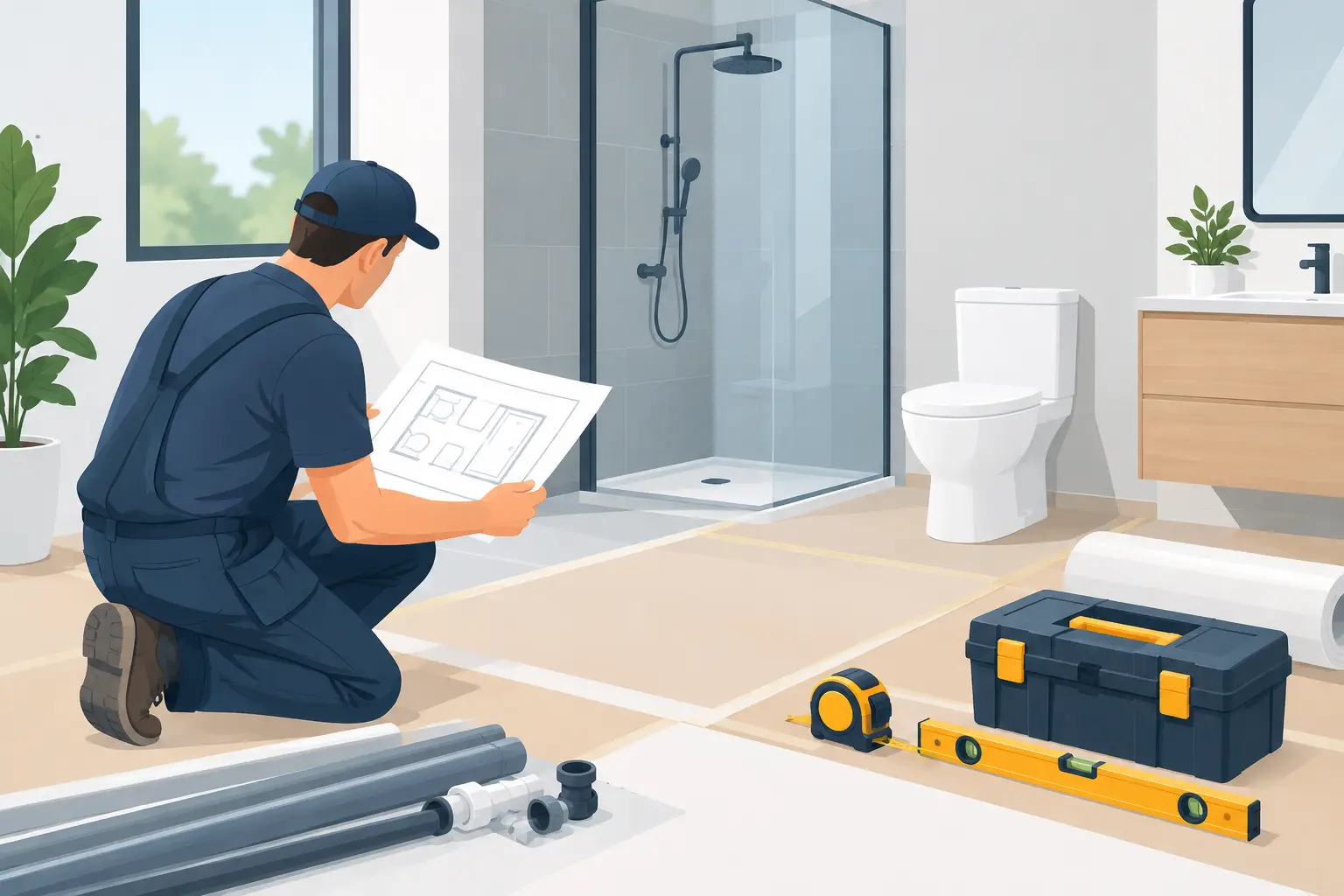
A toilet replacement is usually a short appointment. The preparation is what keeps it that way. If you are asking how to prepare bathroom installation work before a new toilet arrives, focus on access, the water shutoff, and choosing a fixture that actually fits the bathroom and the people using it. You do not need to remove the old toilet or attempt plumbing work yourself.
For most homeowners, landlords, and sellers, the goal is simple: make room for the installer, confirm the basics, and let the replacement happen in one clean visit. A focused toilet replacement should include delivery of the new fixture, removal of the old one, installation, testing, and legal disposal.
Start by choosing the right replacement toilet
Preparation starts before installation day. A toilet can look fine in a showroom and still be the wrong choice for a small powder room, a rental turnover, or a bathroom used by someone with mobility concerns.
The biggest decision is usually bowl height. Standard-height toilets are closer to the traditional 15-inch seat height and can feel natural for shorter adults and children. Comfort-height models sit closer to chair height, typically around 17 to 19 inches with the seat installed. They are often easier for taller adults, older homeowners, and anyone who has trouble standing up, but they are not automatically the best choice for every household.
Also consider bowl shape. An elongated bowl offers more sitting room, but it projects farther into the room. In a tight half-bath, a round-front toilet may preserve useful knee clearance. Measure from the finished wall behind the toilet to the front of the current bowl, then look at how much room remains in front of it. A door that nearly hits the bowl or a vanity that makes cleaning difficult are clues that dimensions matter more than a cosmetic upgrade.
For rentals and home sales, a dependable, water-efficient model is often the practical answer. For a primary bathroom, a skirted toilet can be worth the higher starting price because its smooth sides are much easier to wipe down than the exposed bends and bolt areas on a conventional base. Higher-tier choices may also offer stronger flushing performance, upgraded styling, or bidet-seat compatibility.
Check the toilet’s rough-in before installation
The rough-in is the distance from the finished wall behind the toilet to the center of the floor drain pipe, measured at the closet bolts holding the toilet to the floor. In many Northern Virginia homes, 12 inches is standard. Older homes, condos, and unusual bathroom layouts can have 10-inch or 14-inch rough-ins.
Do not measure from the baseboard. Measure from the actual finished wall, because trim can add enough depth to create confusion. If you are unsure, send a photo and measurement during the consultation rather than guessing. Ordering a 12-inch rough-in toilet for a 10-inch space can turn an under-an-hour installation into a return visit for the correct model.
It is also useful to notice whether the existing toilet sits square to the wall and floor. A toilet that rocks when you sit down, shifts at the base, or has a visible gap may point to loose mounting hardware, an uneven floor, or a problem below the fixture. A replacement can often address ordinary instability, but significant floor damage or a badly deteriorated flange may require additional evaluation. Calling this out before the appointment avoids surprises.
Clear a practical path to the bathroom
A new toilet is awkward to carry, and the old one needs to leave through the same route. Clear the walkway from the entry door to the bathroom, including stairs, hallways, and tight turns. Move shoes, small tables, pet gates, baskets, and anything fragile that could be bumped.
Inside the bathroom, remove items from around the toilet and from the back of the tank. This includes scales, trash cans, toilet brushes, storage racks, bath mats, and decorative items. If you keep cleaning supplies in a cabinet directly beside the toilet, empty it if the door or drawers will be in the way.
Before the installer arrives, make sure there is:
- A clear route at least wide enough to carry a boxed toilet safely
- Open floor space around the toilet base
- Access to the bathroom sink and the toilet’s water supply area
- A safe place for pets away from the work path
You do not need to cover the floors or provide tools. What helps most is a clear, dry workspace. If the bathroom is on an upper floor, mention that when scheduling so the team can plan for the carry route.
Find the shutoff valve, but do not force it
Look behind or beside the toilet for the small shutoff valve where the supply line comes out of the wall or floor. Make sure the area is accessible. You do not need to turn it off in advance unless the toilet is actively leaking.
Older shutoff valves can be stiff, corroded, or prone to dripping after they are moved. Forcing one with pliers can create a small problem that becomes a larger one. If the valve is hard to reach, appears rusty, or has a slow drip, take a photo and mention it before the visit.
If the toilet is leaking at the base, stop using it if possible. Water at the base after flushing can mean a failing wax seal, but it can also be condensation, a tank leak running down the bowl, or water from a nearby shower. Put down a towel, keep the area dry, and avoid repeatedly flushing to “test” it. Repeated use can allow water to reach the subfloor.
Take note of warning signs before the appointment
A toilet does not have to be completely broken to justify replacement. Hairline cracks in the porcelain, a tank that sweats constantly, recurring clogs despite normal use, weak flushing, and a bowl that never seems to stay clean are common reasons people replace an older unit.
Pay attention to where the water appears. A wet supply connection behind the toilet is different from water around the base. A tank that refills for a few seconds every few minutes often has an internal component issue, while a toilet that runs continuously can waste a surprising amount of water. These details help determine whether replacement is the sensible route and what the installer should expect.
If the toilet has been in place for decades, expect some uncertainty until it is lifted. Old wax rings can fail, bolts can be corroded, and flooring may have been installed around the base. That does not mean the job will be difficult, but it is why an upfront photo and honest description are more useful than trying to diagnose everything from one symptom.
Plan for the bathroom to be unavailable briefly
A standard replacement appointment is fast, but treat that bathroom as unavailable until the new toilet is installed, tested, and the area is cleaned up. Use another bathroom beforehand if you have one. In a one-bathroom home, avoid starting laundry, showers, or other routines that make access more complicated during the scheduled window.
Keep children and pets out of the bathroom while work is underway. It is also smart to let the installer know about parking limitations, gated access, elevator rules, or a condo’s required check-in process. Those details are especially relevant in Arlington, Alexandria, and Washington, DC, where building access can add time even when the installation itself is straightforward.
Know what affects replacement pricing
A complete toilet replacement is more predictable when the toilet and labor are bundled, but the fixture you select still matters. At ToiletKing, Essential packages start at $499 and are a practical fit for many rentals, turnovers, and budget-conscious replacements. Performance packages start at $669, Signature packages start at $799, and King’s Throne packages start at $1,049. Within each tier, pricing varies by the specific toilet model.
The main cost differences come from the toilet itself, design details such as a skirted base, flushing performance, comfort-height construction, and premium features. Access conditions and unexpected issues below an old toilet can matter too. A clear consultation before installation is the best way to match the toilet to the room, rather than paying for features that do not solve your actual problem.
A prepared bathroom makes replacement simple
You should not have to coordinate a retailer, delivery driver, installer, and disposal service just to replace a toilet that leaks, rocks, or flushes poorly. Clear the path, share accurate photos and measurements, and leave the old fixture in place for removal.
For a quick, clean toilet replacement in Fairfax County, Loudoun County, or elsewhere in Northern Virginia, call ToiletKing at (571) 326-8708 or book a free consultation at ToiletKingVA.com. Ask about promo code FIVEOFF when scheduling. A broken toilet does not have to take over your day.