
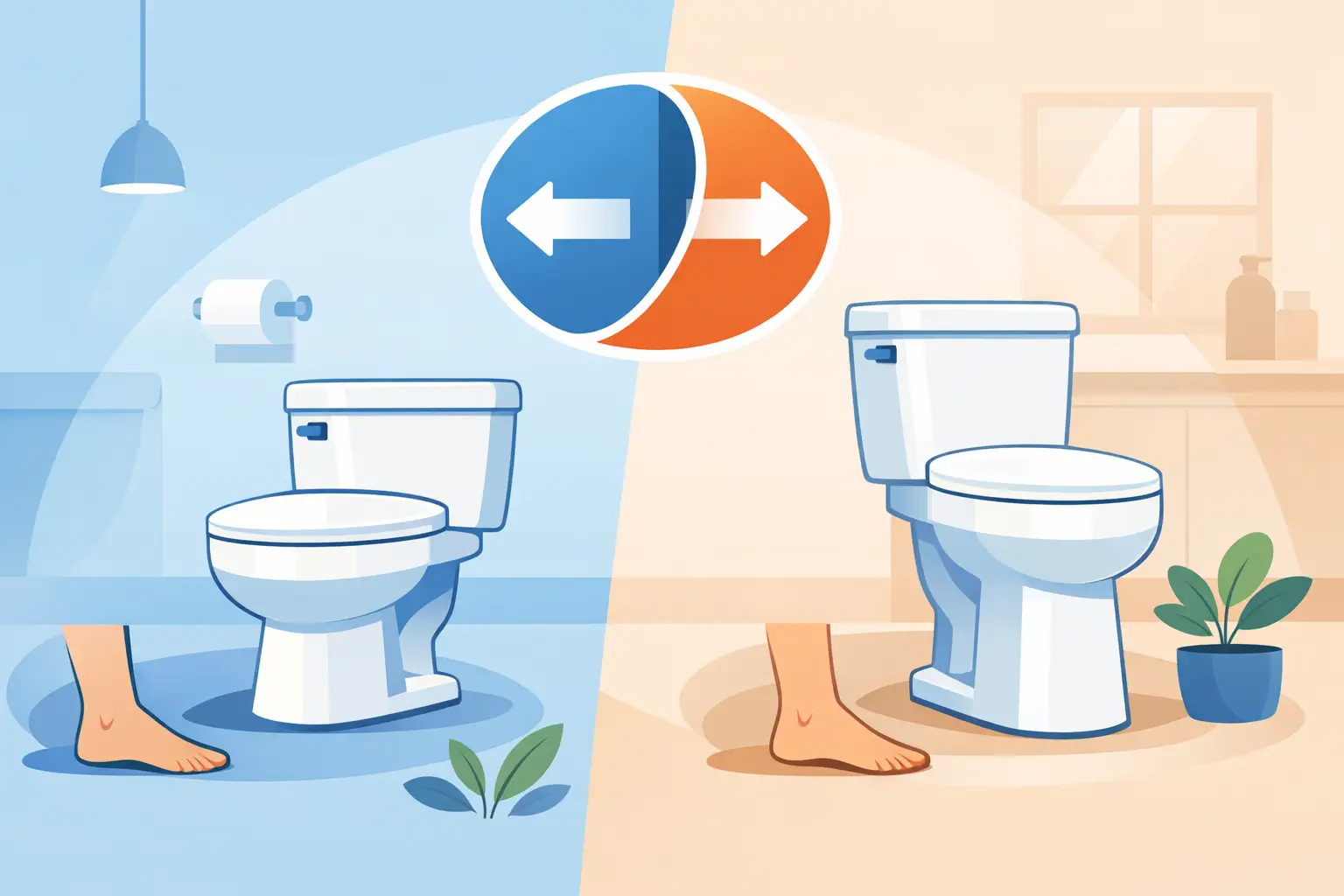
A toilet that feels too low is hard to ignore – especially when you are getting up from it several times a day. The comfort height vs standard toilet decision comes down to more than looks or price: the right seat height affects daily comfort, accessibility, bathroom fit, and even whether young children can use the toilet independently.
For most adults, a comfort-height toilet is the easier choice. But standard-height models still make sense in many Northern Virginia homes, particularly bathrooms used by small children or compact spaces where the overall fixture dimensions matter. Here is how to choose without overthinking it.
Comfort Height vs Standard Toilet: The Quick Answer
A standard-height toilet typically has a bowl rim about 14 to 15 inches from the finished floor. Once the seat is added, the sitting height is generally around 15 to 16 inches. A comfort-height toilet has a bowl rim around 16 to 17 inches high, putting the finished seat height close to 17 to 19 inches – similar to a typical chair.
That extra two inches may sound minor, but it changes the experience. Comfort height reduces the distance an adult must bend down and push up when sitting or standing. Standard height places the user in a slightly lower, more natural squat position and gives shorter people and children a better foothold on the floor.
Neither is automatically better. The best choice is the one that fits the people who use that bathroom most often.
Why Many Homeowners Choose Comfort Height
Comfort height toilets are now common in primary bathrooms, guest bathrooms, and homes where people plan to age in place. They are often called chair-height toilets because the finished seat lands near the height of a dining chair.
For an adult with stiff knees, hip discomfort, back pain, limited mobility, or simply long legs, the difference is immediate. Standing from a comfort-height toilet usually requires less effort. This is one reason landlords and property managers often choose them for rental turnovers: they work well for a broad range of adult tenants and feel like a practical upgrade without changing the rest of the bathroom.
Comfort height can also be a smart choice when replacing an older low-profile toilet. Older fixtures commonly sit noticeably lower, and homeowners often do not realize how much that bothers them until they sit on a newer model. When a toilet has started leaking at the base, rocking on the floor, flushing poorly, or showing hairline cracks in the bowl or tank, replacement is a good opportunity to fix that daily annoyance too.
There is one important distinction. “Comfort height” is a common product term, while ADA-compliant is a specific accessibility standard. Many comfort-height toilets have an appropriate bowl height, but an ADA-compliant installation can also depend on clearance around the fixture, flush-control location, grab-bar planning, and other bathroom details. If accessibility is the goal, confirm the specifications of the exact model rather than relying on the label alone.
When a Standard-Height Toilet Is the Better Fit
Standard-height toilets are not outdated or inferior. They are often the better choice for a hall bath used regularly by children. On a taller toilet, a child may have to perch with feet dangling, which can be uncomfortable and make it harder to sit securely. A sturdy step stool can solve that issue, but some families prefer a lower toilet from the start.
Shorter adults may also prefer standard height. If your feet do not rest flat on the floor, the higher position can feel less stable and put more pressure on the back of your thighs. This is worth considering in a household where the primary users are petite.
A lower seat may also be more comfortable for people who prefer a deeper squat position. There is no universal medical answer here. Physical needs vary, so comfort should guide the selection. If possible, sit on different heights at a showroom, a friend’s home, or even compare the chair heights around your own house before ordering.
Height Is Only One Part of the Fit
Toilet height gets most of the attention, but a replacement needs to fit the bathroom in several other ways. The first measurement is the rough-in: the distance from the finished wall behind the toilet to the center of the drain opening. A 12-inch rough-in is most common in Fairfax County, Loudoun County, and across Northern Virginia, but 10-inch and 14-inch rough-ins do show up, especially in older homes.
You also need enough clearance in front of the bowl and beside it. A comfort-height toilet is taller, but its projection from the wall may be similar to a standard-height model. The larger concern in a tight powder room is usually bowl shape. An elongated bowl gives adults more room and is popular for comfort, while a round-front bowl can save a few valuable inches in a small bathroom.
The water supply valve and shutoff line deserve a look too. A toilet replacement can be fast when the valve works properly and the flange under the old toilet is in good condition. Corroded shutoff valves, warped flooring around the base, or a toilet that has been slowly leaking into the subfloor can add work. Those are not reasons to panic, but they are real cost and scheduling factors that should be identified before installation day.
Flushing Performance Matters More Than Bowl Height
A comfort-height toilet will not solve a weak flush. If your current toilet needs repeated flushing, leaves waste behind, gurgles after flushing, or has a tank that refills unpredictably, focus on the flushing system as well as the seat height.
Modern water-efficient toilets use 1.28 gallons per flush or less while still delivering strong performance when the bowl design and flush system are well matched. That can be a meaningful upgrade from an older fixture that uses far more water with each flush. For homes on public water in the Washington, DC metro area, efficiency is a practical long-term benefit, not just a feature on a product label.
The bowl surface and exterior design also affect everyday cleaning. A skirted toilet hides the trapway along the sides of the bowl, eliminating the hard-to-reach curves that collect dust. It costs more than a conventional exposed-trapway model, but homeowners who are tired of cleaning around bolts and plumbing contours often find it worthwhile. Taller or lower, a toilet that is easy to keep clean tends to look better longer.
What Does the Upgrade Cost?
The height itself is not usually the main driver of replacement cost. Price changes more with the toilet brand, flush performance, bowl shape, skirted design, one-piece versus two-piece construction, and bidet-seat compatibility.
For a straightforward, functional replacement, ToiletKing’s Basic package starts at $489. The Standard package is $639, Deluxe is $799, and King’s Throne options begin at $1,175+. Package pricing includes delivery of the new toilet, removal of the old fixture, professional installation, and legal disposal. That matters because an old porcelain toilet is heavy, awkward to transport, and should not be left on the curb or in the back of a rental property.
A Basic or Standard option may be the right move for a seller preparing a home for market or a landlord replacing a failed fixture between tenants. A Deluxe or King’s Throne model can make more sense in a primary bath, where a skirted profile, upgraded flush, comfort height, and a more polished look are used every day.
A Simple Way to Decide
Start with the household, not the product description. Choose comfort height if the regular users are adults who want easier standing, if mobility is a concern, or if you are planning for long-term use of the home. Choose standard height if young children use the bathroom daily, shorter users strongly prefer their feet flat on the floor, or the lower sitting position simply feels better.
Then select the bowl shape, flushing performance, and exterior style based on the room. A compact round-front standard-height toilet can be the right answer for a tight hall bath. An elongated comfort-height, skirted model may be a much better fit for a primary bathroom. The best replacement is not necessarily the most expensive one – it is the one that works reliably and feels right every time someone uses it.
If you need help choosing a toilet for a home in Fairfax County, Loudoun County, or Northern Virginia, call ToiletKing at (571) 326-8708 or book a free consultation at ToiletKingVA.com. Use promo code FIVEOFF where applicable, and you can have the old toilet removed and the new one installed without turning a simple replacement into a weeklong project.